Representative Louis Washington Turpin
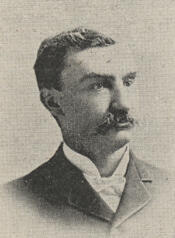
Here you will find contact information for Representative Louis Washington Turpin, including email address, phone number, and mailing address.
| Name | Louis Washington Turpin |
| Position | Representative |
| State | Alabama |
| District | 9 |
| Party | Democratic |
| Status | Former Representative |
| Term Start | December 2, 1889 |
| Term End | March 3, 1895 |
| Terms Served | 3 |
| Born | February 22, 1849 |
| Gender | Male |
| Bioguide ID | T000434 |
About Representative Louis Washington Turpin
Louis Washington Turpin (February 22, 1849 – February 3, 1903) was a Democratic U.S. Representative from Alabama who served three terms in the United States Congress between 1889 and 1895. He was born in Charlottesville, Virginia, on February 22, 1849. Orphaned at a young age following the death of both parents, he moved with his sister to Alabama in 1858, settling in Perry County. Growing up in the post–Civil War South, Turpin did not receive formal higher education and was largely self-educated, a circumstance that shaped both his early livelihood and his later public career.
In Alabama, Turpin engaged in agricultural pursuits, building his livelihood in a predominantly rural and agrarian region. His work as a planter and farmer grounded him in the economic and social concerns of his community during Reconstruction and the years that followed. This background in agriculture would later inform his political outlook and his representation of a largely agricultural constituency in Congress.
Turpin’s entry into public service began at the local level. He was elected tax assessor of Hale County, Alabama, serving from 1873 to 1880. In this role he was responsible for overseeing property assessments and local revenue, gaining practical experience in public finance and county administration during a period of political realignment in the South. In addition to his official duties, he became active in party politics and served as chairman of the Democratic committee of Hale County for six years, helping to organize and strengthen the Democratic Party’s position in the region.
Building on his local prominence, Turpin sought national office as a Democrat. He was an unsuccessful candidate for the nomination to the Forty-eighth Congress, an early indication of his ambition to serve at the federal level. Undeterred by this setback, he remained active in party affairs and continued his agricultural pursuits until he secured the Democratic nomination for the Fiftieth Congress’s successor term.
Turpin presented his credentials as a Democratic Member-elect to the Fifty-first Congress and took his seat in the U.S. House of Representatives on March 4, 1889, representing Alabama. His initial tenure was cut short when his election was successfully contested by John V. McDuffie; Turpin served until June 4, 1890, when McDuffie was seated in his place. This contested election occurred during a period of intense partisan competition and frequent election challenges in the post-Reconstruction South, reflecting broader regional and national tensions over representation and electoral practices.
Despite this interruption, Turpin returned to Congress soon thereafter. He was elected to the Fifty-second and Fifty-third Congresses and served full consecutive terms from March 4, 1891, to March 3, 1895. During these years he participated in the legislative process at a time when the nation was grappling with issues such as economic policy, tariff debates, and the interests of agricultural constituencies. As a Democratic member of the House of Representatives from Alabama, he represented the concerns of his district’s citizens and contributed to the deliberations of the national legislature. At the conclusion of his third term, he was an unsuccessful candidate for renomination, bringing his congressional service to a close.
After leaving Congress, Turpin retired from active politics and returned to private life in Alabama. He resumed and expanded his engagement in planting, continuing the agricultural work that had characterized his early career. He lived in Greensboro, Alabama, where he remained a figure rooted in the local community until his death. Louis Washington Turpin died in Greensboro on February 3, 1903. He was interred in the City Cemetery, leaving a record of service that spanned local office, party leadership, and three terms in the United States House of Representatives during a significant period in American history.