Senator Louis Trezevant Wigfall
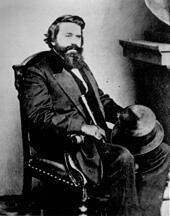
Here you will find contact information for Senator Louis Trezevant Wigfall, including email address, phone number, and mailing address.
| Name | Louis Trezevant Wigfall |
| Position | Senator |
| State | Texas |
| Party | Democratic |
| Status | Former Representative |
| Term Start | December 5, 1859 |
| Term End | December 31, 1861 |
| Terms Served | 1 |
| Born | April 21, 1816 |
| Gender | Male |
| Bioguide ID | W000447 |
About Senator Louis Trezevant Wigfall
Louis Trezevant Wigfall (April 21, 1816 – February 18, 1874) was an American politician, lawyer, and Confederate military officer who served as a United States Senator from Texas from 1859 to 1861 and as a Confederate States Senator from Texas from 1862 to 1865. A member of the Democratic Party, he was one of the leading Southern “Fire-Eaters,” vigorously advocating secession and the preservation and expansion of an aristocratic agricultural society based on slave labor. Known for his powerful oratory, heavy drinking, and combative temperament, he became one of the more imposing and controversial political figures of his era. He was also an enslaver.
Wigfall was born on a plantation near Edgefield, South Carolina, to Levi Durant Wigfall, a successful Charleston merchant who had moved to Edgefield, and Eliza Thomson Wigfall, a member of the French Huguenot Trezavant family. His father died in 1818, when Louis was still a small child, and his mother died when he was about thirteen years old. His family was prominent: an older brother, Hamden, was killed in a duel, and another brother, Arthur, later became a bishop in the Episcopal Church. Orphaned at a young age, Wigfall was placed under the care of a guardian and received private tutoring until 1834. That year he entered Rice Creek Springs School, a military academy near Columbia, South Carolina, attended by sons of the regional elite, and then enrolled at the University of Virginia. There he displayed the volatile sense of honor that would mark his public life, issuing his first dueling challenge over a perceived insult from another student, though that early affair was resolved without bloodshed.
In 1836 Wigfall transferred to South Carolina College (now the University of South Carolina) to complete his studies. His attendance was irregular, and he devoted much of his time to taverns and social life rather than academics. He joined the Euphradian Society, developed an interest in the law, and wrote on student rights, but he also left school for several months to fight in the Second Seminole War in Florida, where he served as a lieutenant of volunteers. Despite his distractions, he graduated in 1837. One of his closest friends from college, John Lawrence Manning, would later become governor of South Carolina. Returning to Edgefield in 1839, Wigfall took over his late brother’s law practice. He had already squandered much of his inheritance and, with a marked propensity for drinking and gambling, soon accumulated substantial debts. He borrowed freely from friends, including the woman who would become his wife, and found that “mere office business” as an upcountry lawyer neither suited his temperament nor yielded the income he desired.
Wigfall’s early political and personal life in South Carolina was turbulent and violent. In the gubernatorial election of 1840 he supported John Peter Richardson against the more radical James Henry Hammond, leading to a series of public disputes and personal confrontations. Within a span of five months he became embroiled in a fistfight, two formal duels, three near-duels, and was charged, though not indicted, in connection with the killing of a man. The climax came in 1840 on an island in the Savannah River near Augusta, Georgia, where he fought a duel with future Congressman Preston Brooks and was severely wounded, taking a bullet through both thighs. Hammond attempted to mediate between the two men, and although Wigfall received an appointment as aide-de-camp and lieutenant colonel on Governor Richardson’s staff, he remained dissatisfied with the outcome of the Brooks affair. The violence and notoriety surrounding these episodes effectively destroyed his South Carolina law practice. He was elected a delegate to the South Carolina Democratic convention in 1844, but his reputation for behind-the-scenes intrigue and his volatile nature undermined his early political prospects. Mounting debts, medical expenses for a sickly infant son who later died, and sheriff’s sales that consumed his Edgefield estate forced him to seek a new start. With the assistance of a Texas cousin, former South Carolina governor James Hamilton Jr., he arranged a law partnership in Texas. Although he abandoned dueling after his marriage, his reputation as a duelist—one he himself defended as a beneficial “factor in the improvement of both the morals and manners of the community”—followed him throughout his life.
In 1841 Wigfall married his second cousin, Charlotte Maria Cross, daughter of Colonel George Warren Cross, a prominent Charleston lawyer and former South Carolina state comptroller, and his wife, Frances Maria Halsey. The couple had three daughters: Francis Halsey, Louise Sophie, and Mary Frances (“Fanny”) Wigfall. Louise later became known as a Civil War diarist, providing a personal record of the conflict that had so deeply engaged her father. Despite the stability that marriage might have offered, Wigfall’s financial and political difficulties in South Carolina continued, reinforcing his decision to relocate to the Southwest.
Arriving in Texas in 1848, Wigfall joined the law practice of William B. Ochiltree in Nacogdoches before settling in Marshall, Texas. He quickly reentered politics, winning election to the Texas House of Representatives, where he served from 1849 to 1850, and later to the Texas Senate, where he served from 1857 to 1860. A staunch Democrat, he helped organize state Democrats to resist the nativist Know Nothing movement, though the decline of that party did not immediately elevate his standing among more moderate Democrats, who regarded his views as extreme. Wigfall emerged as a fierce political opponent of Sam Houston. During Houston’s 1857 gubernatorial campaign, Wigfall followed him along the campaign trail, attacking Houston’s congressional record at each stop and accusing him of betraying Southern interests and courting Northern abolitionist support in pursuit of presidential ambitions. The 1859 raid by John Brown on Harpers Ferry revived sectional tensions and brought renewed prominence to Wigfall and other radical secessionists in Texas.
The Texas legislature elected Wigfall as a Democrat to the United States Senate in 1859 to fill the vacancy caused by the death of Senator James Pinckney Henderson. Matthias Ward had been appointed to the seat and served from September 27, 1858, until Wigfall was elected and sworn in on December 5, 1859. Louis Trezevant Wigfall thus served as a Senator from Texas in the United States Congress from 1859 to 1861, completing one term in office during a period of mounting national crisis. As a member of the Senate, he participated in the legislative process and represented the interests of his Texas constituents while vocally championing secession and the rights of slaveholding states. He continued to hold his Senate seat after Texas seceded on February 1, 1861, using the floor of the Senate and informal venues on Capitol Hill to exhort the rightness of the Southern cause and berate his Northern colleagues. During this time in Washington he also spied on federal military preparations, arranged for weapons to be sent south, and engaged in clandestine efforts to aid the nascent Confederacy. He withdrew from the Senate on March 23, 1861, and was formally expelled on July 11, 1861, for his support of the rebellion.
Even before his expulsion from the United States Senate, Wigfall had become deeply involved in the formation of the Confederate government. He served as a member of the Texas delegation to the Provisional Confederate Congress, which met beginning in early 1861 to establish the provisional government of the Confederate States of America and to select Jefferson Davis as its president. In the days leading up to the outbreak of the Civil War, Wigfall strongly advocated immediate attacks on Fort Sumter in Charleston Harbor and Fort Pickens in Florida, believing that decisive action would spur Virginia and other Upper South slave states to join the Confederacy. After leaving Washington, he traveled to Baltimore, Maryland, where he recruited soldiers for the Confederate cause, and then proceeded to the Confederate capital at Richmond, Virginia.
At the outset of the Civil War, Wigfall briefly combined military and political roles. He arrived in Charleston as the siege of Fort Sumter began in April 1861 and, according to diarist Mary Chesnut, appeared to be the only “thoroughly happy person” she saw, reveling in the crisis he had long sought. Serving as an aide to Confederate General P. G. T. Beauregard during the bombardment, Wigfall, acting without authorization, rowed a skiff to the fort and demanded its surrender from Union Major Robert Anderson. Newspapers widely reported the episode, enhancing his celebrity, though they omitted the crucial fact that he had not consulted Beauregard for two days and that the terms he offered Anderson had already been rejected by his commander. Capitalizing on his new fame, Wigfall secured appointment as colonel of the 1st Texas Infantry Regiment and was quickly promoted to brigadier general in command of the Texas Brigade in the Confederate Army. Stationed near his troops at Dumfries, Virginia, during the winter of 1861–1862, he developed a reputation for nervousness and erratic behavior, frequently calling his men to arms at midnight in anticipation of imagined Federal attacks. His conduct was widely attributed to his fondness for whiskey and hard cider, and he was observed to be intoxicated at times both on and off duty. He resigned his commission in February 1862 to take his seat in the Confederate Senate and was succeeded in brigade command by John Bell Hood.
From 1862 to 1865 Wigfall served as a Confederate States Senator from Texas. Initially a close ally of President Jefferson Davis, he soon broke with him over the scope of central authority in the Confederate government. A steadfast advocate of states’ rights, Wigfall opposed efforts to strengthen the Confederate national government and played a leading role in blocking the creation of a Confederate Supreme Court, fearing that Davis’s appointees might issue decisions unfavorable to state sovereignty. He frequently challenged Davis’s military policies, invoking his own limited military experience from the Seminole War and early Civil War service. Wigfall was a close friend and political supporter of Confederate General Joseph E. Johnston and often introduced or backed legislation favorable to Johnston’s positions. He was also an early and vocal proponent of appointing Robert E. Lee as commander of all Confederate armies. Throughout the war he remained uncompromising in his defense of slavery and white supremacy; in January 1865 he summarized his reasons for supporting the Confederacy by declaring, “Sir, I wish to live in no country where the man who blacks my boots or curries my horse is my equal.”
With the collapse of the Confederacy in 1865, Wigfall sought to avoid federal retribution. He escaped back to Texas in the company of Texas troops, traveling under a forged parole. In 1866 he went into self-imposed exile in London, where he engaged in intrigues aimed at fomenting tension between Great Britain and the United States, though these efforts had little practical effect. He later invested in a mining venture, purchasing a mine in Clear Creek, Colorado, and returned to the United States in 1870. In his final years he lived for a time in Baltimore, Maryland, and by January 1874 he had returned to Texas, residing in Galveston. Louis Trezevant Wigfall died there on February 18, 1874, reportedly of “apoplexy,” and was buried in Trinity Episcopal Cemetery in Galveston. His colorful and often notorious career, marked by duels, fiery rhetoric, and unwavering commitment to slavery and secession, has continued to attract attention in historical studies and popular culture. He appears as a character, often using his real words, in Harry Turtledove’s 1992 alternate history novel “The Guns of the South,” and as a major, villainous figure in Peg A. Lamphier’s historical novel “The Lincoln Special,” which centers on Kate Warne and the Pinkerton Detective Agency’s investigation of the Baltimore Plot against Abraham Lincoln.