Representative Lowndes Henry Davis
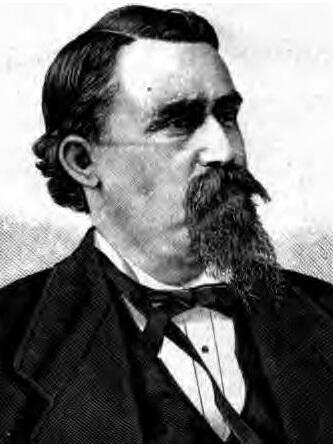
Here you will find contact information for Representative Lowndes Henry Davis, including email address, phone number, and mailing address.
| Name | Lowndes Henry Davis |
| Position | Representative |
| State | Missouri |
| District | 14 |
| Party | Democratic |
| Status | Former Representative |
| Term Start | March 18, 1879 |
| Term End | March 3, 1885 |
| Terms Served | 3 |
| Born | December 13, 1836 |
| Gender | Male |
| Bioguide ID | D000124 |
About Representative Lowndes Henry Davis
Lowndes Henry Davis (December 13, 1836 – February 4, 1920) was an American lawyer and Democratic politician who represented Missouri in the United States House of Representatives from 1879 to 1885. He was born on December 13, 1836, in Jackson, Cape Girardeau County, Missouri, into a region that was then part of the developing American frontier. Growing up in southeastern Missouri, he came of age in a slaveholding border state that would later be deeply divided during the Civil War, an environment that shaped the political and legal issues he would confront in his public career.
Davis pursued higher education in the East, enrolling at Yale College, where he graduated in 1860. While at Yale he was a member of the secret society Skull and Bones, an affiliation that placed him among a network of future national leaders and professionals. Following his undergraduate studies, he turned to the law and attended the law department of the University of Louisville (often referred to at the time as Louisville University Law School), from which he graduated in 1863, during the midst of the Civil War.
After completing his legal education, Davis was admitted to the bar and returned to his native Jackson, Missouri, to begin the practice of law. Establishing himself as an attorney in Cape Girardeau County, he built a professional reputation in a period marked by Reconstruction-era legal and political disputes. His abilities at the bar led to his selection for public legal office, and he soon moved from private practice into a series of increasingly prominent roles in Missouri’s legal and political life.
Between 1868 and 1872, Davis served as state attorney for the tenth judicial district of Missouri, a position that placed him in charge of prosecuting cases on behalf of the state in a large judicial circuit. In this capacity he was involved in enforcing state law during a time of social and political realignment following the Civil War. His work as a district attorney enhanced his standing within the Democratic Party and prepared him for broader responsibilities in state government.
Davis played a notable role in Missouri’s constitutional development when he served as a member of the Missouri constitutional convention in 1875. That convention produced a new state constitution, and his participation placed him at the center of debates over the structure of state government, the judiciary, and the balance of power in postwar Missouri. Building on this experience, he was elected to the Missouri House of Representatives, serving from 1876 to 1878. As a state legislator, he was part of the Democratic majority that helped shape state policy during the late Reconstruction and early post-Reconstruction years.
In 1878, Davis was elected as a Democrat to the United States House of Representatives from Missouri and took his seat in the Forty-sixth Congress on March 4, 1879. He was subsequently reelected to the Forty-seventh and Forty-eighth Congresses, serving three consecutive terms in the House and remaining in office until March 3, 1885. During his congressional service he represented a largely rural Missouri constituency and aligned with the Democratic Party on issues of the era, including federal expenditures and economic policy. In the Forty-eighth Congress (1883–1885), he served as chairman of the Committee on Expenditures in the Department of the Treasury, where he was responsible for overseeing and reviewing the spending practices of that department, reflecting both his legal background and his party’s interest in scrutinizing federal outlays.
After leaving Congress in 1885, Davis returned to Missouri and resumed the practice of law, continuing his professional life away from national office. He remained associated with the legal and civic affairs of his region, living in Cape Girardeau in his later years. Lowndes Henry Davis died in Cape Girardeau, Missouri, on February 4, 1920. Although he spent his public career in Missouri, he was buried in Maple Hill Cemetery in Huntsville, Alabama, a resting place that suggests family or personal connections beyond his home state.