Representative Lucien Lester Ainsworth
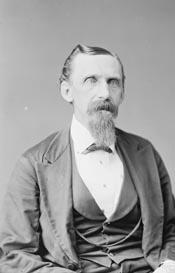
Here you will find contact information for Representative Lucien Lester Ainsworth, including email address, phone number, and mailing address.
| Name | Lucien Lester Ainsworth |
| Position | Representative |
| State | Iowa |
| District | 3 |
| Party | Democratic |
| Status | Former Representative |
| Term Start | December 6, 1875 |
| Term End | March 3, 1877 |
| Terms Served | 1 |
| Born | June 21, 1831 |
| Gender | Male |
| Bioguide ID | A000067 |
About Representative Lucien Lester Ainsworth
Lucien Lester Ainsworth (June 21, 1831 – April 19, 1902) was a one-term Democratic U.S. Representative from Iowa’s 3rd congressional district in northeastern Iowa. He served as a Representative from Iowa in the United States Congress from 1875 to 1877, during a significant period in American history following the Civil War and Reconstruction. As a member of the House of Representatives, Ainsworth participated in the democratic process and represented the interests of his constituents in northeastern Iowa, contributing to the legislative work of the Forty-fourth Congress.
Born on June 21, 1831, Ainsworth came of age in the antebellum era, a time of rapid national expansion and intensifying sectional conflict. Details of his early life, including his place of birth and family background, are not extensively documented in the surviving public record, but his later public career reflects the trajectory of a 19th-century professional who combined legal training with political service. Growing up in this period, he would have been shaped by the political debates over slavery, states’ rights, and the preservation of the Union that defined American public life in the decades before the Civil War.
Ainsworth’s education prepared him for a career in the law and public affairs, as was common for many future members of Congress in the 19th century. Although specific institutions and degrees are not recorded in the available sources, his subsequent legal and legislative work indicates that he received the training necessary to practice law and to participate effectively in legislative deliberations. His legal background would have provided him with familiarity in statutory interpretation, civil procedure, and the constitutional questions that were central to national politics in the postwar era.
Before his election to Congress, Ainsworth pursued a professional career that led him into public life in Iowa. As Iowa developed rapidly in the mid-19th century, lawyers often played prominent roles in local and state affairs, and Ainsworth’s emergence as a Democratic leader in northeastern Iowa reflected both his professional standing and his engagement with the issues facing a growing state. By the time he sought federal office, he had established himself sufficiently within the Democratic Party to secure nomination and election in a region that was politically competitive in the years following the Civil War.
Ainsworth’s congressional service began on March 4, 1875, when he took his seat in the Forty-fourth Congress as the Democratic Representative from Iowa’s 3rd congressional district. Serving until March 3, 1877, he completed one full term in the U.S. House of Representatives. His tenure coincided with the closing phase of Reconstruction and with national debates over economic policy, civil rights, and federal authority in the former Confederate states. As a member of the Democratic Party, Ainsworth contributed to the legislative process during this single term in office, participating in the consideration of measures affecting both his Iowa constituents and the broader nation. While specific committee assignments and sponsored measures are not detailed in the surviving summary record, his role as a voting member of the House placed him within the central deliberative body of the federal government at a time of significant political realignment.
After leaving Congress in 1877, Ainsworth returned to private life and to his professional pursuits in Iowa. Like many one-term members of the House in the 19th century, he resumed his legal and civic activities, remaining part of the political and professional fabric of his community even without holding further federal office. His post-congressional years unfolded against the backdrop of the Gilded Age, a period marked by industrial growth, agricultural change, and evolving party politics in the Midwest, all of which would have shaped the environment in which he lived and worked.
Lucien Lester Ainsworth died on April 19, 1902. His career as a one-term Democratic Representative from Iowa’s 3rd congressional district placed him among the many 19th-century legislators who served briefly in the national legislature during a transformative era in American history. Through his service from 1875 to 1877, he participated directly in the governance of the United States at a time when the nation was consolidating the results of the Civil War and adjusting to new political and economic realities.