Representative Lucien Bonaparte Caswell
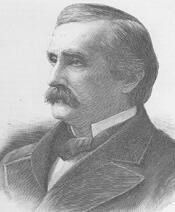
Here you will find contact information for Representative Lucien Bonaparte Caswell, including email address, phone number, and mailing address.
| Name | Lucien Bonaparte Caswell |
| Position | Representative |
| State | Wisconsin |
| District | 1 |
| Party | Republican |
| Status | Former Representative |
| Term Start | December 6, 1875 |
| Term End | March 3, 1891 |
| Terms Served | 7 |
| Born | November 27, 1827 |
| Gender | Male |
| Bioguide ID | C000245 |
About Representative Lucien Bonaparte Caswell
Lucien Bonaparte Caswell (November 27, 1827 – April 26, 1919) was an American lawyer, banker, and Republican politician who served as a Representative from Wisconsin in the United States Congress from 1875 to 1891. Over the course of seven terms, totaling 14 years in the United States House of Representatives, he represented parts of southeast Wisconsin and contributed to the legislative process during a significant period in American history. A member of the Republican Party, he participated in the democratic process and represented the interests of his constituents in Wisconsin’s 2nd and later 1st congressional districts.
Caswell was born in Swanton, Vermont, on November 27, 1827. When he was nine years old, he moved with his family to the frontier Wisconsin Territory, where they settled along the Rock River just south of Lake Koshkonong. Growing up in this developing region, he was educated in local schools and went on to attend Milton Academy in Milton, Wisconsin. He also took a course at Beloit College in Beloit, Wisconsin, reflecting an early commitment to higher learning at a time when formal education on the frontier was still limited.
Pursuing a legal career, Caswell began the study of law in Beloit in the office of Matthew H. Carpenter, who would later become a United States Senator from Wisconsin. Under Carpenter’s tutelage, Caswell read law and prepared for admission to the bar. He was admitted to the bar in October 1851 and, later that year, moved to Fort Atkinson, Wisconsin, where he opened a law practice. His legal work quickly established him as a prominent figure in the community and laid the foundation for his subsequent public career.
Caswell’s early public service began at the county and state levels. In 1854, he was appointed district attorney of Jefferson County, Wisconsin, a position that placed him at the center of local law enforcement and judicial affairs. During the Civil War era and Reconstruction, he was elected to the Wisconsin State Assembly in 1863, 1872, and 1874, serving multiple nonconsecutive terms in the state legislature. In 1863, he also founded the First National Bank of Fort Atkinson and served as its cashier for twenty-five years, demonstrating his influence in both legal and financial circles. That same period saw him engaged in state affairs of broader significance; he accompanied Governor Louis P. Harvey on Harvey’s fatal trip to visit Wisconsin troops in Tennessee during the Civil War. Caswell further advanced his political profile as a delegate to the 1868 Republican National Convention, where he supported the nomination of Ulysses S. Grant for the presidency.
Caswell entered national politics in the mid-1870s. He was first elected as a Republican to the United States House of Representatives in 1874, winning a close race for the 44th Congress by defeating Democrat Amasa G. Cook by 217 votes. From March 4, 1875, to March 3, 1883, he represented Wisconsin’s 2nd congressional district, which then included Columbia, Dane, Jefferson, and Sauk counties. He was subsequently reelected to the 45th, 46th, and 47th Congresses, serving continuously during this period. His congressional service coincided with the post–Civil War Reconstruction era, the rise of industrialization, and significant debates over federal authority and economic policy, in which he participated as a Republican representative of a rapidly developing region.
After a brief interval out of Congress, Caswell returned to the House as the representative of a different constituency. He was elected again as a Republican to the 49th, 50th, and 51st Congresses, this time representing Wisconsin’s 1st congressional district from March 4, 1885, to March 3, 1891. Over the course of his seven terms in Congress, spanning from 1875 to 1891, he was active in shaping important aspects of the federal judiciary and national institutions. He played a role in the establishment of the federal appeals court system, contributing to the development of a more structured and efficient federal judicial hierarchy. He was also involved in overseeing the construction of the Library of Congress, participating in the legislative oversight that guided the growth of this major national cultural and research institution.
Caswell’s long tenure in the House ended when he was defeated in the Republican primaries in 1890 by state senator Henry Allen Cooper. Although Cooper went on to the general election, he was defeated there by Democrat Clinton Babbitt, marking a shift in political fortunes in the district. With the conclusion of his congressional service in March 1891, Caswell returned to private life in Wisconsin.
In his later years, Caswell resumed the practice of law in Fort Atkinson and remained a respected figure in the community he had helped to shape through his legal, banking, and political work. In addition to his earlier founding of the First National Bank, he had established the Citizens’ State Bank of Fort Atkinson in 1885, further solidifying his role in the region’s financial development. He lived to an advanced age, witnessing the transformation of the United States from a post–Civil War nation into a modern industrial power. Lucien Bonaparte Caswell died in Fort Atkinson, Wisconsin, on April 26, 1919, and was buried in Evergreen Cemetery. His life and career have been documented in archival collections, including “Lucien B. Caswell’s Reminiscences,” and in the official records of the United States Congress.