Representative Lucius Lyon
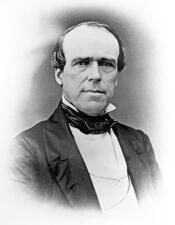
Here you will find contact information for Representative Lucius Lyon, including email address, phone number, and mailing address.
| Name | Lucius Lyon |
| Position | Representative |
| State | Michigan |
| District | 2 |
| Party | Democratic |
| Status | Former Representative |
| Term Start | December 2, 1833 |
| Term End | March 3, 1845 |
| Terms Served | 3 |
| Born | February 26, 1800 |
| Gender | Male |
| Bioguide ID | L000544 |
About Representative Lucius Lyon
Lucius Lyon (February 26, 1800 – September 24, 1851) was a U.S. statesman from the state of Michigan and a prominent early political and civic leader in the Old Northwest. A member of the Democratic Party, he served as a Delegate to the U.S. House of Representatives from Michigan Territory from 1833 to 1835, as a U.S. Senator from Michigan from 1837 to 1839, and as a member of the U.S. House of Representatives from Michigan’s second congressional district from 1843 to 1845. Along with Louis Campau, he is remembered as one of the founding fathers of Grand Rapids, Michigan, the state’s second-largest city, and was the first person to represent Michigan in both the U.S. Senate and the U.S. House of Representatives.
Lyon was born in Shelburne, Vermont, on February 26, 1800, the son of Asa Lyon and Sarah (Atwater) Lyon. He received a common school education in Shelburne and worked with his father on the family farm during his youth. At age eighteen he began attending academies in Shelburne and Burlington, Vermont, teaching school between terms to support himself. During this period he studied engineering and surveying under John Johnson of Burlington, training that would shape his later career in the developing western territories.
In 1821, Lyon moved to Detroit in Michigan Territory, where he initially worked as a teacher before taking up surveying. He was eventually appointed Deputy Surveyor General of Michigan Territory. During the summers of the mid-1820s he surveyed extensive areas that are now parts of Michigan, Illinois, Wisconsin, and Iowa, while in the winters he often returned to Vermont to visit family and study scientific subjects, including geology, at Middlebury College. These studies, combined with his field work, gave him an exceptional knowledge of the geography, natural resources, flora and fauna, and waterways of the region. In 1829 he was commissioned to rebuild the Fort Gratiot Lighthouse at the entrance to the St. Clair River from Lake Huron. In the early 1830s he surveyed a portion of what would become the boundary between Illinois and Wisconsin, placing the initial point of the Fourth Principal Meridian on December 10, 1831, and he participated in survey parties that established the baseline and meridian used to define townships in Wisconsin. His detailed field notebooks became a valuable source of information for later researchers.
Lyon’s technical expertise and familiarity with Michigan Territory brought him into public life at a pivotal moment in the region’s path to statehood. He was elected as a non-voting Delegate to the U.S. Congress for Michigan Territory, serving from 1833 to 1835. On December 11, 1833, he presented a formal petition to Congress requesting Michigan’s admission into the Union. His service in Congress occurred during a significant period in American history, as Michigan’s bid for statehood was delayed in part by a boundary dispute with Ohio over the Toledo Strip—later known as the Toledo War—and by opposition from some southern states to the admission of another free state. Lyon’s detailed knowledge of Michigan’s geography enabled him to argue persuasively to Michigan residents that accepting the Upper Peninsula in lieu of the Toledo Strip was an equitable solution. This compromise helped remove Ohio’s objections, clearing the way for Michigan’s admission to the Union in 1837.
From May 11 to June 24, 1835, Lyon was a member of the convention that drafted the first Michigan Constitution, which voters adopted in October 1835. In November 1835 he was elected as a U.S. Senator, but until Michigan’s formal admission his state’s congressional delegation was seated only as “spectators.” Upon Michigan’s admission as a state on January 26, 1837, Lyon took his seat as a full U.S. Senator and served until 1839. During his Senate service he was involved in the legislative process at a time of rapid territorial expansion and internal improvement. On March 28, 1836, he served as a witness to the Treaty of Washington of 1836, by which the Ottawa and Chippewa nations ceded much of the land in the northern portion of Michigan’s Lower Peninsula, and on May 9, 1836, he was also a witness to a separate treaty with the Chippewa involving additional land cessions. He was a member of the Board of Regents of the University of Michigan from 1837 to 1839, contributing to the early governance of the state’s flagship public university. He did not seek reelection to the Senate in 1839 and subsequently moved to Grand Rapids, Michigan.
Lyon continued his public service in both federal and local roles. In 1839 he was appointed Indian commissioner at La Pointe, in what is now Wisconsin, where he was involved in federal relations with Native American nations in the upper Great Lakes region. A Democrat, he was later elected from the newly formed 2nd congressional district of Michigan to the 28th Congress, serving in the U.S. House of Representatives from March 4, 1843, to March 3, 1845. His tenure in the House, which followed his earlier service as territorial Delegate and U.S. Senator, made him the first individual to represent Michigan in both chambers of Congress. In both the Senate and the House he served on the Committee on Public Lands, where his surveying background and knowledge of western lands informed his legislative work. He did not run for reelection to the House in 1844, concluding three terms of service in Congress between 1833 and 1845 as Delegate, Senator, and Representative.
After leaving Congress, Lyon was appointed by President James K. Polk as U.S. Surveyor General for Ohio, Indiana, and Michigan, a position he held from 1845 to 1850. In that capacity he moved the office from Cincinnati, Ohio, to Detroit, Michigan, and oversaw federal land surveys during a period of continued settlement and development in the Old Northwest. Beyond his official duties, he was a major financial backer of Hiram Moore, an inventor and founder of the village of Climax, Michigan. Moore developed a farm machine in the 1830s and 1840s that combined the functions of a threshing machine and a reaper—an early form of the combine harvester—decades before such machines became common. Moore’s designs were allegedly copied by Cyrus McCormick, and despite years of legal efforts, Moore was unsuccessful in securing his patent claims. Lyon also owned a large tract of land in Grand Rapids and became embroiled in a long-running feud with Louis Campau over the platting and naming of the settlement. Lyon favored the name “Kent” for the village rather than “Grand Rapids.” He is further remembered in Grand Rapids for his attempt to commercialize local salt deposits by boring a well and extracting salt from underground brine.
In his personal life, Lyon professed the Swedenborgian religious faith and was an active advocate for temperance. He later became affiliated with the Washingtonian movement, which promoted total abstinence from alcohol. He never married and had no children. Lucius Lyon died at the Detroit home of his nephew, George W. Thayer, on September 24, 1851, and was buried in Elmwood Cemetery in Detroit. His legacy is reflected in numerous Michigan place names, including South Lyon; Lyon Township in Oakland County; Lyon Township in Roscommon County; Lyon Lake; and Lyons Township. In 1836 he purchased much of the property in a small village in Ionia County, Michigan, renamed it Lyons, platted the village, established its first post office, and installed his brother Truman as the first postmaster, although he himself never resided there. In Grand Rapids, Lyon Street and Lyon Square bear his name, and in 2008 a bronze statue of his likeness was erected downtown as part of a “Community Legends” initiative honoring pivotal figures in the city’s history.