Representative Luke Potter Poland
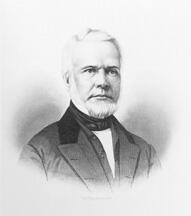
Here you will find contact information for Representative Luke Potter Poland, including email address, phone number, and mailing address.
| Name | Luke Potter Poland |
| Position | Representative |
| State | Vermont |
| District | 2 |
| Party | Republican |
| Status | Former Representative |
| Term Start | December 4, 1865 |
| Term End | March 3, 1885 |
| Terms Served | 6 |
| Born | November 1, 1815 |
| Gender | Male |
| Bioguide ID | P000406 |
About Representative Luke Potter Poland
Luke Potter Poland (November 1, 1815 – July 2, 1887) was an American attorney, judge, and Republican politician from Vermont who served in both the United States Senate and the United States House of Representatives, as well as on the Vermont Supreme Court. Over the course of a public career that spanned the mid-nineteenth century, he became most notable for his service as an associate justice of the Vermont Supreme Court from 1848 to 1849 and again from 1857 to 1860, as chief justice of that court from 1860 to 1865, and for his multiple terms in Congress during the Reconstruction era and the years that followed.
Poland was born in Westford, Vermont, where he attended the local common schools before pursuing further study at Jericho Academy. While still a student, he contributed to his family’s livelihood by working in his father’s sawmill and gained early business experience as a store clerk in Waterville, Vermont. He qualified as a teacher and taught school for a time, using his earnings to support his legal studies. He read law in the office of an attorney in Morristown, Vermont, and was admitted to the bar in 1836. Following his admission, he established a law practice in Morrisville, Vermont, where he built a regional reputation as a capable lawyer.
From the outset of his professional life, Poland’s legal work was closely intertwined with public service. An opponent of slavery, he initially engaged in politics as a Democrat but, as the national debate over slavery intensified in the 1840s and 1850s, he gravitated first to the Free Soil Party and then to the emerging Republican Party, reflecting his alignment with the abolition movement. In Vermont he held several county-level offices, including register of probate and state’s attorney, positions that gave him practical experience in the administration of justice and local government. His performance in these roles led to his appointment as an associate justice of the Vermont Supreme Court, where he served from 1848 to 1849. After a brief interval away from the bench, he returned as an associate justice from 1857 to 1860.
Poland’s judicial career reached its height when he was elevated to chief justice of the Vermont Supreme Court in 1860. He held that position until 1865, presiding over the state’s highest court during the tumultuous years of the Civil War. As chief justice, he oversaw a docket that reflected both the ordinary legal disputes of a rural New England state and the extraordinary pressures of wartime, including questions related to military service, civil liberties, and the changing economic conditions of the period. His reputation for legal acumen and integrity on the bench helped to establish him as a leading figure in Vermont’s Republican establishment.
In October 1865, following the death of Senator Jacob Collamer, Poland was appointed to temporarily succeed him in the United States Senate. He took his seat on November 21, 1865, and served until March 3, 1867. His brief tenure in the Senate coincided with the early Reconstruction period, when Congress grappled with the reintegration of the former Confederate states and the legal status of newly freed African Americans. In 1866, while still serving in the Senate, Poland was elected to the United States House of Representatives. He entered the House on March 4, 1867, and served three consecutive terms, remaining in office until March 3, 1875. A member of the Republican Party throughout his congressional career, he participated in the legislative process during a significant period in American history, representing the interests of his Vermont constituents while contributing to national debates over Reconstruction, civil rights, and economic policy.
After leaving the House in 1875, Poland returned to Vermont and resumed his legal and political activities, maintaining his influence within state Republican circles. In 1882, he was again elected to the United States House of Representatives, this time for a single term. He served from March 4, 1883, to March 3, 1885, adding to a record that ultimately encompassed service in Congress from 1865 to 1885, including his Senate appointment and four House terms. Across these six terms in federal office, he took part in shaping legislation during the post–Civil War transformation of the United States, as the nation moved from Reconstruction into the Gilded Age.
In his later years, Poland divided his time between his professional obligations and family life, spending part of each year at his summer home in Waterville, Vermont. He died there on July 2, 1887. His remains were interred at Mount Pleasant Cemetery in St. Johnsbury, Vermont, closing the life of a jurist and legislator who had played a sustained role in Vermont and national public affairs over five decades.