Representative Luke Pryor
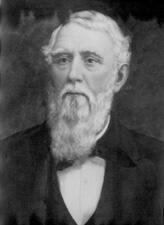
Here you will find contact information for Representative Luke Pryor, including email address, phone number, and mailing address.
| Name | Luke Pryor |
| Position | Representative |
| State | Alabama |
| District | 8 |
| Party | Democratic |
| Status | Former Representative |
| Term Start | January 1, 1880 |
| Term End | March 3, 1885 |
| Terms Served | 2 |
| Born | July 5, 1820 |
| Gender | Male |
| Bioguide ID | P000557 |
About Representative Luke Pryor
Luke Pryor (July 5, 1820 – August 5, 1900) was an American lawyer, planter, and Democratic politician who served as a U.S. Representative and U.S. Senator from Alabama during the late nineteenth century. He was born in 1820 in Alabama to Luke Pryor and Ann Batte Lane. His father’s first marriage had been to Martha Scott, a sister of General Winfield Scott, linking the family to one of the most prominent military figures of the era. Among his siblings was John Benjamin Pryor, who became a noted racehorse trainer based in Natchez, Mississippi. Pryor spent virtually his entire life in Alabama and became closely associated with Limestone County and the town of Athens.
Pryor studied law in his youth and was admitted to the bar in 1841. By the time of the 1850 United States Census, his occupation was recorded as “lawyer,” reflecting his professional standing in the community. In addition to his legal practice, he became a substantial landholder and planter. He lived for approximately forty years at Sugar Creek Plantation near Athens, Alabama, which served as his principal residence and the center of his agricultural and social life. The Pryor House, built in 1836 and located in Limestone County, later came to be recognized as a historic building associated with his family and the broader history of the region.
Like many members of the antebellum Southern planter class, Luke Pryor was an enslaver. The 1840 Census for his father’s household recorded six free Black children under the age of ten, as well as one enslaved male child under ten and an older enslaved woman between fifty-five and one hundred years old. By 1850, Luke Pryor himself was recorded as enslaving thirty-nine people ranging in age from four months to seventy years. On the 1860 Census, only two enslaved people were listed in his household, indicating a significant change in the scale of his direct involvement in slavery on the eve of the American Civil War. The Civil War began on April 12, 1861, and slavery in the United States was not fully abolished until the ratification of the Thirteenth Amendment in 1865, a period that encompassed the prime years of Pryor’s adult life and shaped the political and social environment in which he operated.
Pryor married Isabella Virginia Harris, and together they had eight children, all born in Alabama. His family life was rooted in the same region where he practiced law and managed his plantation, and his long residence at Sugar Creek Plantation made him a prominent local figure. Through his legal work, agricultural interests, and family connections, he became part of the Democratic political establishment that dominated Alabama in the decades before and after the Civil War.
Luke Pryor’s national political career included service in both houses of Congress. He served as a Representative from Alabama in the United States Congress from 1879 to 1885, completing two terms as a member of the House of Representatives. A Democrat, he represented the interests of his Alabama constituents during a significant period in American history, as the nation grappled with the aftermath of Reconstruction, the reordering of Southern society, and emerging industrial and economic changes. In the House, Pryor participated in the legislative process and contributed to debates and policymaking that reflected the priorities of his district and party during the late 1870s and early 1880s.
In addition to his House service, Pryor briefly served in the United States Senate. Following the death of Senator George S. Houston, he was appointed to fill the resulting vacancy and sat as a U.S. senator from Alabama from January 7 to November 23, 1880. His tenure in the Senate was temporary, ending when a successor was elected to complete the term, but it placed him among the relatively small number of Alabamians who have served in both chambers of Congress. Throughout his congressional service, he remained aligned with the Democratic Party, which at that time was consolidating its control over Southern politics in the post-Reconstruction era.
After leaving Congress in 1885, Pryor returned to his life in Alabama, where he continued to reside at Sugar Creek Plantation near Athens. He lived there for the remainder of his life, maintaining his connections to the local community and to the legal and agricultural pursuits that had long defined his career. Luke Pryor died on August 5, 1900, and was interred at City Cemetery in Athens, Alabama. His grave and the historic Pryor House in Limestone County stand as tangible reminders of his role in the political and social history of nineteenth-century Alabama.