Representative Luther Badger
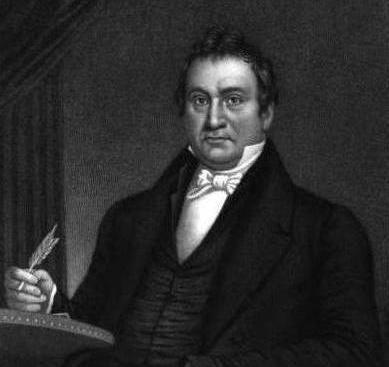
Here you will find contact information for Representative Luther Badger, including email address, phone number, and mailing address.
| Name | Luther Badger |
| Position | Representative |
| State | New York |
| District | 23 |
| Party | Adams |
| Status | Former Representative |
| Term Start | December 5, 1825 |
| Term End | March 3, 1827 |
| Terms Served | 1 |
| Born | April 10, 1785 |
| Gender | Male |
| Bioguide ID | B000023 |
About Representative Luther Badger
Luther Badger (April 10, 1785 – October 30, 1868) was an American lawyer, militia officer, and politician from New York who served one term in the United States House of Representatives as a member of the Adams Party. He was born in Partridgefield, Berkshire County, Massachusetts, the son of Lemuel and Sabra (Smith) Badger. In 1786, when he was still an infant, his family moved to New York, settling on a farm on the bank of the Susquehanna River in what later became Harpursville, Broome County. Growing up in this rural setting along the Susquehanna, Badger experienced the frontier conditions of upstate New York in the early national period, which would shape his later professional and public life.
Badger pursued his education at Hamilton-Oneida Academy (later Hamilton College) in Clinton, New York, where he studied for two years but did not graduate. During this period, he supported himself in part by teaching in the common schools, an experience that reflected both the limited formal educational opportunities of the era and his early engagement with public service. His time at the academy provided him with a classical and legal foundation that prepared him for the study of law, even though he left without a degree.
In 1807, Badger began reading law in the office of William Eager in Jamesville, New York, marking the start of his legal training. In 1810, he advanced his studies by entering the law office of Randall & Wattles in New Hartford, New York, a more established legal practice that further refined his professional skills. He married Eunice Wells in 1811, and the following year, in 1812, he was admitted to the bar. Badger then commenced the practice of law in Jamesville, where he built a local legal career. He continued in active legal practice there until 1824, when he retired from the bar and turned his attention to other pursuits.
Alongside his legal work, Badger had a substantial career in the New York State Militia. He first joined the militia as a sergeant major and, in 1812, was promoted to quartermaster, a position of responsibility for supplies and logistics. Over the ensuing years he rose steadily in rank, ultimately becoming a brigadier general in 1819. From 1820 to 1827 he served as judge advocate of the 27th Brigade of Infantry, overseeing legal matters within the brigade. He retired from military service in 1827. His militia career, which spanned the period of the War of 1812 and its aftermath, contributed to his public standing and complemented his emerging role in civic and political life.
Badger entered national politics as a supporter of President John Quincy Adams and the Adams Party during the fracturing of the Democratic-Republican coalition. Elected as an Adams man to the 19th United States Congress, he represented New York’s twenty-third congressional district and served from March 4, 1825, to March 3, 1827. During this single term in the House of Representatives, he participated in the legislative process at a time of significant national debate over internal improvements, economic policy, and the evolving party system. As a member of the Adams Party representing New York, he contributed to the democratic process and represented the interests of his constituents during a pivotal period in American political realignment. After the conclusion of his term, he did not return to Congress.
Following his service in Congress, Badger engaged in mercantile pursuits, reflecting a common pattern among early nineteenth-century professionals who combined law, commerce, and public office. In 1832, he returned to his old home in Harpursville, Broome County, and resumed the practice of law, reestablishing himself as a local attorney. His legal expertise and prior public experience led to his appointment as District Attorney of Broome County, a position he held from 1847 to 1849. In this role he was responsible for prosecuting criminal cases on behalf of the state, further cementing his reputation as a public servant. He resigned as district attorney in 1849 and subsequently resumed private practice in Jordan, New York, in Onondaga County.
In his personal life, after the death of his first wife, Badger remarried. On August 28, 1845, he married Betsey (Dimock) Avery, who was the sister of Davis Dimock Jr., a Pennsylvania politician and member of Congress. This marriage linked Badger to another family active in public affairs and extended his connections beyond New York into neighboring states. He continued to reside and practice law in Jordan during his later years, remaining a figure of local prominence.
Luther Badger died on October 30, 1868, in Jordan, Onondaga County, New York. He was buried in Jordan Cemetery. His long life spanned from the early years of the American republic through the Civil War era, and his varied career as lawyer, militia officer, congressman, and local prosecutor reflected the multifaceted public roles often undertaken by early nineteenth-century American professionals.