Representative Luther Alexander Johnson
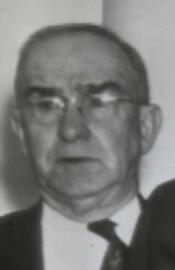
Here you will find contact information for Representative Luther Alexander Johnson, including email address, phone number, and mailing address.
| Name | Luther Alexander Johnson |
| Position | Representative |
| State | Texas |
| District | 6 |
| Party | Democratic |
| Status | Former Representative |
| Term Start | December 3, 1923 |
| Term End | July 17, 1946 |
| Terms Served | 12 |
| Born | October 29, 1875 |
| Gender | Male |
| Bioguide ID | J000159 |
About Representative Luther Alexander Johnson
Luther Alexander Johnson (October 29, 1875 – June 6, 1965) was a Democratic Representative from Texas who served twelve consecutive terms in the United States House of Representatives from 1923 to 1946. His long tenure in Congress spanned a transformative period in American history, including the Roaring Twenties, the Great Depression, the New Deal era, and the Second World War, during which he played an active role in the legislative process and in representing the interests of his Texas constituents.
Johnson was born in Corsicana, Navarro County, Texas, where he attended the local public schools. He pursued legal studies at Cumberland University in Lebanon, Tennessee, receiving his LL.B. degree in 1896. That same year he was admitted to the bar and returned to his hometown of Corsicana to commence the practice of law. Early in his legal career he served as attorney for the Central Texas Grocery Company and The Royall Coffee Company, establishing himself as a capable businessman-lawyer in the commercial life of Central Texas.
Johnson quickly moved into public service through legal office. He served as prosecuting attorney of Navarro County from 1898 to 1902, gaining experience in criminal law and local governance. He then became district attorney of the thirteenth judicial district of Texas, holding that position from 1904 to 1910. These prosecutorial roles enhanced his reputation as a diligent public servant and provided a foundation for his later political career at the state and national levels.
Active in Democratic Party politics, Johnson served as a delegate to the Democratic National Convention in 1916, participating in the national party’s deliberations during the Woodrow Wilson administration. He further solidified his standing in Texas politics by serving as chairman of the Democratic State convention in 1920. These roles within the party apparatus helped propel him to national office and reflected his alignment with the dominant Democratic currents in Texas during the early twentieth century.
Johnson was elected as a Democrat to the Sixty-eighth Congress and to the eleven succeeding Congresses, serving in the U.S. House of Representatives from March 4, 1923, until his resignation on July 17, 1946. Throughout his twelve terms, he participated fully in the democratic process, contributing to debates and legislation on domestic and foreign policy. A confidential 1943 analysis of the House Foreign Affairs Committee by Isaiah Berlin for the British Foreign Office described him as a well-disposed farmer and capable businessman, a typical southern Democrat who stood staunchly behind the administration’s foreign policies and supported most New Deal measures, with some reservations on labor issues. Berlin characterized Johnson as strongly independent and strongly American, traditionally pro-British, and likely to support the administration’s postwar policies. Johnson was noted in particular for having made one of the most eloquent speeches in support of the unamended Lend-Lease Powers Act during World War II.
In his legislative work, Johnson became especially prominent for his role in the development of federal communications policy. He was most famous for his part in the passage of the Radio Act of 1927, which established a regulatory framework for radio broadcasting in the United States. In congressional debate he warned that American thought and American politics would be largely at the mercy of those who operated broadcasting stations, and cautioned that if a single selfish group were permitted to dominate stations throughout the country, “then woe be to those who dare to differ with them” (67 Cong. Rec. 5558 (1926)). His advocacy reflected a concern for the public interest in emerging mass media and helped shape the legal structure that governed radio in the early twentieth century.
Upon leaving Congress, Johnson continued his public service in the federal judiciary. In July 1946, President Harry S. Truman appointed him a judge of the United States Tax Court. He held this office from July 1946 until his retirement in September 1956, adjudicating complex tax matters and contributing to the development of federal tax jurisprudence. After retiring from the bench, he returned to Corsicana, where he resumed a quieter life in the community that had been the center of his personal and professional activities.
In his personal life, Johnson married Turner Read on July 19, 1899. The couple had two children and maintained a lifelong membership in the Westminster Presbyterian Church (USA) in Corsicana, where Johnson served as a ruling elder. He was also associated with several civic and fraternal organizations, including Kappa Sigma, Lions Clubs International, and the Independent Order of Odd Fellows, reflecting his engagement in community and social affairs beyond his formal public offices. Johnson died in Corsicana on June 6, 1965, and was interred in Oakwood Cemetery, closing a long life marked by legal practice, political leadership, and federal judicial service.