Representative Luther Martin Kennett
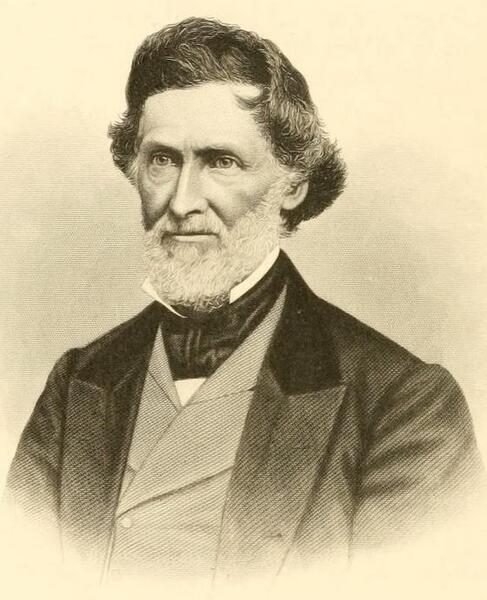
Here you will find contact information for Representative Luther Martin Kennett, including email address, phone number, and mailing address.
| Name | Luther Martin Kennett |
| Position | Representative |
| State | Missouri |
| District | 1 |
| Party | Independent |
| Status | Former Representative |
| Term Start | December 3, 1855 |
| Term End | March 3, 1857 |
| Terms Served | 1 |
| Born | March 15, 1807 |
| Gender | Male |
| Bioguide ID | K000119 |
About Representative Luther Martin Kennett
Luther Martin Kennett (March 15, 1807 – April 12, 1873) was a U.S. Representative from Missouri and mayor of the City of St. Louis. He was born in Falmouth, Pendleton County, Kentucky, where he attended private schools. As a young man he entered public service early, working as county clerk of Pendleton County in 1822 and 1823, and then as county clerk of Campbell County, Kentucky, in 1824. These early clerical positions introduced him to local government administration and public affairs.
In 1825 Kennett moved west to St. Louis, Missouri, which was then an emerging commercial center on the Mississippi River. There he found employment in a mercantile establishment, gaining experience in trade and business at a time when St. Louis was rapidly expanding as a hub for river traffic and frontier commerce. His health later declined, and he spent several years in Europe on account of ill health before returning to St. Louis in 1849. Upon his return he became involved in the city’s growing transportation and railroad interests, reflecting the broader mid-nineteenth-century push to link the Mississippi Valley with the interior and the Pacific coast.
Kennett’s business activities led to his service as vice president of the Pacific Railroad Company, one of the earliest railroad enterprises organized to extend rail lines westward from St. Louis. He also served as president of the St. Louis & Iron Mountain Railroad for a period in 1853, further cementing his role in the development of regional rail infrastructure. These positions placed him at the center of efforts to modernize transportation in Missouri and to promote economic growth through improved connections between St. Louis, the interior of the state, and markets beyond.
Kennett entered municipal politics as a member of the Whig Party and was elected mayor of St. Louis, serving from 1850 to 1853. His mayoralty coincided with a period of rapid urban growth, increased immigration, and significant public works in the city. As mayor, he presided over St. Louis during years when issues of public health, infrastructure, and law and order were increasingly pressing for a burgeoning river city. His simultaneous prominence in both municipal government and railroad development made him a notable civic leader in antebellum St. Louis.
Building on his local reputation, Kennett was elected as an Opposition Party candidate to the Thirty-fourth Congress, serving as a U.S. Representative from Missouri from March 4, 1855, to March 3, 1857. The Opposition Party, composed largely of former Whigs and others opposed to the dominant Democratic Party, reflected the fluid and shifting party alignments of the 1850s as sectional tensions over slavery and national expansion intensified. During his single term in Congress, Kennett represented Missouri at a time of growing national discord, although he was unsuccessful in his bid for reelection in 1856.
After losing his reelection campaign, Kennett retired to his home near St. Louis and withdrew from active political life. He continued to be associated with the community he had helped to shape through his earlier roles in city government and railroad development. In 1867 he again left the United States and moved to Europe, where he took up residence abroad during the post–Civil War years.
Kennett remained in Europe for the rest of his life. He died in Paris, France, on April 12, 1873. His remains were returned to the United States and interred in Bellefontaine Cemetery in St. Louis, a burial ground for many of the city’s prominent nineteenth-century figures. His legacy in Missouri is reflected in the naming of the city of Kennett, Missouri, in his honor, commemorating his contributions to the state’s political and economic development.