Senator Luther Strange
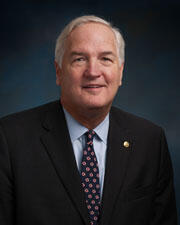
Here you will find contact information for Senator Luther Strange, including email address, phone number, and mailing address.
| Name | Luther Strange |
| Position | Senator |
| State | Alabama |
| Party | Republican |
| Status | Former Representative |
| Term Start | February 9, 2017 |
| Term End | January 3, 2018 |
| Terms Served | 1 |
| Born | March 1, 1953 |
| Gender | Male |
| Bioguide ID | S001202 |
About Senator Luther Strange
Luther Johnson Strange III (born March 1, 1953) is an American lawyer and Republican politician who represented Alabama in the United States Senate from 2017 to 2018. He was appointed to the Senate to fill the vacancy created when Senator Jeff Sessions resigned upon his confirmation as Attorney General of the United States. Over a career spanning private legal practice and public office, Strange served as Alabama’s 47th Attorney General, sought statewide office multiple times, and played a prominent role in multistate litigation on environmental, regulatory, and social issues.
Strange was born on March 1, 1953, and grew up in the South before embarking on a legal and political career. Details of his early life prior to higher education are less extensively documented in public sources than his later professional activities, but his formative years preceded his entry into law and Republican politics, in which he would become a significant figure in Alabama’s statewide offices and, briefly, in the United States Senate.
Strange entered public life after establishing himself as an attorney. Before holding statewide office, he became active in Republican politics in Alabama and emerged as a candidate for high office in the mid-2000s. In 2006, he ran for Lieutenant Governor of Alabama. In that race, he defeated George Wallace Jr. in the Republican primary, a notable intra-party victory given Wallace’s well-known political name in the state. Strange then faced Democratic incumbent Jim Folsom Jr. in the general election and was defeated, marking his first statewide general election campaign. He remained a visible figure in state Republican circles and returned to the statewide ballot in subsequent election cycles.
In 2010, Strange sought the office of Attorney General of Alabama. He challenged incumbent Republican Attorney General Troy King in the Republican primary and defeated him, an unusual instance of a sitting statewide Republican officeholder losing renomination. Strange then advanced to the general election, where he faced Democratic nominee James Anderson. He won that contest and took office as the 47th Attorney General of Alabama in 2011. He was reelected in 2014, having again been a candidate for public office in that cycle, and served as attorney general until 2017. During his tenure, he was the coordinating counsel for the Gulf Coast states in the extensive litigation arising from the Deepwater Horizon oil spill, a role that placed him at the center of complex, multistate environmental and economic claims. In April 2014, he argued before the Supreme Court of the United States in Lane v. Franks, a case involving a whistleblower who reported corruption within the Alabama community college system; this was his first argument before the Court. That same year, in March 2014, he brought Alabama into a lawsuit filed by Missouri Attorney General Chris Koster challenging California’s egg production standards under Proposition 2 (2008). In October 2014, U.S. District Judge Kimberly Mueller dismissed the lawsuit, holding that Alabama and the other plaintiff states lacked standing because they were representing the interests of egg farmers rather than a substantial segment of their populations.
As Alabama Attorney General, Strange frequently engaged in litigation against the federal government. He sued over a joint U.S. Department of Justice and U.S. Department of Education directive on the treatment of transgender students in public schools and challenged changes in the U.S. Department of the Interior’s calculation of Gulf of Mexico offshore drilling royalties. He also joined a multistate suit against the Obama administration’s Clean Power Plan, aligning with other Republican attorneys general in opposition to federal environmental regulations. Along with several of his Republican counterparts, Strange publicly and legally supported ExxonMobil when the company came under investigation by other state attorneys general over whether it had failed to disclose material information about climate change, a controversy that drew national attention. Ideologically, Strange was an opponent of same-sex marriage and expressed disagreement with the Supreme Court’s 2015 decision in Obergefell v. Hodges, which recognized a constitutional right to same-sex marriage. His tenure also coincided with the investigation, conviction, and removal from office of Alabama House Speaker Mike Hubbard in June 2016; Strange recused himself from direct involvement in that case and appointed Van Davis as Acting Attorney General to oversee the prosecution. In addition to his litigation portfolio, Strange rose within national Republican circles, serving as chairman of the Republican Attorneys General Association in 2016 and 2017.
The path to Strange’s Senate service began with the announced nomination of Senator Jeff Sessions as United States Attorney General in November 2016, which created an impending vacancy in one of Alabama’s U.S. Senate seats. Governor Robert J. Bentley would fill the seat by appointment once Sessions was confirmed. Many Alabama political figures expressed interest in the appointment and in running in the eventual special election. On November 22, 2016, Strange revealed to Fred Barnes of The Weekly Standard his intention to seek the Senate seat regardless of whether he was appointed by the governor, calling a run “the right thing for me to do.” He filed paperwork for a potential special election one week later and publicly announced his candidacy on December 6, 2016, stating that voters would make the ultimate decision and that he looked forward to making his case to the people of Alabama to “keep protecting and fighting for our conservative values.” By the end of that year, his new Strange for Senate federal campaign committee reported raising more than $309,000 in the few weeks leading up to the December 31 filing deadline.
Governor Bentley began interviewing candidates for the Senate appointment in mid-December 2016. A list released by the governor’s office and reported by the Montgomery Advertiser on December 22 included Chief Justice Roy Moore; Representative Mo Brooks; Senate President Pro Tempore Del Marsh; state Senators Arthur Orr, Cam Ward, Bill Hightower, and Trip Pittman; Representative Bill Poole; Associate Justice Glenn Murdock; Representative Connie Rowe; and former Representative Perry Hooper, among others. Strange was not interviewed until the following week, alongside U.S. Representative Martha Roby, Representative Gary Palmer, Tim James (son of former Governor Fob James), state Senator Greg Reed, and state Senator Phil Williams. Additional interviews before January 6 included Representative Robert Aderholt, Revenue Commissioner Julie P. Magee, and Department of Economic and Community Affairs Director Jim Byard, bringing the total number of interviews to 20, the limit the governor had set. In January 2017, Bentley announced that the special election for the remainder of Sessions’s term would not take place until 2018, effectively granting the eventual appointee a year of incumbency, though the election was ultimately scheduled for December 2017. On February 2, 2017, Bentley named six finalists for the appointment: U.S. Representative Robert Aderholt, Senate President Pro Tempore Del Marsh, Attorney General Luther Strange, Bentley appointee Jim Byard, state Representative Connie Rowe, and former state Representative Perry Hooper Jr.
After Sessions was confirmed as U.S. Attorney General in February 2017, Governor Bentley appointed Luther Strange to the United States Senate to fill the resulting vacancy. Strange took office as a U.S. Senator from Alabama in 2017 and served until 2018, completing one appointed term in the 115th Congress. During this period, he participated in the legislative process, represented the interests of Alabama constituents, and aligned with the Republican majority on key policy issues, including judicial confirmations and major legislative initiatives of the early Trump administration. His service in Congress occurred during a significant period in American political history marked by partisan realignment, contentious national debates over health care, immigration, and regulatory policy, and the early years of the Trump presidency. As a member of the Senate, Strange contributed to committee work and floor deliberations, taking part in the democratic process at the federal level.
Strange sought to retain his Senate seat in the special election called to fill the remainder of Sessions’s term. In the Republican primary, he advanced to a runoff against former Alabama Supreme Court Chief Justice Roy Moore. In the initial primary, Strange finished second to Moore, and in the runoff held on September 26, 2017, Moore again defeated Strange, receiving 54.89 percent of the vote to Strange’s 45.11 percent. On December 12, 2017, Democratic nominee and former U.S. Attorney Doug Jones defeated Moore in the general election, becoming Strange’s successor in the Senate. Strange’s appointed term concluded in early 2018, ending his brief tenure in Congress. Following his departure from the Senate, he returned to private life and the practice of law, his public record defined by his years as Alabama’s attorney general, his leadership among Republican attorneys general, and his short but notable service in the United States Senate.