Representative Lyman Eddy Barnes
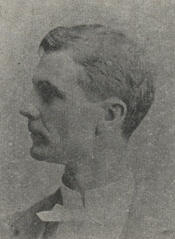
Here you will find contact information for Representative Lyman Eddy Barnes, including email address, phone number, and mailing address.
| Name | Lyman Eddy Barnes |
| Position | Representative |
| State | Wisconsin |
| District | 8 |
| Party | Democratic |
| Status | Former Representative |
| Term Start | August 7, 1893 |
| Term End | March 3, 1895 |
| Terms Served | 1 |
| Born | June 30, 1855 |
| Gender | Male |
| Bioguide ID | B000159 |
About Representative Lyman Eddy Barnes
Lyman Eddy Barnes Sr. (June 30, 1855 – January 16, 1904) was an American lawyer and Democratic politician from Appleton, Wisconsin, who served one term as a United States Representative from Wisconsin’s 8th congressional district during the Fifty-third Congress (1893–1895). A member of the Democratic Party, he contributed to the legislative process during a significant period in American history and represented the interests of his constituents in northeastern Wisconsin. Earlier in his career, he served as district attorney of Outagamie County, Wisconsin, and was a prominent figure in the legal and political life of Appleton.
Barnes was born in Weyauwega, Waupaca County, Wisconsin, the son of William W. Barnes and Lucy Eddy (née Thomas). He was raised in Wisconsin and attended the public schools in Oshkosh, Wisconsin. At the age of seventeen he began the study of law in the Oshkosh law office of Earl P. Lynch and Charles Barber, receiving his initial legal training through apprenticeship. Seeking a formal legal education, he later enrolled in the law department of Columbia College in New York City, where he completed his studies and graduated in 1876.
Immediately after his graduation in 1876, Barnes returned to Wisconsin and settled in Appleton. He was admitted to the bar there later that year and commenced practice as an attorney. In 1877 he formed a law partnership with John Goodland, a well-known Appleton lawyer and the father of future Wisconsin governor Walter Samuel Goodland. Barnes’s early legal career in Appleton established him as a capable practitioner. In 1880 he married Helen Byrd Conkey, daughter of Theodore Conkey, a prominent Appleton pioneer and businessman. The couple had at least five children, and Barnes’s family and professional life were closely tied to the Appleton community.
In 1882 Barnes moved to Rockledge, Florida, where he continued to practice law for approximately five years. His time in Florida broadened his professional experience, but he ultimately chose to return to Wisconsin, resettling in Appleton around the late 1880s. Reestablished in his former community, he resumed his legal practice and soon entered public service. In 1890 he was elected district attorney of Outagamie County, Wisconsin, a position that enhanced his public profile and provided a platform for higher office within the Democratic Party.
In 1892, following a statewide redistricting based on the 1890 United States census, Barnes sought the Democratic nomination for the United States House of Representatives in the newly configured Wisconsin 8th congressional district. Because none of Wisconsin’s incumbent U.S. representatives resided in the new district, the seat was open and highly contested. Barnes faced former U.S. Representative Thomas R. Hudd for the Democratic nomination. The two men traveled throughout the district, courting delegates at county conventions. A serious controversy arose from the Portage County convention, where Hudd accused Barnes’s supporters of buying delegates. Several prominent Democrats pledged not to support Barnes if the allegations were proven, and the dispute damaged Barnes’s standing at the subsequent Brown County convention, leaving Hudd in a seemingly strong position. Nevertheless, at the district convention Barnes secured the nomination on the first ballot.
In the 1892 general election, Barnes ran against Republican candidate Henry A. Frambach, a Kaukauna businessman and former mayor. Frambach’s campaign emphasized his Civil War service, particularly his record at the Battle of Shiloh, and Republican allies attempted to exploit lingering tensions from the Democratic nominating contest by suggesting that Hudd would support Frambach over Barnes. Despite these efforts, Barnes won the election with approximately 53 percent of the vote. He entered Congress on March 4, 1893, as part of the Democratic majority in the Fifty-third Congress and served until March 3, 1895. During his single term, he participated in the legislative work of the House of Representatives at a time marked by the Panic of 1893 and contentious national debates over economic and monetary policy, representing the interests of his constituents from Wisconsin’s 8th district.
Barnes sought reelection in 1894 and was renominated by the Democratic Party without opposition, reflecting his standing within the party despite the increasingly difficult national environment for Democrats. In the general election he faced Republican Edward S. Minor, a former state senator and then mayor of Sturgeon Bay, Wisconsin. The campaign was bitter and highly partisan, with newspapers on both sides trading accusations and innuendo. The broader political climate had turned sharply against the Democratic Party following the economic downturn associated with the Panic of 1893, and this shift contributed to Barnes’s defeat. He lost the 1894 election, receiving only about 42 percent of the vote, and his congressional service concluded with the end of the Fifty-third Congress in March 1895.
After leaving Congress, Barnes returned to Appleton and resumed the practice of law. He did not again seek elective office but remained engaged in public affairs and the legal profession. In 1903 he was appointed to a state court commission charged with redrawing Wisconsin’s judicial circuits, a role that reflected continued confidence in his legal judgment and understanding of the state’s judicial needs. His work on this commission was among his last public responsibilities.
In early January 1904, Barnes suffered an acute attack of appendicitis and was taken to St. Elizabeth’s Hospital in Appleton, where he underwent surgery on January 10. In the days immediately following the operation his condition initially appeared to improve, but on January 15 his health deteriorated sharply; he developed a high fever, severe pain, and delirium. Lyman Eddy Barnes died in the early morning hours of January 16, 1904, at St. Elizabeth’s Hospital in Appleton, Wisconsin. He was interred at Riverside Cemetery in Appleton, leaving a record of service as a lawyer, county prosecutor, and one-term Democratic member of the United States House of Representatives from Wisconsin.