Senator Lyman Trumbull
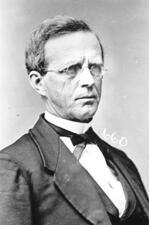
Here you will find contact information for Senator Lyman Trumbull, including email address, phone number, and mailing address.
| Name | Lyman Trumbull |
| Position | Senator |
| State | Illinois |
| Party | Republican |
| Status | Former Representative |
| Term Start | December 3, 1855 |
| Term End | March 3, 1873 |
| Terms Served | 3 |
| Born | October 12, 1813 |
| Gender | Male |
| Bioguide ID | T000392 |
About Senator Lyman Trumbull
Lyman Trumbull served as a Senator from Illinois in the United States Congress from 1855 to 1873. A member of the Republican Party, Lyman Trumbull contributed to the legislative process during 3 terms in office.
Lyman Trumbull’s service in Congress occurred during a significant period in American history. As a member of the Senate, Lyman Trumbull participated in the democratic process and represented the interests of constituents.
Lyman Trumbull (October 12, 1813 – June 25, 1896) was an American lawyer, judge, and politician who represented the state of Illinois in the United States Senate from 1855 to 1873. Trumbull was a leading abolitionist attorney and key political ally to Abraham Lincoln and authored several landmark pieces of reform as chair of the Judiciary Committee during the American Civil War and Reconstruction era, including the Confiscation Acts, which created the legal basis for the Emancipation Proclamation; the Thirteenth Amendment to the United States Constitution, which abolished chattel slavery; and the Civil Rights Act of 1866, which led to the Fourteenth Amendment to the United States Constitution. Born in Colchester, Connecticut to a prominent political family, Trumbull studied law in Greenville, Georgia, before moving to Illinois to establish a practice and enter politics. He served as the Illinois Secretary of State from 1841 to 1843 and as a justice of the Illinois Supreme Court from 1848 to 1853. As an attorney, Trumbull successfully argued the case Jarrot v. Jarrot, which de facto banned slavery in the state. In 1855, Trumbull was elected to the Senate as the choice of the anti-slavery faction of the Illinois legislature, defeating Abraham Lincoln. Lincoln endorsed Trumbull for the election; the two soon became leading members of the new Republican Party. After the American Civil War, Trumbull was a leading moderate Republican, favoring both civil rights for freed slaves and reconciliation with the South. In the 1868 impeachment trial of President Andrew Johnson, Trumbull voted to acquit Johnson despite heavy pressure from other Republican senators. He broke with the Republicans in 1870 and was a candidate for the presidency at the 1872 Liberal Republican convention. After returning to the Democratic Party, Trumbull left the Senate in 1873 to establish a legal practice in Chicago. Before his death in 1896, he became a member of the Populist Party and represented Eugene V. Debs before the Supreme Court of the United States.