Representative Lynden Evans
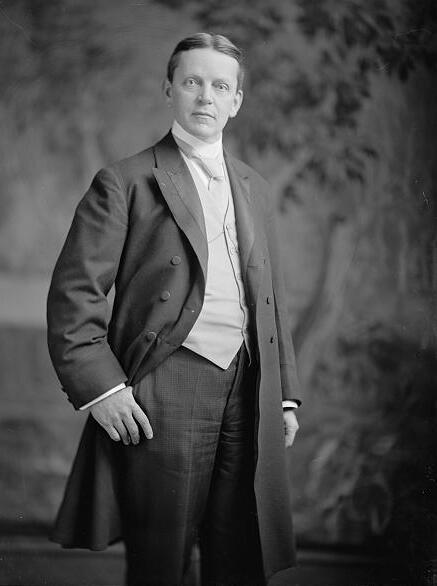
Here you will find contact information for Representative Lynden Evans, including email address, phone number, and mailing address.
| Name | Lynden Evans |
| Position | Representative |
| State | Illinois |
| District | 9 |
| Party | Democratic |
| Status | Former Representative |
| Term Start | April 4, 1911 |
| Term End | March 3, 1913 |
| Terms Served | 1 |
| Born | June 28, 1858 |
| Gender | Male |
| Bioguide ID | E000252 |
About Representative Lynden Evans
Lynden Evans (June 28, 1858 – May 6, 1926) was a U.S. Representative from Illinois and a member of the Democratic Party who served one term in the United States House of Representatives from 1911 to 1913. He was born in LaSalle, LaSalle County, Illinois, where he attended the local public schools. Among his siblings was Frederic Dahl Evans, with whom he shared a Midwestern upbringing during a period of rapid industrial and social change in the post–Civil War United States.
After completing his early education in LaSalle, Evans enrolled at Knox College in Galesburg, Illinois, an institution known for its liberal arts curriculum and engagement with public affairs. He was graduated from Knox College in 1882. Following his graduation, he pursued a career in education, teaching in the schools of La Salle and Evanston, Illinois. His experience as a teacher reflected an early commitment to public service and intellectual development, and it preceded his decision to enter the legal profession.
Evans subsequently studied law and prepared for admission to the bar, aligning his professional trajectory with the expanding legal and commercial life of late nineteenth-century Chicago. He was admitted to the bar in 1885 and commenced the practice of law in Chicago, Illinois. As a practicing attorney, he built a career in a city that was emerging as a major national center of commerce, transportation, and industry, and his legal work placed him in the midst of the corporate and economic issues that would later inform his public service.
In addition to his private practice, Evans contributed to legal education. In 1907 and 1908 he served as a lecturer on corporation law at the John Marshall Law School in Chicago. In that role he provided instruction on the legal frameworks governing corporate organization and activity at a time when questions of corporate power, regulation, and economic reform were central to public debate. His academic work complemented his legal practice and enhanced his reputation in the field of corporate law.
Evans entered national politics as a Democrat and was elected to the Sixty-second Congress as a Representative from Illinois, serving from March 4, 1911, to March 3, 1913. His service in Congress occurred during a significant period in American history, marked by the Progressive Era’s focus on political reform, economic regulation, and social justice. As a member of the House of Representatives, Lynden Evans participated in the legislative process and represented the interests of his Illinois constituents, contributing to debates and decisions in a Congress that addressed issues such as tariff policy, antitrust enforcement, and governmental reform. His term reflected both his legal background and his party’s broader national agenda during the administration of President William Howard Taft.
In 1912 Evans stood for reelection to the Sixty-third Congress but was an unsuccessful candidate. The election took place in a politically turbulent year that saw a major split in the national Republican Party and the rise of the Progressive (“Bull Moose”) movement, developments that reshaped electoral dynamics in Illinois and across the country. After his single term in office concluded on March 3, 1913, he returned to private life and resumed the practice of law in Chicago.
Evans continued his legal career in Chicago from the end of his congressional service until his death. He remained part of the city’s legal community during a period that encompassed World War I and the early 1920s, years in which Chicago’s economic and social landscape continued to evolve. Lynden Evans died in Chicago, Illinois, on May 6, 1926. He was interred in Graceland Cemetery, a resting place for many of the city’s notable figures, reflecting his standing as a lawyer, educator, and former Member of Congress from Illinois.