Senator Lyndon Baines Johnson
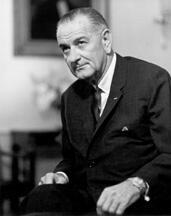
Here you will find contact information for Senator Lyndon Baines Johnson, including email address, phone number, and mailing address.
| Name | Lyndon Baines Johnson |
| Position | Senator |
| State | Texas |
| Party | Democratic |
| Status | Former Representative |
| Term Start | January 5, 1937 |
| Term End | January 3, 1961 |
| Terms Served | 8 |
| Born | August 27, 1908 |
| Gender | Male |
| Bioguide ID | J000160 |
About Senator Lyndon Baines Johnson
Lyndon Baines Johnson served as a Senator from Texas in the United States Congress from 1937 to 1961. A member of the Democratic Party, Lyndon Baines Johnson contributed to the legislative process during 8 terms in office.
Lyndon Baines Johnson’s service in Congress occurred during a significant period in American history. As a member of the Senate, Lyndon Baines Johnson participated in the democratic process and represented the interests of constituents.
Lyndon Baines Johnson (; August 27, 1908 – January 22, 1973), also known as LBJ, was the 36th president of the United States, serving from 1963 to 1969. He became president after the assassination of John F. Kennedy, under whom he had served as the 37th vice president from 1961 to 1963. A Southern Democrat, Johnson previously represented Texas in Congress for over 23 years, first as a U.S. representative from 1937 to 1949, and then as a U.S. senator from 1949 to 1961. Born in Stonewall, Texas, Johnson worked as a teacher and a congressional aide before winning election to the U.S. House of Representatives in 1937. In 1948, he was controversially declared the winner in the Democratic primary for the U.S. Senate election in Texas before winning the general election. He became Senate majority whip in 1951, Senate Democratic leader in 1953 and majority leader in 1954. Senator Kennedy bested Johnson and his other rivals for the 1960 Democratic presidential nomination before surprising many by offering to make Johnson his vice presidential running mate. The Kennedy–Johnson ticket won the general election. Vice President Johnson assumed the presidency in 1963, after President Kennedy was assassinated. The following year, Johnson won reelection to the presidency in a landslide, winning the largest share of the popular vote for the Democratic Party in history, and the highest for any candidate since the advent of widespread popular elections in the 1820s. Johnson’s domestic policy agenda known as the Great Society was aimed at expanding civil rights, public broadcasting, access to health care, aid to education and the arts, urban and rural development, consumer protection, environmentalism, and public services. He sought to create better living conditions for low-income Americans by spearheading the war on poverty. As part of these efforts, Johnson signed the Social Security Amendments of 1965, which resulted in the creation of Medicare and Medicaid. Johnson made the Apollo program a national priority; enacted the Higher Education Act of 1965 which established federally insured student loans; and signed the Immigration and Nationality Act of 1965 which laid the groundwork for U.S. immigration policy today. Johnson’s civil rights legacy was shaped by the Civil Rights Act of 1964, the Voting Rights Act of 1965, and the Civil Rights Act of 1968. Due to his domestic agenda, Johnson’s presidency marked the peak of modern American liberalism in the 20th century. Johnson’s foreign policy prioritized containment of communism, including in the ongoing Vietnam War. Johnson began his presidency with near-universal support, but his approval declined throughout his presidency as the public became frustrated with both the Vietnam War and domestic unrest, including race riots, increasing public skepticism with his reports and policies (coined the credibility gap), and increasing crime. Johnson initially sought to run for re-election in 1968; however, following disappointing results in the New Hampshire primary, he withdrew his candidacy. Johnson retired to his Texas ranch and kept a low public profile until he died in 1973. Public opinion and academic assessments of Johnson’s legacy have fluctuated greatly. Historians and scholars rank Johnson in the upper tier for his accomplishments regarding domestic policy. His administration passed many major laws that made substantial changes in civil rights, health care, welfare, and education. Conversely, Johnson is heavily criticized for his foreign policy, namely escalating American involvement in the Vietnam War.