Senator Lynn Joseph Frazier
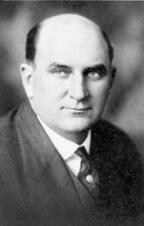
Here you will find contact information for Senator Lynn Joseph Frazier, including email address, phone number, and mailing address.
| Name | Lynn Joseph Frazier |
| Position | Senator |
| State | North Dakota |
| Party | Republican |
| Status | Former Representative |
| Term Start | December 3, 1923 |
| Term End | January 3, 1941 |
| Terms Served | 3 |
| Born | December 21, 1874 |
| Gender | Male |
| Bioguide ID | F000354 |
About Senator Lynn Joseph Frazier
Lynn Joseph Frazier (December 21, 1874 – January 11, 1947) was an American educator, farmer, and politician who served as the 12th governor of North Dakota from 1917 until his recall in 1921 and later represented North Dakota in the United States Senate from 1923 to 1941. A member of the Republican Party and a leading figure in the state’s Nonpartisan League movement, he was the first American governor ever successfully recalled from office; the only other American governor to be recalled is Gray Davis of California, who was removed in 2003.
Frazier was born in Medford, Steele County, Minnesota, on December 21, 1874. When he was six years old, his family moved to what would become the state of North Dakota, then a largely agricultural frontier. He grew up in this rural environment and was educated in the public schools, graduating from Grafton High School in 1892. He went on to attend Mayville Normal School, a teacher-training institution, from which he graduated in 1895. Originally intending to become a physician, he enrolled at the University of North Dakota, where he completed his bachelor’s degree with honors. The unexpected deaths of his father and brother, however, compelled him to abandon his medical ambitions and return home to take over the family farm, a turning point that firmly rooted his life and outlook in the concerns of small farmers.
Before entering public office, Frazier worked as both a farmer and a schoolteacher, occupations that connected him closely with the agrarian and educational communities of North Dakota. His experience in the classroom and on the land shaped his later political agenda, particularly his support for reforms benefiting farmers and rural residents. As the Nonpartisan League (NPL) rose to prominence in North Dakota politics in the 1910s, Frazier emerged as one of its most visible standard-bearers. Running within the Republican Party but aligned with the NPL’s program of state-backed economic institutions for farmers, he became a central figure in the state’s progressive-era political realignment.
Frazier’s major political career began with his election as governor of North Dakota in 1916. After winning the Republican primary as the Nonpartisan League candidate, he was elected governor that year with approximately 79 percent of the vote, a landslide that reflected the strength of the NPL among the state’s farmers and rural voters. Taking office in 1917, he quickly moved to implement the League’s reform program. His administration oversaw the establishment of the Bank of North Dakota and the North Dakota Mill and Elevator, state-owned enterprises designed to provide fair credit and marketing opportunities for farmers and to reduce the influence of out-of-state financial and grain interests. These institutions became enduring legacies of the Nonpartisan League’s success and remain notable features of North Dakota’s economic landscape.
During his tenure as governor, Frazier was re-elected twice, in 1918 and 1920, underscoring his continued popularity in the early years of his administration. He also confronted significant labor and economic challenges. In response to the 1919 national coal strike, Frazier took an unusual and assertive approach: he declared martial law, took over coal mines operating under contracts with the United Mine Workers of America, and ran them in cooperation with the union to ensure continued production and heating fuel for the state’s residents. However, during his third term an agricultural depression struck North Dakota, severely affecting farmers and fueling opposition to the NPL’s policies. Economic distress, combined with organized resistance from private business interests, led to a private-business-led grassroots movement that pressed for his removal. In 1921, Frazier became the first governor in United States history to be successfully recalled from office. In the subsequent recall election, Independent Voters Association member Ragnvald Nestos was chosen to succeed him.
Despite this setback, Frazier’s political career continued on the national stage. In 1922 he was elected to the United States Senate from North Dakota, again running as the Nonpartisan League candidate on the Republican ticket. He took his seat in the Senate on March 4, 1923, and served three consecutive terms, remaining in office until January 3, 1941. As a U.S. Senator from North Dakota from 1923 to 1941, Frazier participated in the legislative process during a significant period in American history that encompassed the later years of the Progressive Era, the Roaring Twenties, the Great Depression, and the early phase of World War II in Europe. A member of the Republican Party, he contributed to national debates over agriculture, economic relief, and New Deal policies, and he represented the interests of his largely rural constituents in matters of farm credit, price supports, and federal assistance. His long tenure reflected sustained support at home, although in 1940 he lost his bid for renomination in the Republican primary to William Langer, another prominent North Dakota political figure, bringing his Senate service to a close in January 1941.
In his personal life, Frazier was married twice. He married Lottie J. Stafford on November 26, 1903, and the couple had five children. Their marriage lasted until her death on January 14, 1935. Two years later, in 1937, he married Catherine Paulson. After leaving the Senate, Frazier lived quietly away from public office, remaining a figure of historical interest in North Dakota for his role in the Nonpartisan League and his pioneering recall experience. He died in Riverdale, Maryland, on January 11, 1947, at the age of 72. Lynn Joseph Frazier was buried in Hoople Cemetery in Hoople, North Dakota. His life and career have been the subject of historical study, including the biography “The Gentleman from North Dakota: Lynn J. Frazier” by Nels Erickson, published by the State Historical Society of North Dakota in 1986, and he has been portrayed in media such as the 1984 Nebraska Public Television documentary “Plowing up a Storm,” which examined the Nonpartisan League and its impact on Midwestern politics.