Representative Lynn Rivers
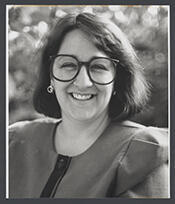
Here you will find contact information for Representative Lynn Rivers, including email address, phone number, and mailing address.
| Name | Lynn Rivers |
| Position | Representative |
| State | Michigan |
| District | 13 |
| Party | Democratic |
| Status | Former Representative |
| Term Start | January 4, 1995 |
| Term End | January 3, 2003 |
| Terms Served | 4 |
| Born | December 19, 1956 |
| Gender | Female |
| Bioguide ID | R000281 |
About Representative Lynn Rivers
Lynn Nancy Rivers (née Carruthers; born December 19, 1956) is an American politician, lawyer, and educator from Michigan who served as a Democratic Representative in the United States House of Representatives from 1995 to 2003. Over the course of four terms in Congress, she contributed to the legislative process during a significant period in American history, participating in the democratic process and representing the interests of her Michigan constituents.
Rivers was born in Au Gres, Michigan, and grew up in Arenac County. She graduated from Au Gres-Sims High School in 1975. The day after her high school graduation she married, and by the age of 21 she was the mother of two children. In her early adulthood she also confronted serious mental health challenges, being diagnosed with bipolar disorder at about age 21, an experience that would later shape her public advocacy and distinguish her as a rare national officeholder who spoke openly about mental illness.
After several years devoted to family and local community life, Rivers pursued higher education. She enrolled at the University of Michigan, where she studied biological anthropology and earned a Bachelor of Arts degree in 1987. She then continued her education in law, attending Wayne State University Law School in Detroit and receiving her Juris Doctor degree in 1992. Her legal training, combined with her background in the sciences and her personal experience with mental health issues, informed her later work on public policy and legislative matters.
Rivers began her public service at the local level in Ann Arbor, Michigan. From 1984 to 1992 she served as a trustee on the Ann Arbor Board of Education, where she gained experience in governance, budgeting, and education policy. Building on her local service, she was elected to the Michigan House of Representatives, serving as a member of the state legislature from 1993 to 1994. In the state house she developed a reputation as an engaged and progressive lawmaker, which helped position her for a successful run for national office.
In 1994, Rivers sought election to the United States House of Representatives as a Democrat from Michigan’s 13th Congressional District. During this first campaign for federal office she spoke publicly about her long struggle with bipolar disorder, becoming one of the first major-party congressional candidates to address such a diagnosis openly. She was elected to the 104th Congress and subsequently re-elected to the three succeeding Congresses, serving from January 3, 1995, to January 3, 2003. As a member of the House of Representatives, Rivers participated actively in the legislative process and represented the interests of her district during a period marked by divided government, major budget debates, and significant policy discussions on health care, education, and technology. While in Congress she spoke about her condition on the House floor, making her the first openly bipolar member of Congress. In recognition of her advocacy on mental health issues, the National Mental Health Association named her “Legislator of the Year” in 1998.
Rivers’s congressional career was significantly affected by redistricting following the 2000 United States Census. Michigan lost a congressional district in the reapportionment, and much of her 13th District was merged into a newly drawn 15th District that also included the territory of long-time Democratic incumbent John Dingell. Faced with the elimination of her existing district, Rivers chose to run in the Democratic primary for the new 15th District. The redrawn district was more than 65 percent new to her, and despite her established record in Congress she lost the primary to Dingell by 18 points, bringing her four-term tenure in the House to a close on January 3, 2003.
Immediately after leaving Congress, Rivers turned to teaching and public education about government and politics. She taught political science at the University of Michigan and at Washtenaw Community College, drawing on her legislative experience at the local, state, and federal levels. Through her academic work and continued public engagement, she remained involved in civic life, contributing to the understanding of American government, mental health policy, and the role of women in the United States House of Representatives.