Representative Lynn Schenk
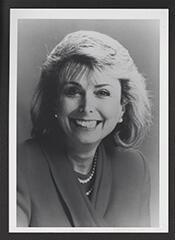
Here you will find contact information for Representative Lynn Schenk, including email address, phone number, and mailing address.
| Name | Lynn Schenk |
| Position | Representative |
| State | California |
| District | 49 |
| Party | Democratic |
| Status | Former Representative |
| Term Start | January 5, 1993 |
| Term End | January 3, 1995 |
| Terms Served | 1 |
| Born | January 5, 1945 |
| Gender | Female |
| Bioguide ID | S000119 |
About Representative Lynn Schenk
Lynn Alice Schenk (born January 5, 1945) is an American politician, lawyer, and public official from California. A member of the Democratic Party, she served one term in the United States House of Representatives from 1993 to 1995, representing California’s 49th congressional district. During her tenure in Congress, she contributed to the legislative process at a time of significant political change nationally, participating in the democratic process and representing the interests of her San Diego–area constituents.
Schenk was born in 1945 in the Bronx, New York, the daughter of a Holocaust survivor. She attended public schools in both the Bronx and Los Angeles after her family moved to California, and she graduated from Alexander Hamilton High School in Los Angeles. She went on to earn a Bachelor of Arts degree from the University of California, Los Angeles (UCLA) in 1967. Schenk then enrolled at the University of San Diego School of Law, where she received her Juris Doctor in 1970 at a time when there were only three other women in her law school class. She pursued postgraduate study in international law at the London School of Economics, further broadening her legal and policy background.
Early in her legal career, Schenk became known as a trailblazer for women’s rights in the legal profession and public life. In 1971, together with two other female lawyers, she challenged a longstanding gender barrier at The Grant Grill in the U.S. Grant Hotel in downtown San Diego, where women were prohibited from dining during lunch. A male friend made a reservation, and the three women entered unescorted and ordered mock turtle soup, a specialty not available in the hotel’s other restaurants. Although staff initially tried to push them out, they were ultimately seated, and they continued to return until the restaurant removed its “No women before 3 p.m.” sign. The following year, in 1972, Schenk and other women formed the Lawyers Club of San Diego, which worked for passage of the Equal Rights Amendment and on broader women’s rights issues, cementing her reputation as an advocate for gender equality and civil rights.
Schenk’s early professional career included significant roles in both federal and state government as well as the private sector. She served as a White House Fellow, working under Vice Presidents Nelson A. Rockefeller and Walter Mondale, gaining experience in national policy and executive branch operations. She later served as a deputy attorney general in the office of the California Attorney General and worked as an attorney for San Diego Gas & Electric, where she developed expertise in regulatory and corporate matters. California Governor Jerry Brown appointed her deputy secretary, and later secretary, of the California Business, Transportation and Housing Agency, a position she held from 1977 until 1983. In that capacity she oversaw major aspects of the state’s economic development, transportation infrastructure, and housing policy. When Brown chose not to seek a third term as governor, Schenk returned to private legal practice.
Schenk also pursued elective office at the local level before entering Congress. In 1984, she ran as the Democratic candidate for the San Diego County Board of Supervisors against Republican Susan Golding. Late in the campaign, Golding’s campaign allegedly distributed literature accusing Schenk of financial irregularities. Schenk lost the race by a margin of 45 percent to 55 percent, but she subsequently sued Golding for slander and won a $150,000 judgment, underscoring her willingness to defend her reputation and integrity in public life.
In 1992, following redistricting after the 1990 United States census, Schenk sought and won the Democratic nomination for the newly drawn 49th congressional district, which covered most of San Diego and encompassed much of the area previously represented by six-term Republican Representative Bill Lowery. In the general election she was elected to the U.S. House of Representatives, becoming the first Democrat in 40 years to represent that area in Congress. Schenk served in the 103rd Congress from January 3, 1993, to January 3, 1995. As a member of the House of Representatives, she participated in the legislative process during a significant period in American political history, representing her constituents’ interests on national issues and contributing to the work of the Democratic majority in the early years of the Clinton administration. In the 1994 election cycle, amid a strong national shift toward the Republican Party, she was defeated for reelection by Brian Bilbray, the Republican mayor of Imperial Beach.
After leaving Congress, Schenk remained active in California politics and public service. In 1998, she ran unsuccessfully for Attorney General of California. That same year she joined the administration of Governor Gray Davis, serving in various senior positions in state government, including as Chief of Staff from 1998 until Davis was recalled in 2003. In that role she was widely regarded as a strong and exacting administrator who “didn’t suffer fools” and was credited with shaping much of the centrist policy direction of the Davis administration. Following her service in the governor’s office, she returned to corporate law practice while continuing to play an influential role in state policy and Democratic politics.
Schenk has held numerous leadership and board positions in civic, scientific, and infrastructure organizations. She has served on the Board of Trustees of The Scripps Research Institute, contributing to the governance of one of the nation’s leading biomedical research institutions. She was appointed to the board of the California High-Speed Rail Authority in 2003 by Governor Gray Davis and has remained a member of that body, helping to oversee the planning and development of the state’s high-speed rail system. By 2011 she was serving as vice chairperson of the Authority, reflecting her ongoing involvement in major transportation and infrastructure initiatives in California. She has continued to practice corporate law and remains active in both California and national politics.
In recognition of her pioneering role in law, politics, and women’s rights, Schenk was nominated and inducted into the San Diego County Women’s Hall of Fame in 2012 as a “Trailblazer,” an honor reserved for women who have paved the way for others or were the first in their field. The annual Women’s Hall of Fame induction is co-hosted by the Women’s Museum of California, the Commission on the Status of Women, the University of California San Diego Women’s Center, and San Diego State University Women’s Studies. Her career has also been noted in broader historical treatments of women and Jewish Americans in Congress, including the publication “Women in Congress, 1917–2006,” prepared by the Office of History and Preservation of the U.S. House of Representatives.
Schenk was married to C. Hugh Friedman, a longtime professor at the University of San Diego School of Law, until his death on January 29, 2013. She resides in San Diego, California. Throughout her career and into later life, she has remained engaged in public affairs, law, and policy, reflecting a lifelong commitment to public service, women’s equality, and the civic life of California.