Representative Madison Roswell Smith
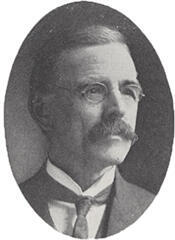
Here you will find contact information for Representative Madison Roswell Smith, including email address, phone number, and mailing address.
| Name | Madison Roswell Smith |
| Position | Representative |
| State | Missouri |
| District | 13 |
| Party | Democratic |
| Status | Former Representative |
| Term Start | December 2, 1907 |
| Term End | March 3, 1909 |
| Terms Served | 1 |
| Born | July 9, 1850 |
| Gender | Male |
| Bioguide ID | S000588 |
About Representative Madison Roswell Smith
Madison Roswell Smith (July 9, 1850 – June 18, 1919) was a United States Representative from Missouri and a member of the Democratic Party who served one term in the U.S. House of Representatives from 1907 to 1909. His congressional service took place during a significant period in American history, when the nation was grappling with issues of industrialization, economic reform, and expanding federal authority, and he participated in the legislative process as the elected representative of his Missouri constituents.
Smith was born on a farm near Glenallen, Bollinger County, Missouri, on July 9, 1850. He attended local public schools in rural Missouri, reflecting the limited but growing educational opportunities in the post–Civil War era. Seeking further education, he enrolled at Central College in Fayette, Missouri, where he pursued higher studies that prepared him for a professional career. His early life on a farm and his subsequent education provided him with firsthand knowledge of both agricultural and small-town concerns that would later inform his public service.
After completing his studies, Smith taught school for a time, combining teaching with the study of law. He was admitted to the bar in 1874, marking the formal beginning of his legal career. In 1877 he began the practice of law at Marble Hill, Missouri, establishing himself as an attorney in Bollinger County. His abilities as a lawyer and his growing local reputation led to his election as prosecuting attorney of Bollinger County, a position he held from 1878 to 1882. In this role he was responsible for representing the county in criminal matters, gaining experience in public administration and legal advocacy.
Smith’s political career advanced when he was elected to the Missouri state Senate, where he served from 1884 to 1888. During his tenure in the state legislature, he participated in shaping state policy in a period of regional development and political realignment. At the conclusion of his term, he declined to be a candidate for re-election, choosing instead to pursue other professional opportunities. He subsequently served as editor of reports for the St. Louis Court of Appeals for four years, a position that involved the careful review, organization, and publication of appellate decisions. He eventually resigned from that post, but his work there underscored his legal expertise and familiarity with Missouri jurisprudence.
In addition to his state-level service, Smith became active in national party politics. He served as a delegate to the Democratic National Convention in 1896, a landmark convention at which the party debated monetary policy and nominated William Jennings Bryan for the presidency. He again served as a delegate to the Democratic National Convention in 1912, participating in the convention that nominated Woodrow Wilson. These roles reflected his standing within the Democratic Party in Missouri and his engagement with national political issues.
Smith was elected as a Democrat to the Sixtieth Congress and served in the U.S. House of Representatives from March 4, 1907, to March 3, 1909. As a member of the House of Representatives, he contributed to the legislative process during one full term in office, representing the interests of his Missouri constituents in Washington, D.C. His service coincided with the Progressive Era, when Congress addressed questions of regulation, economic reform, and federal oversight. In 1908 he was an unsuccessful candidate for re-election to the Sixty-first Congress, bringing his congressional career to a close after a single term.
Following his departure from Congress, Smith turned to the financial sector in St. Louis. He organized the Federal Trust Company of St. Louis and served as its secretary from 1909 to 1912, participating in the management of a financial institution during a period of significant change in American banking and commerce. His experience in law, politics, and business positioned him for diplomatic service when the Democratic Party returned to national power.
In 1912 Smith was appointed United States Minister to Haiti, a diplomatic post he held from 1912 until his resignation in 1914. As minister, he represented U.S. interests in the Caribbean nation during a time of regional instability and increasing American involvement in Caribbean affairs. After resigning from the diplomatic service and returning to the United States, he resumed the practice of law, this time in Farmington, Missouri, where he continued his professional work in his later years.
Madison Roswell Smith died in Farmington, Missouri, on June 18, 1919. He was interred in the Masonic Cemetery in Farmington, reflecting his ties to the local community. Many decades after his death, his memory and resting place drew renewed attention when, in 2011, his tombstone was desecrated. As of 2017, this act of vandalism remained an unsolved crime under continuing police investigation, an unusual postscript to the life of a lawyer, legislator, businessman, and diplomat who had served Missouri and the United States in multiple capacities.