Representative Mae Ella Nolan
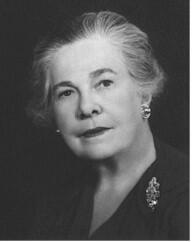
Here you will find contact information for Representative Mae Ella Nolan, including email address, phone number, and mailing address.
| Name | Mae Ella Nolan |
| Position | Representative |
| State | California |
| District | 5 |
| Party | Republican |
| Status | Former Representative |
| Term Start | April 11, 1921 |
| Term End | March 3, 1925 |
| Terms Served | 2 |
| Born | September 20, 1886 |
| Gender | Female |
| Bioguide ID | N000125 |
About Representative Mae Ella Nolan
Mae Ella Nolan (née Hunt; September 20, 1886 – July 9, 1973) was an American politician and member of the Republican Party who served as a Representative from California in the United States Congress from 1921 to 1925. She became the fourth woman to serve in the United States Congress, the first woman elected to Congress from California, the first woman to chair a congressional committee, and the first woman to fill a House seat left vacant by her husband’s death. Her service in Congress occurred during a significant period in American history, and as a member of the House of Representatives she participated in the legislative process and represented the interests of her constituents.
Mae Ella Hunt was born in San Francisco, California, on September 20, 1886. She was educated in the public schools of San Francisco and later attended St. Vincent’s Convent. To prepare for clerical and business work, she enrolled at Ayres Business College in San Francisco, where she received training that would later support her involvement in political and public life. Raised in the Catholic faith, she would later become the first woman of Catholic background to serve in the federal legislature.
In 1913, Mae Ella Hunt married John Ignatius Nolan, a Republican labor leader and politician who represented a San Francisco district in the United States House of Representatives. Through her marriage, she became closely acquainted with political affairs and the concerns of organized labor in California. John I. Nolan built a reputation as a pro-labor Republican, and Mae Nolan became familiar with his legislative priorities, which would shape her own agenda when she later entered Congress.
John I. Nolan died on November 18, 1922, near the end of the 67th Congress. At the time of his death, he had already been re-elected to the 68th Congress, which was scheduled to convene on March 4, 1923. To address the resulting vacancies, two special elections were held on January 23, 1923: one to fill the remainder of his term in the 67th Congress and another to fill his seat in the 68th Congress. Republican Mae Nolan won both special elections to replace her husband, becoming the first woman elected to her husband’s seat in Congress in what came to be known as “widow’s succession.” She thus served in the House of Representatives from January 23, 1923, to March 3, 1925, completing the unexpired term of the 67th Congress and serving the full term of the 68th Congress. In this capacity, she contributed to the legislative process during two terms in office.
Nolan’s election made her the fourth woman elected to Congress, following Jeannette Rankin of Montana, Alice Mary Robertson of Oklahoma, and Winnifred Sprague Mason Huck of Illinois. All four were Republicans and served in the House of Representatives. As the first woman elected to Congress from California and the first Catholic woman to serve in the federal legislature, Nolan’s tenure marked a series of milestones in the evolving role of women in national politics. She took her seat in the House in 1923, at a time when women had only recently secured the right to vote nationwide.
In Congress, Mae Nolan largely supported and continued her late husband’s legislative program, particularly on issues of minimum wage, child labor laws, and education. She depended heavily on support from organized labor in her district and focused her efforts on improving wages and working conditions. Nolan advocated lowering taxes on workers while increasing taxes on wealthy Americans, and she supported a bonus for World War I veterans, aligning herself with popular postwar demands for compensation to former servicemembers. Although she had previously been associated with the Woman Suffrage Committee, she distanced herself from the organized women’s suffrage movement after entering Congress, dropping her membership and emphasizing instead her ties to labor constituencies, which were often skeptical of suffrage organizations.
During her term, Nolan became the first woman to chair a congressional committee when she was appointed chairman of the Committee on Expenditures in the Post Office Department. In this role she oversaw investigations and reviews of spending and administrative practices within the Post Office, a major federal department in the early twentieth century. Despite her trailblazing status and the national attention her election attracted, she chose not to seek renomination in 1924 to the 69th Congress. Explaining her decision to retire from elective office, she remarked that “Politics is entirely too masculine to have any attraction for feminine responsibilities,” signaling her intention to return to private life after completing her husband’s unfinished work.
In her later years, Mae Nolan moved from San Francisco to Sacramento, California. She lived there in relative obscurity compared to the prominence of her years in Congress, but her service remained a notable early example of women’s participation in federal legislative office and of the pattern of widows succeeding their husbands in Congress—a path followed by dozens of women after her. Mae Ella Nolan died in Sacramento on July 9, 1973, at the age of 86. She was interred at Holy Cross Cemetery in Colma, California, where she was buried alongside her husband, John I. Nolan, whom she survived by more than fifty years.