Representative Maecenas Eason Benton
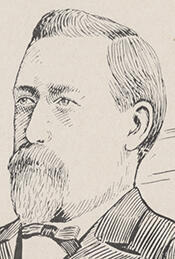
Here you will find contact information for Representative Maecenas Eason Benton, including email address, phone number, and mailing address.
| Name | Maecenas Eason Benton |
| Position | Representative |
| State | Missouri |
| District | 15 |
| Party | Democratic |
| Status | Former Representative |
| Term Start | March 15, 1897 |
| Term End | March 3, 1905 |
| Terms Served | 4 |
| Born | January 29, 1848 |
| Gender | Male |
| Bioguide ID | B000397 |
About Representative Maecenas Eason Benton
Maecenas Eason Benton (January 29, 1848 – April 27, 1924) was a U.S. Representative from Missouri and a member of the Democratic Party who served four terms in the United States House of Representatives from 1897 to 1905. He was the father of Thomas Hart Benton, who gained national prominence as a painter of the American Scene, and the nephew of Thomas Hart Benton, one of the first two United States Senators elected from Missouri.
Benton was born near Dyersburg, Dyer County, Tennessee, on January 29, 1848. He attended two west Tennessee academies in his youth, receiving a classical preparatory education before pursuing higher studies. He later attended Saint Louis University in St. Louis, Missouri, furthering his academic training in advance of a legal career. During the American Civil War he served in the Confederate States Army, an experience that shaped his early adulthood in the tumultuous years of national conflict and reconstruction.
After the war, Benton prepared for the legal profession and enrolled at the Cumberland School of Law at Cumberland University in Lebanon, Tennessee. He was graduated from Cumberland in 1870 and was admitted to the bar shortly thereafter. Benton then moved to Neosho, Newton County, Missouri, where he commenced the practice of law. On June 24, 1888, he married Elizabeth Wise of Waxahachie, Texas, establishing a family that would later include his son, the artist Thomas Hart Benton.
Benton quickly became active in public affairs and local legal administration. He served as prosecuting attorney of Newton County, Missouri, from 1878 to 1884, gaining prominence as a courtroom advocate and public official. His performance in that role led to his appointment as United States attorney, a federal post he held from March 1885 to July 1889. In addition to his legal and prosecutorial work, he participated in national party politics and served as a delegate to the 1896 Democratic National Convention, reflecting his growing influence within the Democratic Party in Missouri.
Elected as a Democrat to the Fifty-fifth, Fifty-sixth, Fifty-seventh, and Fifty-eighth Congresses, Benton represented Missouri in the U.S. House of Representatives from March 4, 1897, to March 3, 1905. His service in Congress occurred during a significant period in American history marked by industrial expansion, the Spanish–American War, and the early Progressive Era. As a member of the House of Representatives, he participated in the legislative process, contributed to debates on national policy, and represented the interests of his Missouri constituents. A committed Democrat, he took part in the democratic process at the federal level for four consecutive terms. In 1904 he was an unsuccessful candidate for re-election to the Fifty-ninth Congress, bringing his congressional career to a close in March 1905.
Following his departure from Congress, Benton resumed the practice of law in Neosho, Missouri, returning to the profession in which he had first established his public reputation. He remained engaged in state affairs and later served as a member of the Missouri state constitutional conventions in 1922 and 1924, contributing to the revision and modernization of the state’s fundamental law. His continued public service in these conventions underscored his long-standing involvement in legal and governmental reform at both the state and national levels.
Maecenas Eason Benton died of throat cancer in Springfield, Missouri, on April 27, 1924. He was interred in Odd Fellows Cemetery in Neosho, Missouri, the community that had been central to his legal and political life. His legacy endures not only through his congressional service and his role in Missouri public affairs, but also through his family’s cultural contributions; he is depicted in the 1939 Neosho centennial mural in Neosho, painted by James Duard Marshall, a testament to his lasting place in the civic memory of the region.