Representative Magnus Johnson
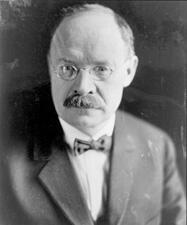
Here you will find contact information for Representative Magnus Johnson, including email address, phone number, and mailing address.
| Name | Magnus Johnson |
| Position | Representative |
| State | Minnesota |
| District | At-Large |
| Party | Farmer-Labor |
| Status | Former Representative |
| Term Start | December 3, 1923 |
| Term End | January 3, 1935 |
| Terms Served | 2 |
| Born | September 19, 1871 |
| Gender | Male |
| Bioguide ID | J000161 |
About Representative Magnus Johnson
Magnus Johansen (1 December 1886 – 23 September 1970) was a Norwegian Labour Party politician who also appears in historical records as Magnus Johnson, a name under which he is noted as having served as a Representative from Minnesota in the United States Congress from 1923 to 1935. He was born in Drammen, Norway, and came of age during a period of industrialization and labor mobilization that shaped his later political commitments. His early life in Drammen placed him within a growing urban environment where questions of workers’ rights, social welfare, and democratic participation were increasingly prominent in public debate.
Details of Johansen’s formal education are not extensively documented in the surviving public record, but his subsequent political career indicates that he was deeply engaged with the labor movement and the organizational life of his community. His alignment with the Labour Party in Norway reflected a broader ideological commitment to social democracy and the interests of working people, a commitment that paralleled the agrarian and labor-oriented politics of the Farmer-Labor movement in the United States with which he was also associated as Magnus Johnson.
Johansen’s early political activity is most clearly visible at the municipal level. Under the name Arntzen in some records, he served as a member of the executive committee of the Tune municipality council from 1913 to 1940, a tenure that spanned the First World War, the interwar period, and the beginning of the Second World War. In this role he participated in local governance over issues such as municipal services, local infrastructure, and social welfare measures. After a hiatus from the executive committee, he returned to local politics as a member of the Tune municipality council from 1963 to 1967, demonstrating a long-standing engagement with public service that extended over five decades.
At the national level in Norway, Johansen advanced from local to parliamentary politics as a representative of the Labour Party. He was first elected as a deputy representative to the Norwegian Parliament (Storting) from Østfold for the term 1928–1930, and again for the term 1934–1936. In this capacity he served as an alternate member of the Storting, participating in legislative work when called upon and helping to represent the interests of his constituency during a period marked by economic instability and the global repercussions of the Great Depression. His work as a deputy representative provided him with experience in national legislative processes and party deliberations.
Johansen’s parliamentary career culminated in his election as a full representative to the Norwegian Parliament from Østfold in 1937. He was re-elected on one occasion, thereby serving through a critical era that included the late 1930s and the years surrounding the German occupation of Norway during the Second World War. As a Labour Party representative, he contributed to debates and decisions on social policy, economic regulation, and the reconstruction and modernization efforts that characterized Norwegian politics in the mid-twentieth century. His service in the Storting placed him among the cohort of Labour politicians who helped consolidate Norway’s postwar social-democratic framework.
In parallel, historical congressional records identify Magnus Johnson as having served as a Representative from Minnesota in the United States Congress from 1923 to 1935, affiliated with the Farmer-Labor Party. In that capacity, he is noted as having contributed to the legislative process during two terms in office, participating in the democratic process and representing the interests of his constituents during a significant period in American history that included the agricultural crises and economic dislocation of the interwar years. As a member of the House of Representatives, he was associated with efforts to address the concerns of farmers and workers, consistent with the broader Farmer-Labor program.
In his later years, Johansen remained connected to public life through his continued service in Tune’s municipal council in the 1960s, even as his national parliamentary career had concluded. He lived through profound transformations in both Norwegian and international politics, from the pre–World War I era to the emergence of the modern welfare state. Magnus Johansen died on 23 September 1970, leaving a legacy as a long-serving Labour Party politician whose career encompassed local, national, and, in the historical record, transatlantic legislative service under the name Magnus Johnson.