Senator Mahlon Dickerson
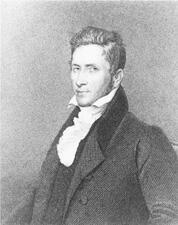
Here you will find contact information for Senator Mahlon Dickerson, including email address, phone number, and mailing address.
| Name | Mahlon Dickerson |
| Position | Senator |
| State | New Jersey |
| Party | Jackson |
| Status | Former Representative |
| Term Start | December 1, 1817 |
| Term End | March 3, 1833 |
| Terms Served | 3 |
| Born | April 17, 1770 |
| Gender | Male |
| Bioguide ID | D000308 |
About Senator Mahlon Dickerson
Mahlon Dickerson (April 17, 1770 – October 5, 1853) was an American lawyer, jurist, industrialist, and statesman who served as a justice of the Supreme Court of New Jersey, the seventh governor of New Jersey, a United States Senator from New Jersey, the 10th United States Secretary of the Navy, and a United States district judge of the United States District Court for the District of New Jersey. A member of the Jackson Party in his later political career, he contributed to the legislative process during three terms in the United States Senate, representing New Jersey during a significant period in early nineteenth-century American history.
Dickerson was born on April 17, 1770, in Hanover Neck, in the Province of New Jersey, British America. He was part of a politically active family; his brother Philemon Dickerson later served as a United States Representative from New Jersey and eventually succeeded him as judge of the United States District Court for the District of New Jersey. Educated initially by private tutors, Mahlon Dickerson received an Artium Baccalaureus degree in 1789 from the College of New Jersey (now Princeton University). He then read law and completed his legal training in 1793, preparing for a career in the legal profession at a time when the new nation’s institutions were still taking shape.
Admitted to the bar in 1793, Dickerson entered private legal practice in Morristown, New Jersey, where he practiced from 1793 to 1794 and again from 1794 to 1796. In 1794 he served as a private in the New Jersey Detached Militia, Second Regiment of Cavalry, during the Whiskey Rebellion, reflecting early involvement in the defense of federal authority. He moved to Philadelphia, Pennsylvania, where he continued in private practice from 1797 to 1810. While in Philadelphia he held a series of municipal and state positions: he served as a judge of the Mayor’s Court, was a member of the Philadelphia Common Council in 1799, acted as a commissioner of bankruptcy for the Commonwealth of Pennsylvania in 1802, served as adjutant general for Pennsylvania from 1805 to 1808, and was city recorder for Philadelphia from 1808 to 1810. Beginning in 1810, he also became a miner and iron manufacturer in Morris County, New Jersey, an enterprise he maintained for decades, from 1810 until his death in 1853.
Dickerson’s public career in New Jersey advanced rapidly after his return to the state. He was elected to the New Jersey General Assembly, serving from 1811 to 1813. In 1813 he was appointed a justice of the Supreme Court of New Jersey, serving on that court from 1813 to 1815, and during part of that time, from 1813 to 1814, he also served as reporter for the Supreme Court of New Jersey. He was elected the seventh governor of New Jersey and held the governorship from 1815 to 1817. His growing prominence in state affairs and his alignment with the Democratic-Republican Party positioned him for national office.
Dickerson was elected as a Democratic-Republican from New Jersey to the United States Senate in 1816 and took his seat on March 4, 1817. He was reelected in 1823 and served continuously until January 30, 1829, when he resigned. On that same date he was immediately reelected to fill the vacancy caused by the resignation of Senator Ephraim Bateman and continued to serve from January 30, 1829, to March 3, 1833. Over the course of these three Senate terms, he evolved politically from Democratic-Republican to Crawford Republican and ultimately to Jacksonian Democrat, reflecting the shifting party alignments of the era. During his Senate tenure he chaired several important committees: he was Chairman of the United States Senate Committee on the Library in the 15th Congress, Chairman of the Committee on Commerce and Manufactures in the 16th through 18th Congresses, and Chairman of the Committee on Manufactures in the 19th through 22nd Congresses. As a member of the Jackson Party and a leading figure on economic and manufacturing issues, he participated actively in the democratic process and represented the interests of his New Jersey constituents during a formative period in American political and economic development.
After leaving the Senate, Dickerson continued to play a significant role in both state and national affairs. In 1833 he served as vice president of the New Jersey Legislative Council. President Andrew Jackson initially selected him as minister to Russia, and Dickerson accepted the diplomatic appointment. However, upon his arrival in Washington, D.C., he learned that Jackson had instead decided to appoint him as the 10th United States Secretary of the Navy. He assumed that cabinet post in June 1834. President Martin Van Buren reappointed him, and he served as Secretary of the Navy from June 1834 to June 1838, overseeing naval administration during a period of technological and organizational transition for the service. In 1844 he was a delegate to the New Jersey Constitutional Convention, contributing to the revision of the state’s fundamental law.
Dickerson’s federal judicial service came late in his career. On July 14, 1840, President Martin Van Buren nominated him to a seat on the United States District Court for the District of New Jersey, vacated by Judge William Rossell. The United States Senate confirmed his nomination on July 21, 1840, and he received his commission on July 23, 1840. His tenure on the federal bench was brief; he resigned on February 16, 1841. His brother Philemon Dickerson would later succeed him in that judicial office, continuing the family’s influence in New Jersey’s legal and political life.
In addition to his public offices, Dickerson was active in learned and patriotic societies. In 1807 he was elected a member of the American Philosophical Society, reflecting recognition of his intellectual and civic standing. During the 1820s he belonged to the Columbian Institute for the Promotion of Arts and Sciences, a prestigious Washington society whose members included former Presidents Andrew Jackson and John Quincy Adams and many prominent figures in government, the military, medicine, and other professions. In 1833 he was admitted to the Society of the Cincinnati in the State of New Jersey, an organization composed of descendants and officers of the Revolutionary War, underscoring his connection to the founding generation and its legacy.
Mahlon Dickerson died on October 5, 1853, in Succasunna, Morris County, New Jersey. He was interred in the Presbyterian Cemetery in Succasunna. His long career as lawyer, judge, governor, senator, cabinet officer, and federal judge, together with his industrial activities and learned-society memberships, left a lasting imprint on New Jersey and the nation. In recognition of his contributions, the Mahlon Dickerson Reservation, a 3,200-acre public park in Morris County, New Jersey, bears his name.