Representative Mahlon Morris Garland
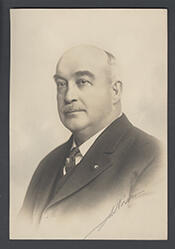
Here you will find contact information for Representative Mahlon Morris Garland, including email address, phone number, and mailing address.
| Name | Mahlon Morris Garland |
| Position | Representative |
| State | Pennsylvania |
| District | -1 |
| Party | Republican |
| Status | Former Representative |
| Term Start | December 6, 1915 |
| Term End | March 3, 1921 |
| Terms Served | 3 |
| Born | May 4, 1856 |
| Gender | Male |
| Bioguide ID | G000068 |
About Representative Mahlon Morris Garland
Mahlon Morris Garland (May 4, 1856 – November 19, 1920) was an American labor leader and Republican politician who served as a member of the U.S. House of Representatives from Pennsylvania from 1915 to 1920. He represented his Pennsylvania district in three consecutive terms in Congress and was reelected to a fourth term, but died before the new session began. His congressional service occurred during a significant period in American history, and he participated actively in the legislative process and in representing the interests of his constituents.
Garland was born on May 4, 1856, in Pittsburgh, Pennsylvania. In his youth he moved with his parents to Alexandria, Pennsylvania. There he learned the trade of puddling and heating in the iron and steel industry, entering the industrial workforce that would shape his later career as a labor leader. His early experience in heavy industry provided him with firsthand knowledge of the conditions and concerns of workingmen in the mills and furnaces of western Pennsylvania.
As a young man, Garland joined the Amalgamated Association of Iron, Steel and Tin Workers, one of the most important labor organizations in the metal trades of the late nineteenth and early twentieth centuries. He rose through its ranks and ultimately became president of the organization, gaining prominence as a spokesman for industrial labor. His leadership in the Amalgamated Association brought him into wider public life and laid the foundation for his later roles in both local government and national labor affairs. In addition to his union responsibilities, he became involved in civic matters and was elected a member of the select council of Pittsburgh, serving in that municipal legislative body in 1886 and 1887.
Garland’s public service expanded beyond city government into federal administration. He was appointed by President William McKinley as the United States Collector of Customs (then called surveyor of customs) at Pittsburgh in 1898. He was reappointed to this post by President Theodore Roosevelt in 1902 and 1906 and by President William Howard Taft in 1910, serving continuously in that capacity until March 3, 1915. During these years he also held other positions of public trust and influence: he served as vice president of the American Federation of Labor, further solidifying his standing in the national labor movement, and he was a member of the Pittsburgh School Board and of the borough council of Edgewood, Pennsylvania, reflecting his engagement with local education and municipal governance.
In 1914, Garland was elected as a Republican to the Sixty-fourth Congress and took his seat in the U.S. House of Representatives on March 4, 1915. He was subsequently reelected to the Sixty-fifth and Sixty-sixth Congresses, serving continuously from 1915 to 1920. As a member of the House of Representatives during a period that encompassed World War I and its immediate aftermath, he contributed to the legislative process and participated in the democratic governance of the nation. Drawing on his background in industry and organized labor, he was particularly associated with issues affecting workers and the mining and manufacturing sectors of Pennsylvania.
During the Sixty-sixth Congress, Garland served as chairman of the United States House Committee on Mines and Mining. In this capacity he played a leading role in shaping legislation and oversight related to the mining industry, an area of vital importance to both his home state and the national economy. His committee chairmanship reflected the confidence of his colleagues in his expertise on industrial and labor matters and his ability to guide complex policy questions through the House.
Garland was reelected to the Sixty-seventh Congress, thereby securing a fourth consecutive term, but he did not live to take his seat. He died in office in Washington, D.C., on November 19, 1920, before the new session began. His death placed him among the members of the United States Congress who died in office in the first half of the twentieth century. Mahlon Morris Garland was interred at Woodlawn Cemetery in Pittsburgh, Pennsylvania, returning in death to the city where he had been born and where his long career in labor leadership and public service had begun.