Representative Mahlon Pitney
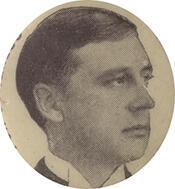
Here you will find contact information for Representative Mahlon Pitney, including email address, phone number, and mailing address.
| Name | Mahlon Pitney |
| Position | Representative |
| State | New Jersey |
| District | 4 |
| Party | Republican |
| Status | Former Representative |
| Term Start | December 2, 1895 |
| Term End | March 3, 1899 |
| Terms Served | 2 |
| Born | February 5, 1858 |
| Gender | Male |
| Bioguide ID | P000370 |
About Representative Mahlon Pitney
Mahlon R. Pitney IV (February 5, 1858 – December 9, 1924) was an American lawyer, jurist, and Republican politician who served as a Representative from New Jersey in the United States Congress from 1895 to 1899 and later as an associate justice of the Supreme Court of the United States from 1912 to 1922. He was born on February 5, 1858, in Morristown, New Jersey, into a family with deep colonial and Revolutionary-era roots. The American branch of the Pitney family dated back to about 1720, when two Scots, Johnathan and James Pitney, settled the Pitney farm in Mendham Township, New Jersey. James’s son, also named Mahlon Pitney, fought in the American Revolutionary War alongside George Washington. Mahlon Pitney IV was the son of Henry Cooper Pitney, a prominent New Jersey lawyer who later became a judge, and Sarah Louise (née Halsted) Pitney, and he grew up in an environment steeped in law, public service, and local prominence.
Pitney attended the College of New Jersey, now Princeton University, where he was a classmate of future President Woodrow Wilson. During his undergraduate years he was active in campus life and served as manager of the college baseball team. He graduated in 1879 and, following the common professional path of the era, read law in his father’s practice rather than attending a formal law school. Pitney passed the New Jersey bar examination in 1882 and established a private practice in Dover, New Jersey, where for a time he worked in partnership with his brother, John Oliver Halsted Pitney. In 1889 he returned to Morristown to assume control of his father’s law firm after Henry Pitney received a judicial appointment, thereby consolidating his own position in the local bar and community. In 1891 he married Florence Shelton; the couple had three children, and both of their sons attended Princeton University and entered the legal profession. Through his daughter Beatrice Pitney Lamb, a writer on political topics, Pitney became the maternal great-grandfather of actor Christopher Reeve; he was also Reeve’s step great-grandfather on the paternal side, as Reeve’s paternal grandmother later married Mahlon Pitney IV.
Pitney’s growing legal reputation and family political connections led him into elective office in the 1890s. In 1894 he ran as a Republican candidate for the United States House of Representatives from New Jersey’s 4th congressional district. He defeated the one-term Democratic incumbent Johnston Cornish and took his seat in the Fifty-fourth Congress on March 4, 1895. A member of the Republican Party, Pitney contributed to the legislative process during two terms in office, representing the interests of his New Jersey constituents during a significant period in American history marked by industrial expansion, labor unrest, and debates over monetary policy and tariffs. He was reelected in 1896 to the Fifty-fifth Congress and continued to participate actively in the work of the House of Representatives. During this period he also emerged as a key figure in state party affairs, serving as chairman of the 1895 New Jersey Republican convention, where he successfully pushed for the nomination of John W. Griggs as the party’s gubernatorial candidate. Seen as a rising star in state politics, Pitney harbored aspirations to become governor of New Jersey.
To strengthen his standing in state politics and move closer to his gubernatorial ambitions, Pitney resigned from the House before the completion of his second term in 1899 and sought election to the New Jersey Senate. He won a Senate seat in 1898 and quickly became a leading Republican voice in the state legislature. As party floor leader, he played a central role in organizing Republican control of the Senate after the 1900 election, and he later rose to the position of Senate President. Despite his prominence and his desire to become the state’s chief executive, his gubernatorial hopes were blocked when Governor Foster M. Voorhees favored another candidate as his successor. In 1901 Voorhees offered Pitney a seat on the New Jersey Supreme Court, a move that removed a potential political rival while preserving party unity. Pitney accepted and thus began a judicial career that would eventually carry him to the nation’s highest court.
Pitney served as an associate justice of the New Jersey Supreme Court for seven years before being elevated in 1908 to the post of Chancellor of New Jersey, the state’s highest judicial and equity office under the 1844 constitution. As chancellor he presided over the Court of Chancery and became known for decisions that reflected a conservative approach to labor disputes and a strong view of property and contract rights. One of his most controversial rulings in this period came in Jones Glass Co. v. Glass Bottle Blowers Association, in which he limited the ability of labor unions to prevent employers from hiring strikebreakers. This decision, among others, would later fuel progressive opposition to his nomination to the United States Supreme Court. Nonetheless, his judicial work in New Jersey solidified his reputation as a jurist of national stature and made him a logical candidate for federal judicial service in the eyes of Republican leaders.
On February 19, 1912, President William Howard Taft nominated Pitney to be an associate justice of the Supreme Court of the United States, succeeding Justice John Marshall Harlan. His nomination drew criticism from progressive Republicans and labor advocates, who objected to his record in cases such as Jones Glass Co., but the Senate confirmed him on March 13, 1912, by a vote of 50–26. Pitney took the judicial oath and was sworn into office on March 18, 1912. On the Supreme Court he quickly developed a reputation as a relatively conservative justice and a leading adherent of the doctrine of substantive due process, which emphasized protection of economic liberties and contractual freedom against government regulation. At the same time, he showed concern about the unchecked growth of corporate power and supported an expansive reading of the Sherman Antitrust Act to curb monopolistic practices. He was one of only two associate justices nominated by Taft—along with Willis Van Devanter—who later served on the Court during Taft’s tenure as Chief Justice beginning in 1921.
Pitney’s Supreme Court opinions reflected both his skepticism of organized labor and his wariness of concentrated business power. In Coppage v. Kansas (1915), he authored the majority opinion striking down a Kansas statute that prohibited so-called “yellow-dog” contracts, which required employees to agree not to join a union as a condition of employment. The Court held that the law violated the liberty of contract protected by the Due Process Clause of the Fourteenth Amendment, and Pitney’s opinion asserted that the state’s police power could not legitimately be used simply to equalize bargaining power between employers and employees. Yet in New York Central Railroad Co. v. White (1917), he wrote the majority opinion upholding a New York workers’ compensation statute, helping to lay the constitutional foundation for the nationwide expansion of workers’ compensation programs. He also authored the controversial majority opinion in Frank v. Mangum (1915), which upheld the murder conviction of Leo Frank, a Jewish factory superintendent in Atlanta, Georgia, despite serious concerns about mob domination of the trial; the decision was strongly criticized in dissents by Justices Oliver Wendell Holmes Jr. and Charles Evans Hughes and has remained a subject of historical debate.
Pitney’s later years on the Court were marked by declining health. After suffering a stroke, he resigned from the Supreme Court in 1922, ending a decade of service on the nation’s highest tribunal and nearly three decades in public office at both the state and federal levels. He spent his final years largely in retirement. Mahlon R. Pitney IV died on December 9, 1924, in Washington, D.C. He was interred at Evergreen Cemetery in Morristown, New Jersey, returning in death to the community where his family had been established for generations. In subsequent assessments of his judicial career, some scholars and commentators have highlighted his influence on early twentieth-century constitutional law. Legal scholar Richard Epstein, for example, has cited Pitney as the twentieth-century Supreme Court justice who “has done the most to protect the core Constitutional values,” describing him as “a great justice” and “the only consistent near-libertarian on the Supreme Court.”