Representative Major R. Owens
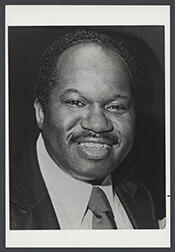
Here you will find contact information for Representative Major R. Owens, including email address, phone number, and mailing address.
| Name | Major R. Owens |
| Position | Representative |
| State | New York |
| District | 11 |
| Party | Democratic |
| Status | Former Representative |
| Term Start | January 3, 1983 |
| Term End | January 3, 2007 |
| Terms Served | 12 |
| Born | June 28, 1936 |
| Gender | Male |
| Bioguide ID | O000159 |
About Representative Major R. Owens
Major Robert Odell Owens (June 28, 1936 – October 21, 2013) was an American politician, librarian, and long-serving Democratic member of the United States House of Representatives from New York, serving from 1983 to 2007. Over the course of 12 consecutive terms, he represented New York’s 11th and later 12th congressional district, succeeding pioneering Representative Shirley Chisholm and ultimately being succeeded by Yvette Clarke. His tenure in Congress spanned a significant period in late 20th- and early 21st-century American history, during which he became known for his advocacy on civil rights, education, labor, and disability policy, including his key role in shepherding the Americans with Disabilities Act of 1990 through the House of Representatives.
Owens was born on June 28, 1936, in Collierville, Tennessee, a small town near Memphis. He grew up in the segregated South, an experience that shaped his later commitment to civil rights, social justice, and expanded educational opportunity. His early years coincided with the era of Jim Crow laws and the nascent civil rights movement, and these conditions informed his understanding of the structural barriers facing African Americans and other marginalized communities. Seeking broader opportunities and higher education, he left Tennessee to attend college in the North, a move that would set the course for his professional life as both a librarian and a public servant.
Owens pursued higher education at Morehouse College in Atlanta, Georgia, a historically Black institution known for producing many prominent African American leaders. He later completed a Bachelor of Arts degree at Morehouse in 1956. Demonstrating a strong interest in information access and community service, he went on to earn a Master of Science degree in library science from Atlanta University (now Clark Atlanta University) in 1957. This training in librarianship provided him with both a professional foundation and a philosophical framework centered on the democratization of knowledge, which would later influence his approach to public policy and constituent service.
After completing his education, Owens embarked on a career as a librarian and community organizer. He moved to New York City, where he worked in the Brooklyn Public Library system, including service as a community information librarian. In that role, he focused on connecting residents—particularly in underserved neighborhoods—to information about jobs, housing, education, and social services. His work in libraries led him into broader community activism, as he became increasingly involved in local efforts to address poverty, inequality, and inadequate public services. This combination of professional librarianship and grassroots organizing helped establish his reputation as a pragmatic advocate for urban communities and laid the groundwork for his entry into electoral politics.
Owens’s political career began at the local and state levels in New York. He served in various community and governmental roles, including positions that bridged social services and public policy, and he was elected to the New York State Senate, where he represented a Brooklyn district. In the State Senate, he continued to focus on issues such as education, housing, and social welfare, building a legislative record that reflected his longstanding concern for low-income and minority communities. His effectiveness as a legislator and his close ties to neighborhood organizations made him a natural successor when Representative Shirley Chisholm, the first Black woman elected to Congress, chose to retire from the U.S. House of Representatives.
In 1982, Owens was elected to the U.S. House of Representatives from New York’s 11th congressional district, taking office on January 3, 1983. Following redistricting, he later represented New York’s 12th congressional district, but he continued to serve largely the same Brooklyn-based constituency. As a member of the House, he participated actively in the legislative process and became known as a strong liberal voice on domestic policy. He served on committees and subcommittees dealing with education, labor, and government operations, and he consistently advocated for increased federal support for public schools, libraries, job training programs, and community development initiatives. His background as a librarian informed his emphasis on literacy, information access, and the role of public institutions in empowering citizens.
One of Owens’s most notable legislative achievements was his role in advancing the Americans with Disabilities Act of 1990. He played a key part in shepherding this landmark civil rights legislation for people with disabilities through the House of Representatives, working to build support for provisions that prohibited discrimination in employment, public accommodations, transportation, and telecommunications. His efforts contributed to the ADA’s eventual enactment, which fundamentally reshaped the legal landscape for millions of Americans with disabilities. Throughout his 12 terms in Congress, he also spoke out on issues of racial justice, voting rights, and economic inequality, and he was recognized for his willingness to challenge both Republican and Democratic administrations when he believed the interests of his constituents were at stake.
Owens’s service in Congress extended through changing political eras, from the Reagan administration through the early years of the George W. Bush administration. During this time, he represented a diverse, largely urban district and remained closely engaged with local organizations, churches, and advocacy groups in Brooklyn. He was known for holding frequent community meetings and for maintaining a visible presence in his district, reflecting his belief that elected officials should remain directly accountable to the people they serve. After more than two decades in the House, he chose not to seek reelection in 2006. He retired at the end of his term in January 2007, and his seat was filled by Yvette Clarke, who continued the tradition of African American representation from the district.
In his later years, Owens remained involved in public affairs, writing, speaking, and teaching about politics, policy, and community empowerment. He drew on his experiences as both a librarian and a legislator to emphasize the importance of civic education and informed participation in democracy. Major Robert Odell Owens died on October 21, 2013, in New York City. His career left a legacy of advocacy for civil rights, disability rights, education, and the principle that access to information and public institutions is essential to a functioning democracy.