Representative Manley Caldwell Butler
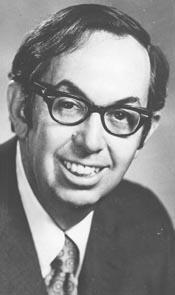
Here you will find contact information for Representative Manley Caldwell Butler, including email address, phone number, and mailing address.
| Name | Manley Caldwell Butler |
| Position | Representative |
| State | Virginia |
| District | 6 |
| Party | Republican |
| Status | Former Representative |
| Term Start | January 21, 1971 |
| Term End | January 3, 1983 |
| Terms Served | 6 |
| Born | June 2, 1925 |
| Gender | Male |
| Bioguide ID | B001182 |
About Representative Manley Caldwell Butler
Manley Caldwell Butler (June 2, 1925 – July 28, 2014) was an American lawyer and Republican politician from Roanoke, Virginia, widely admired for his integrity, bipartisanship, and courage. Born in Roanoke to William Wilson Samuel Butler and the former Sarah Poage Caldwell, he was educated in the city’s public schools and achieved the rank of Eagle Scout. He graduated from Jefferson Senior High School in 1942. Butler was descended from Chief Justice John Marshall and became a member of the John Marshall Foundation; his great-grandfather, James A. Walker, had been a Virginia lawyer and politician and a Confederate general during the American Civil War. A lifelong Episcopalian, Butler was a member of St. John’s Episcopal Church in Roanoke and served on its vestry.
After high school, Butler began undergraduate studies in Richmond and joined the Reserve Officers’ Training Corps (ROTC). During World War II he trained at Columbia University and was commissioned an ensign in the United States Navy, where he was assigned to command a rescue boat in Rhode Island. Upon his discharge in 1946, he returned to his studies and completed his undergraduate degree at the University of Richmond in 1948. He then attended the University of Virginia School of Law in Charlottesville, receiving an LL.B. degree in 1950. Butler distinguished himself academically, being elected to Phi Beta Kappa, the Order of the Coif, and the Raven Society. In 1950 he was admitted to the Virginia bar and began a private legal practice in Roanoke. Around this time he married June Parker Nolde of Richmond; over the course of their 64-year marriage they raised four sons—Manley, Henry, Jimmy, and Marshall.
Butler’s first foray into electoral politics came in 1958, when he ran unsuccessfully for the Roanoke City Council. In 1961, amid widespread public dissatisfaction with the closing of Virginia’s public schools under U.S. Senator Harry F. Byrd’s policy of Massive Resistance to the Supreme Court’s Brown v. Board of Education decisions, Butler became the first Republican to represent Roanoke in the Virginia House of Delegates since 1901. He defeated veteran Byrd Organization Democrat Julian H. Rutherfoord Jr., who had served since 1948. Taking office in 1962, Butler represented Roanoke in the House of Delegates, a part-time position, from 1962 to 1971. During his decade in the General Assembly, he fought corruption, including exposing a local highway commissioner’s conflict of interest, and worked to revitalize a competitive two-party system in Virginia as the Byrd Organization crumbled—an achievement he later described as “the greatest thrill” of his life.
Within the House of Delegates, Butler quickly rose to positions of leadership. He served as chairman of the joint Republican caucus from 1964 to 1966 and as minority leader from 1966 to 1971. He became deeply involved in redistricting controversies prompted by population changes and by the Supreme Court’s decision in Davis v. Mann, as well as by the implementation of federal civil rights legislation. While representing Roanoke, he served alongside Democrat Kossen Gregory until 1963 and then Democrat Willis M. Anderson. In the 1971 elections, Ray L. Garland and John C. Towler succeeded Anderson and Butler as Roanoke’s delegates. Butler’s law partner, Linwood Holton, was elected governor of Virginia in 1969 and took office in 1970; Holton later recalled Butler’s talent for building alliances and his ability to concentrate on specific policy issues.
Manley Caldwell Butler served as a Representative from Virginia in the United States Congress from 1971 to 1983. When U.S. Representative Richard H. Poff, a fellow Republican, resigned from the Roanoke-based Sixth Congressional District, Butler won the Republican nomination to fill the vacancy. On November 7, 1972, he ran in two elections held the same day: a special election for the balance of Poff’s tenth term and the regular general election for a full two-year term in the Ninety-third Congress. In the special election he was elected with 51.76 percent of the vote, defeating Democrat Willis M. Anderson and Independent Roy R. White; in the general election he won a full term with 54.62 percent of the vote, again defeating Anderson and White. A member of the Republican Party, Butler contributed to the legislative process during six terms in office, serving in the House of Representatives from 1972 to 1983 and participating in the democratic process on behalf of his constituents during a significant period in American history.
Initially, Butler supported President Richard M. Nixon and credited his own 1972 victory in part to Nixon’s landslide reelection. However, as the Watergate scandal unfolded and the White House tapes revealed political “dirty tricks” and abuses of power, Butler joined six other Republicans and three conservative Southern Democrats—who referred to themselves as “the unholy alliance”—in questioning the president’s conduct. On July 25, 1974, as a freshman member of the House Judiciary Committee, he drew national attention when he announced his support for impeachment, declaring that for Republicans who had long campaigned against dishonest and criminal conduct in government, “Watergate is our shame.” Two days later, the Judiciary Committee voted to refer three articles of impeachment to the full House; Butler voted in favor of two of them. Nixon resigned the presidency the following month. Despite his mother’s warnings that his stance might endanger his political career and despite the likelihood that fellow Republicans penalized him with less favorable committee assignments, Butler never questioned the appropriateness of his vote. Colleagues and observers often remarked that he was “free of politics” and conducted himself more like a judge than a partisan legislator.
Voters in the Sixth District appeared to appreciate Butler’s independence and courage. In the 1974 election, when many Republican incumbents lost their seats amid public anger over Watergate, Butler was re-elected with 45.15 percent of the vote, defeating Democrat Paul J. Puckett and Independents Warren D. Saunders and Timothy A. McGay, though he fell short of an absolute majority. It was the last time he would face major-party opposition. In 1976 he was re-elected with 62.24 percent of the vote, defeating Independent Warren D. Saunders; he ran unopposed in both 1978 and 1980. During his congressional tenure, Butler participated not only in the Watergate proceedings but also in the confirmation hearings for Vice Presidents Gerald R. Ford and Nelson Rockefeller. He played a key role in the creation of the Legal Services Corporation and was the principal author of the Bankruptcy Reform Act of 1978, a major overhaul of the nation’s bankruptcy laws. His service in Congress, spanning six terms from 1971 to 1983, was marked by a reputation for careful legal analysis, bipartisan cooperation, and attention to the rule of law.
In 1982 Butler chose not to seek re-election to the House of Representatives. He left Congress at the conclusion of his term in January 1983 and returned to Roanoke, where he resumed the practice of law with the firm of Woods, Rogers & Hazelgrove. He continued to influence national policy on bankruptcy as a member of the National Bankruptcy Review Commission from 1995 to 1997. His legacy also extended through the careers of his former staff: Bob Goodlatte, once a member of Butler’s congressional staff, later represented Virginia’s Sixth Congressional District from 1993 through 2019, and his former press secretary, Richard Cullen, went on to law school and was appointed United States Attorney for the Eastern District of Virginia from 1991 to 1993 and later served as Attorney General of Virginia, filling an unexpired term from 1997 to 1998. Butler’s congressional papers were deposited at the Washington and Lee University School of Law, preserving the record of his legislative work.
In recognition of his service, Roanoke’s main post office was renamed in his honor in 2002. Butler remained active in civic and church affairs in Roanoke for many years. His wife, June, predeceased him in June 2014. Manley Caldwell Butler died on July 28, 2014, at the age of 89. He was survived by their four sons and numerous grandchildren, as well as by a public reputation for integrity and principled leadership that had been forged in both the Virginia General Assembly and the United States Congress.