Senator Marcus Allen Coolidge
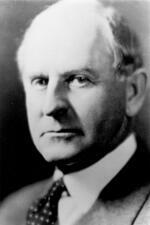
Here you will find contact information for Senator Marcus Allen Coolidge, including email address, phone number, and mailing address.
| Name | Marcus Allen Coolidge |
| Position | Senator |
| State | Massachusetts |
| Party | Democratic |
| Status | Former Representative |
| Term Start | December 7, 1931 |
| Term End | January 3, 1937 |
| Terms Served | 1 |
| Born | October 6, 1865 |
| Gender | Male |
| Bioguide ID | C000740 |
About Senator Marcus Allen Coolidge
Marcus Allen Coolidge (October 6, 1865 – January 23, 1947) was a Democratic United States Senator representing Massachusetts from March 4, 1931, to January 3, 1937. He served one term in the United States Senate during a significant period in American history, contributing to the legislative process and representing the interests of his constituents as a member of the Democratic Party.
Coolidge was born in Westminster, Massachusetts, the son of Frederick Spaulding Coolidge. Through his father, he was descended from early New England settlers John Coolidge (1604–1691) and Thomas Hastings, who emigrated from the East Anglia region of England to the Massachusetts Bay Colony in 1630 and 1634, respectively. He was also a distant relative of Calvin Coolidge, the Massachusetts governor who later became President of the United States. Raised in a New England manufacturing family, he attended the public schools of his hometown before pursuing further training in business.
After completing his early schooling, Coolidge studied at Bryant & Stratton Commercial College at its former Boston, Massachusetts, campus, where he received commercial and business education that prepared him for a career in industry and contracting. Upon leaving school, he entered his father’s enterprise, working in the manufacture of chairs and rattan, an important regional industry in north-central Massachusetts at the time. His experience in this family business provided him with practical knowledge of manufacturing, labor, and commerce that would later inform his public service.
Coolidge subsequently expanded his activities into the contracting business, where he engaged in the construction of street railways, water works, and bridges. This work placed him at the center of local and regional infrastructure development in Massachusetts and gave him direct experience with public works, municipal needs, and the complexities of large-scale construction projects. His growing prominence in business and civic affairs led naturally into formal political involvement at the local and state levels.
In 1916, Coolidge was elected mayor of Fitchburg, Massachusetts, marking his first major elective office. As mayor, he oversaw municipal administration in a growing industrial city and strengthened his reputation as a capable local leader. His public service extended beyond elective office; he served as a trustee and president of Cushing Academy in Ashburnham, Massachusetts, reflecting his interest in education and community institutions. In 1919, President Woodrow Wilson appointed him special envoy to Poland to represent the Peace Commission in the aftermath of World War I, a diplomatic assignment that underscored his standing within the national Democratic Party. He further solidified his role in party affairs by serving as chairman of the Democratic state convention in 1920. That same year, he was the Democratic candidate for lieutenant governor of Massachusetts but was defeated by Republican Congressman Alvan T. Fuller.
Coolidge’s statewide prominence and party leadership culminated in his election to the United States Senate in 1930. He entered the Senate on March 4, 1931, and served until January 3, 1937, completing one full term. His tenure coincided with the onset of the Great Depression and the early years of the New Deal, a period of intense legislative activity and economic crisis. During the Seventy-third and Seventy-fourth Congresses, he served as chairman of the Senate Committee on Immigration, placing him at the center of debates over immigration policy during a time of economic hardship and shifting national priorities. Although he played an active role in the Senate and in the broader democratic process, he chose not to be a candidate for renomination in 1936.
After leaving Congress, Coolidge returned to Fitchburg and resumed his former business pursuits, maintaining his connection to the community that had first elevated him to public office. He continued to be recognized locally for his civic contributions. Among his notable acts of philanthropy was the donation of substantial land to the city of Fitchburg for a recreational park in the northern section of the city. This park, which bears the Coolidge name, became the largest in Fitchburg and includes an engraved stone memorializing his public activities and contributions.
In his personal life, Coolidge’s family connections extended into public service. He was the father-in-law of Harry Hines Woodring, who served as Secretary of War under President Franklin D. Roosevelt, and of Robert E. Greenwood, a mayor of Fitchburg, Massachusetts, thereby linking his family to both national and local political leadership. Marcus Allen Coolidge died at St. Francis Hospital in Miami Beach, Florida, on January 23, 1947, at the age of eighty-one. He was interred at Mount Pleasant Cemetery in Westminster, Massachusetts, returning in death to the community where his life had begun.