Representative Marian Williams Clarke
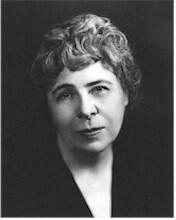
Here you will find contact information for Representative Marian Williams Clarke, including email address, phone number, and mailing address.
| Name | Marian Williams Clarke |
| Position | Representative |
| State | New York |
| District | 34 |
| Party | Republican |
| Status | Former Representative |
| Term Start | March 9, 1933 |
| Term End | January 3, 1935 |
| Terms Served | 1 |
| Born | July 29, 1880 |
| Gender | Female |
| Bioguide ID | C000467 |
About Representative Marian Williams Clarke
Marian Williams Clarke (née Williams; July 29, 1880 – April 8, 1953) was a Republican member of the United States House of Representatives from New York. She served one term in Congress from 1933 to 1935 and was the second woman elected to Congress from New York, following Ruth Baker Pratt. During her tenure, she represented the interests of her constituents as a member of the House of Representatives and contributed to the legislative process at a time of significant political and economic change in the United States.
Clarke was born on July 29, 1880, in Standing Stone, Pennsylvania. She pursued higher education at a time when relatively few women attended college. She first attended the University of Nebraska art school for a year, reflecting an early interest in the arts, and then continued her studies at Colorado College in Colorado Springs, Colorado. She graduated from Colorado College in 1902, an achievement that provided her with a solid academic foundation and prepared her for later public and political life.
Marian Williams married John Davenport Clarke, who would later become a Republican member of Congress from New York. Through her marriage, she became closely acquainted with political life and the workings of the federal government. John Davenport Clarke served in the House of Representatives until his death, and his career in public service helped shape Marian Clarke’s subsequent entry into national politics.
Clarke’s congressional career began under tragic circumstances. Her husband, Representative John Davenport Clarke, died in a car crash on November 5, 1933, creating a vacancy in New York’s representation in the House of Representatives. Marian Williams Clarke was elected in 1933 to fill the vacancy caused by his death. She took her seat in Congress on December 28, 1933, as a Republican Representative from New York. Serving during the 73rd Congress, at the height of the New Deal era, she participated in the democratic process and engaged in legislative work during a period marked by the Great Depression and major federal policy initiatives.
As a member of the House of Representatives, Clarke served from December 28, 1933, until January 3, 1935. Her term encompassed just over one year, during which she represented her district’s interests and contributed to the deliberations of Congress. Although she had the opportunity to seek a longer congressional career, she chose not to do so. Prior to the 1934 primary, she withdrew her nomination for reelection, thereby concluding her service in the House at the end of her first term. Her decision left her as a one-term member of Congress, but her election nonetheless marked an important step in the gradual expansion of women’s representation in the federal legislature.
After leaving Congress in January 1935, Clarke returned to private life in New York. While she did not again hold federal office, her role as one of the earliest women in the House of Representatives, and as the second woman to represent New York in Congress, placed her among the pioneering women in American national politics. Her service illustrated both the opportunities and the limits faced by women in public life during the first half of the twentieth century.
Marian Williams Clarke died on April 8, 1953, in Cooperstown, New York. She was interred at Locust Hill Cemetery in Hobart, New York. Her life and career, spanning from her Pennsylvania upbringing and Colorado education to her brief but notable service in the United States Congress, reflect the evolving role of women in American political institutions in the early twentieth century.