Representative Marilyn Laird Lloyd
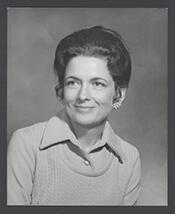
Here you will find contact information for Representative Marilyn Laird Lloyd, including email address, phone number, and mailing address.
| Name | Marilyn Laird Lloyd |
| Position | Representative |
| State | Tennessee |
| District | 3 |
| Party | Democratic |
| Status | Former Representative |
| Term Start | January 14, 1975 |
| Term End | January 3, 1995 |
| Terms Served | 10 |
| Born | January 3, 1929 |
| Gender | Female |
| Bioguide ID | L000381 |
About Representative Marilyn Laird Lloyd
Rachel Marilyn Lloyd (née Laird; January 3, 1929 – September 19, 2018) was an American politician and businesswoman who served ten terms as a Democratic Representative from Tennessee in the United States House of Representatives from 1975 until 1995. Over two decades in Congress, she became a prominent voice on science, energy, defense, and aging policy, and was the first woman ever elected from Tennessee to a full term in the U.S. House of Representatives.
Lloyd was born Rachel Marilyn Laird on January 3, 1929, in Fort Smith, Arkansas, the daughter of a Church of Christ pastor. Her family later moved within the region, and she was educated in Kentucky, graduating in 1945 from Western Kentucky College High School in Bowling Green, Kentucky, a laboratory high school associated with what is now Western Kentucky University. She went on to attend Shorter College in Rome, Georgia. Her early adult life was rooted in the small-town and regional communities of the South, experiences that later informed her political style and her reputation as a representative closely attuned to the values of a conservative-leaning district.
Before entering public office, Lloyd built a career as a businesswoman in broadcasting and aviation. She owned radio station WTTI in Dalton, Georgia, and later owned Executive Aviation in Winchester, Tennessee, a business that reflected the growing importance of regional air travel and services in the postwar South. Her work as an entrepreneur helped establish her public profile and provided her with management and communications experience that would prove useful in political life.
Lloyd’s personal life was marked by both family responsibilities and repeated tragedy. Her first husband was Dr. Robert Earl Davison, a dentist in Trion, Georgia, with whom she had three daughters. After Davison’s death in 1960, she married Mort Lloyd in 1963, a popular television news anchor at WDEF-TV in Chattanooga, Tennessee. The couple had one son. Mort Lloyd entered the 1974 Democratic primary for Tennessee’s 3rd congressional district, seeking to unseat two-term Republican Congressman LaMar Baker. He won the primary on August 1, 1974, but was killed in an airplane crash on August 20, 1974, while flying to visit his parents. In the aftermath of his death, the Democratic Party selected his widow, Marilyn Lloyd, to replace him on the ballot. She went on to defeat Baker in the November 1974 general election, a contest held in the shadow of the Watergate scandal, which contributed to the defeat of many Republicans in competitive and marginal districts. In 1978, she married engineer Joseph P. Bouquard; they divorced in 1983, after which she resumed using the name Marilyn Lloyd. In 1991, she married Robert Fowler, a physician, who also predeceased her.
Elected in 1974, Lloyd took office in January 1975 as the Representative from Tennessee’s 3rd congressional district and served continuously until her retirement in January 1995, completing ten consecutive terms. Her election made her the first woman ever elected to Congress from Tennessee for a full term; earlier women—Willa Eslick, Louise Reece, and Irene Baker—had been elected only in special elections to succeed their late husbands and did not seek full terms. Lloyd was generally regarded as a moderate-to-conservative Democrat, receiving a 53 percent rating from the American Conservative Union. By national standards she was considered conservative, but within Tennessee she was viewed as a moderate, often breaking with the national Democratic leadership when she believed her district’s more conservative views required it. Her voting record and public positions reflected the political character of the Chattanooga- and Oak Ridge–based district she represented.
Throughout her congressional career, Lloyd was particularly influential in areas related to science, technology, energy, and infrastructure. She served on the House Science Committee for her entire tenure in Congress, a position of special importance because the committee had jurisdiction over legislation affecting nuclear weapons and research facilities at Oak Ridge, a major installation in her district. She became a strong advocate for the Clinch River Breeder Reactor project at Oak Ridge, seeking to secure federal support and funding for advanced nuclear research. By the time she retired, she had risen to become the second-ranking Democrat on the Science Committee. In addition, she served on the Committee on Public Works (1975–1987), where she dealt with transportation, infrastructure, and environmental issues, and on the House Armed Services Committee (1983–1995), where she participated in oversight of defense policy during the late Cold War and post–Cold War transition. She also served for much of her congressional career on the House Select Committee on Aging, reflecting an interest in issues affecting older Americans.
Lloyd’s approach to women’s issues and health policy evolved over time. When women members of the House formed a Congressional Women’s Caucus in 1977, she was one of three congresswomen who declined to join, apparently out of concern that affiliation with the caucus might alienate some of her conservative constituents. She later joined the caucus but resigned in 1980 over political disagreements. Over the course of her service, however, she became an active supporter of legislation related to women’s health. She cosponsored the Mammography Quality Standards Act, enacted in 1992, which established national standards for mammography services to improve early detection of breast cancer. After being diagnosed with breast cancer herself in 1991 and being denied a silicone breast implant because the U.S. Food and Drug Administration had removed such implants from the market, she became an outspoken advocate for breast cancer treatment and women’s health more broadly, including the availability of breast implants for reconstructive surgery. Her personal struggle with cancer led her to reverse her longstanding opposition to abortion rights; she announced on the House floor that fighting for medical decisions “that should have been mine alone” had changed her view, and she thereafter supported a woman’s right to choose.
Lloyd’s later electoral contests reflected both her personal standing and shifting partisan alignments in Tennessee. In 1992, she faced a strong challenge from Republican real estate broker Zach Wamp. In one of the closest races of her career, she defeated Wamp by approximately 2,900 votes, a margin of about 1 percent. Her victory was aided by the withdrawal of underground environmental candidate Peter Melcher, and she retained her seat largely through a strong performance in the Oak Ridge area, offsetting a decisive loss in Hamilton County, home to Chattanooga. That same year, the Clinton–Gore Democratic presidential ticket carried the 3rd District by only 39 votes out of roughly 225,000 cast, one of its weakest showings in Tennessee despite Senator Al Gore’s presence on the ticket. The narrowness of her 1992 victory is widely believed to have influenced her decision not to seek an eleventh term in 1994. She retired at the end of the 103rd Congress and endorsed Wamp’s bid to succeed her, an endorsement that may have contributed to his narrow victory. Since her departure, Democrats have exceeded 40 percent of the vote in the district in only two elections, underscoring the district’s long-term Republican realignment.
After leaving Congress in 1995, Lloyd maintained a relatively low public profile, though she remained engaged in advocacy on behalf of victims of domestic violence and continued to be recognized for her contributions to science and environmental policy. In 1999, the Marilyn Lloyd Environmental and Life Sciences Research Complex at Oak Ridge National Laboratory was named in her honor, reflecting her long-standing support for the Oak Ridge facilities and for federal investment in scientific research. Her congressional papers were deposited at the University of Tennessee at Chattanooga, where they are archived in the university library and serve as a resource for scholars studying late twentieth-century congressional politics, energy policy, and the role of women in the House of Representatives.
Marilyn Lloyd died on September 19, 2018, at her home in Chattanooga, Tennessee, at the age of 89. No cause of death was publicly disclosed, though her obituary described her as a “breast cancer survivor.” She was survived by her children from her marriages to Dr. Robert Earl Davison and Mort Lloyd, and she was remembered in Tennessee and beyond for her two decades of service in the U.S. House of Representatives, her advocacy for scientific research and women’s health, and her pioneering role as the first woman elected from Tennessee to a full congressional term.