Representative Marilyn N. Musgrave
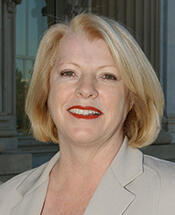
Here you will find contact information for Representative Marilyn N. Musgrave, including email address, phone number, and mailing address.
| Name | Marilyn N. Musgrave |
| Position | Representative |
| State | Colorado |
| District | 4 |
| Party | Republican |
| Status | Former Representative |
| Term Start | January 7, 2003 |
| Term End | January 3, 2009 |
| Terms Served | 3 |
| Born | January 27, 1949 |
| Gender | Female |
| Bioguide ID | M001152 |
About Representative Marilyn N. Musgrave
Marilyn Neoma Musgrave (née Shuler; born January 27, 1949) is an American politician and former Republican member of the United States House of Representatives who represented Colorado’s 4th Congressional District from January 3, 2003, to January 3, 2009. She was the first Republican woman elected to Congress from Colorado and served three terms in the House of Representatives during a significant period in American political history, participating actively in the legislative process and representing the interests of a largely rural, traditionally Republican district on the eastern plains of Colorado.
Musgrave was born Marilyn Neoma Shuler in Greeley, Colorado. She graduated from Eaton High School in Eaton, Colorado, in 1968. She then attended Colorado State University in Fort Collins, where she earned a Bachelor of Arts degree in social studies in 1972. While attending Colorado State University, she married Steve Musgrave. After completing her education, the couple settled in Fort Morgan, south of Greeley, where they owned and operated a bale-stacking business serving the region’s agricultural community. In addition to her work in the family business, Musgrave taught school. She and her husband raised four children, and they have eight grandchildren. A devout Pentecostal and member of the Assemblies of God, Musgrave was one of three Pentecostals serving in the 110th Congress, alongside Republicans Tim Johnson of Illinois and Todd Tiahrt of Kansas.
Musgrave’s career in elective office began at the local level in Fort Morgan. In 1991 she was elected to the Fort Morgan School Board, where she served one term. During her tenure, she focused on changing the local sex education curriculum to an abstinence-only approach, reflecting her socially conservative views. She was active in the Fort Morgan Right to Life chapter and at one time served as its president, solidifying her reputation as a staunch opponent of abortion. In 1992, Musgrave was elected to the Colorado House of Representatives, where she quickly emerged as one of the most conservative members of the state legislature. She frequently sparred with more socially moderate and liberal legislators and focused heavily on social issues, including opposition to civil unions and marriage for same-sex couples. At the same time, she was active on small business and agricultural issues, authoring bills to exempt farm equipment dealers from sales tax and to lower taxes on small businesses.
After serving in the Colorado House, Musgrave successfully ran for the Colorado State Senate in 1998. In the State Senate, she continued to champion conservative social and fiscal positions and was selected as the Senate Republican Caucus Chairman, a leadership role that enhanced her profile within the party. Her legislative record in Denver reinforced her standing among social conservatives and gun rights advocates, and she developed close ties with organizations such as the Rocky Mountain Gun Owners, the state affiliate of Gun Owners of America (GOA). These state-level experiences and alliances laid the groundwork for her subsequent bid for federal office.
In 2002, following the retirement of Congressman Bob Schaffer, Musgrave sought the Republican nomination for Colorado’s 4th Congressional District. She won the primary against businessman Jeff Bedingfield, aided by key endorsements from Schaffer and former U.S. Senator William Armstrong. In the November 2002 general election, she defeated Democratic State Senate President Stan Matsunaka by a margin of 55 percent to 42 percent. Her victory was facilitated by a substantial campaign war chest and the district’s long-standing Republican lean—it had been in Republican hands since 1973. She took office in January 2003 and was reelected twice. In 2004, she again faced Matsunaka, who criticized her as a “one-trick pony” for her focus on outlawing same-sex marriage and alleged neglect of constituent services. Musgrave retained her seat with 51 percent of the vote to Matsunaka’s 45 percent, winning most rural counties by large margins but losing Larimer County, home to Fort Collins, and the district’s portion of Boulder County, including Longmont. In 2006, she faced Democratic State Representative Angie Paccione and Reform Party candidate Eric Eidsness. In a closely contested race, Musgrave won a third term with 45.61 percent of the vote to Paccione’s 43.12 percent and Eidsness’s 11.28 percent, again losing Larimer County but holding on through strong support in Weld County and other rural areas.
During her three terms in Congress, Musgrave served on the House Committee on Agriculture and the House Committee on Small Business. Within the Agriculture Committee, she was particularly active on issues affecting specialty crops, rural development, and foreign agriculture. In the 110th Congress, she served as the Ranking Minority Member of the Subcommittee on Specialty Crops, Rural Development, and Foreign Agriculture. She also served as the Region Two representative on the Republican Steering Committee, which plays a key role in committee assignments and party strategy. Musgrave was a member of the conservative Republican Study Committee and its “Values Action Team,” and her official House website carried the motto “Defending our way of life through conservative leadership.” The American Conservative Union ranked her as the most conservative member of the House, giving her a 99 percent lifetime rating, while National Journal ranked her as the 28th most conservative member based on her 2007 voting record.
Musgrave became nationally known for her advocacy on social issues, particularly her sponsorship of the proposed Federal Marriage Amendment in the 108th and 109th Congresses. Originally drafted by the Alliance for Marriage, the amendment sought to define marriage in the United States Constitution as “the union of a man and a woman” and to bar recognition of same-sex marriage or “legal incidents thereof.” At the 2006 Family Research Council “Values Voters Summit,” she declared that “as we face the issues that we are facing today, I don’t think there’s anything more important out there than the marriage issue,” though she later sought to downplay that statement during her 2006 reelection campaign. Consistent with her long-standing positions, she was staunchly anti-abortion, supporting the Partial-Birth Abortion Ban Act and the Child Custody Protection Act, and serving as an original cosponsor of the Child Interstate Abortion Notification Act. She opposed public funding for embryonic stem cell research on abortion-related grounds and was a vocal proponent of congressional intervention in the Terri Schiavo case in 2005, arguing on the House floor that Schiavo’s condition and treatment raised profound moral questions about the value of human life. Musgrave also weighed in on the emergency contraception controversy, criticizing a witness at a 2005 congressional subcommittee hearing who said she felt humiliated and discriminated against when a pharmacist refused to fill a prescription for emergency contraception, characterizing the incident instead as an “inconvenience.” In 2003, she introduced an amendment to the Runaway, Homeless, and Missing Children Protection Act that would have prevented the distribution of contraception to runaway teens; the amendment did not become part of the final legislation.
In addition to her social policy agenda, Musgrave was a vigorous advocate for gun rights and homeschooling. She strongly opposed gun control measures and successfully passed an amendment prohibiting enforcement of a federal requirement that all handguns be sold with trigger locks. She founded the Second Amendment Caucus in the House of Representatives and worked to protect gun manufacturers and dealers from certain types of lawsuits. Musgrave maintained close ties with Gun Owners of America and its Colorado affiliate, Rocky Mountain Gun Owners, and in 2004 she was a special guest speaker at the 19th annual Gun Rights Policy Conference awards luncheon, where she was named “Gun Rights Legislator of the Year.” She also promoted policies to support families who homeschool their children, arguing that government intruded excessively into family affairs. Having homeschooled one of her own children, she developed close links with the Home School Legal Defense Association (HSLDA), and members of HSLDA’s youth arm, Generation Joshua, were deployed to her district in the final days of the 2006 campaign to assist her reelection effort. Musgrave’s alliances extended to numerous conservative and religious organizations, including the National Right to Life Committee, Focus on the Family, Alliance for Marriage, the Family Research Council, the National Taxpayers Union, the Christian Coalition, and the Traditional Values Coalition. She also participated in trips sponsored by The Heritage Foundation and the Club for Growth, further reinforcing her standing in national conservative circles. In 2005, she received the “Distinguished Christian Statesman” award from D. James Kennedy’s Center for Christian Statesmanship.
Musgrave ran for a fourth term in the 2008 election, held on November 4, 2008. Her Democratic opponent was Betsy Markey, who had served as regional director for U.S. Senator Ken Salazar in the 4th District. In a race that drew substantial national attention and outside spending, Musgrave was defeated, receiving 44 percent of the vote to Markey’s 56 percent, a 56-to-44 percent margin. It was the second-largest margin of defeat for a Republican incumbent in the 2008 election cycle, after Florida’s Tom Feeney. As in her previous campaigns, Musgrave won most of the rural counties in the district but lost heavily populated Larimer County—this time by approximately 32,300 votes—and, unlike in earlier elections, she also lost Weld County by about 5,700 votes, a reversal from her prior strong showings there and a key factor in her defeat. After the election, Musgrave did not publicly concede, declined to comment extensively to the media, and did not contact Markey to congratulate her. She later recorded a robocall on behalf of Republican Senator Saxby Chambliss of Georgia, attributing her defeat to “leftist special interests” who, she said, had “smothered the truth with vicious attacks and lies.”
Following the end of her congressional service in January 2009, Musgrave continued her involvement in national politics through advocacy work. As of 2009, she began working for the Susan B. Anthony List, a nonprofit organization that supports anti-abortion women in politics and had backed her during her congressional campaigns. In that role, she has remained active in promoting pro-life candidates and policies, extending the social conservative agenda that had defined her legislative career at both the state and federal levels.