Representative Mario Biaggi
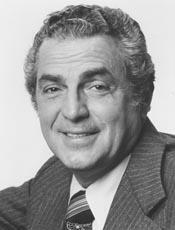
Here you will find contact information for Representative Mario Biaggi, including email address, phone number, and mailing address.
| Name | Mario Biaggi |
| Position | Representative |
| State | New York |
| District | 19 |
| Party | Democratic |
| Status | Former Representative |
| Term Start | January 3, 1969 |
| Term End | January 3, 1989 |
| Terms Served | 10 |
| Born | October 26, 1917 |
| Gender | Male |
| Bioguide ID | B000432 |
About Representative Mario Biaggi
Mario Biaggi (October 26, 1917 – June 24, 2015) was an American politician, attorney, and police officer who served as a Representative from New York in the United States Congress from 1969 to 1989. A member of the Democratic Party, he served ten terms as a member of the United States House of Representatives from New York from 1969 to 1988, first elected in 1968 as a Democrat from the Bronx. During his two decades in the House of Representatives, Biaggi participated in the legislative process at a significant period in American history and represented the interests of his constituents, contributing actively to debates on law enforcement, public safety, and national policy.
Biaggi was born in New York City on October 26, 1917, to Italian immigrant parents and grew up in a working-class environment in the Bronx. His early life in a densely populated urban neighborhood exposed him to the challenges of crime, poverty, and social dislocation that would later shape his professional focus on law enforcement and public order. Before entering public office, he pursued a career in policing that would make him one of the most recognized law enforcement figures in the city.
Joining the New York City Police Department (NYPD), Biaggi rose to become one of the most decorated officers in its history. Over the course of his service, he was injured 11 times in the line of duty and was involved in numerous dangerous confrontations, including incidents in which he killed two criminals who attacked him. His record of bravery and repeated citations for valor earned him citywide recognition and a reputation as a tough, streetwise officer. After retiring from active police work, and despite the demands of a long law enforcement career, he pursued legal studies and became an attorney at 49 years of age, adding formal legal training to his practical experience in criminal justice.
Biaggi’s transition from law enforcement to elective office came in the late 1960s. In 1968, he ran for Congress from a Bronx-based district as a Democrat and won election to the U.S. House of Representatives. He was subsequently re-elected nine times, seven of those elections with more than 90 percent of the vote, reflecting strong support in his district. Although a Democrat, he was considered fairly conservative by New York City standards and, on several occasions, also ran on the Conservative Party line. His congressional service, which extended from 1969 to 1988, coincided with major national developments, including the Vietnam War, the civil rights era, the Watergate scandal, and the economic and foreign policy challenges of the 1970s and 1980s, during which he consistently emphasized law enforcement, public safety, and support for police and crime victims.
In addition to his regular legislative work, Biaggi sought higher municipal office while serving in Congress. In 1973, he declared his candidacy for Mayor of New York City and entered the Democratic primary. Conservative Party leaders, noting his law-and-order profile and prior appearances on their ballot line, supported him as the party’s candidate for mayor and planned to nominate him regardless of whether he secured the Democratic line. Initially leading in some polls, Biaggi ultimately lost the Democratic primary in June 1973, finishing third with 21 percent of the vote, behind Abe Beame with 34 percent and Herman Badillo with 29 percent, and ahead of Albert H. Blumenthal, who received 16 percent. After failing to win the Democratic nomination, Biaggi remained on the Conservative Party line in the general election because New York law did not allow him to withdraw at that stage. He assured Democratic county leaders that he would not make a “serious run” that might draw votes away from Beame. In the general election he finished fourth, behind Beame, John Marchi, and Blumenthal, with 11 percent of the vote, as Beame was elected mayor.
Within Congress, Biaggi became particularly known for initiatives related to the nation’s historical legacy and to law enforcement. In 1975, he introduced a joint resolution of Congress, later enacted as Public Law 94-479, to posthumously promote George Washington to the grade of General of the Armies of the United States and to restore Washington’s position as the highest-ranking military officer in U.S. history. The resolution passed Congress and was approved by President Gerald Ford in 1976. The promotion was formalized in Department of the Army Order 31-3 in 1978, with an effective appointment date of July 4, 1976, in conjunction with the United States Bicentennial. Biaggi also established the National Law Enforcement Officers Memorial Fund (NLEOMF), which sponsored the National Law Enforcement Officers Memorial in Washington, D.C., at Judiciary Square. Authorized in 1984, the memorial honors tens of thousands of U.S. law enforcement officers who have died in the line of duty throughout American history, reflecting Biaggi’s enduring identification with and advocacy for the law enforcement community.
Biaggi’s long congressional career ended amid legal and ethical controversy. In 1987 and 1988, he was tried and convicted in two separate federal cases for receipt of unlawful gratuities. These convictions placed him under intense scrutiny in the House of Representatives and raised the prospect of his expulsion from Congress. Facing that likelihood and the political fallout from the cases, he resigned from Congress in 1988, bringing to a close ten consecutive terms in the House. His departure marked a dramatic reversal for a figure who had for many years enjoyed overwhelming electoral support and a prominent public profile.
Mario Biaggi lived for many years after leaving public office. He remained a figure of interest in discussions of New York politics, law enforcement, and congressional ethics, his career often cited both for his extraordinary record as a decorated police officer and for the legal controversies that ended his time in Congress. He died on June 24, 2015, in New York, at the age of 97, closing a life that spanned nearly a century of American urban and political history.