Representative Marion Cannon
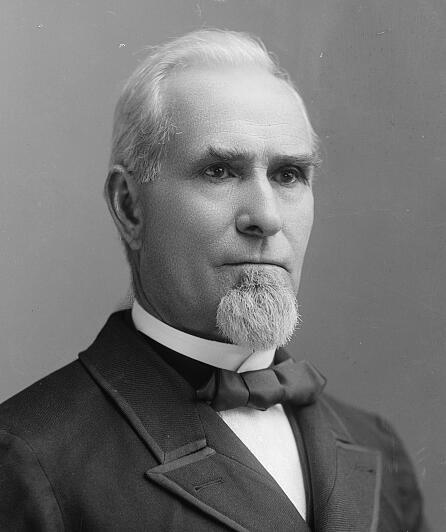
Here you will find contact information for Representative Marion Cannon, including email address, phone number, and mailing address.
| Name | Marion Cannon |
| Position | Representative |
| State | California |
| District | 6 |
| Party | Populist |
| Status | Former Representative |
| Term Start | August 7, 1893 |
| Term End | March 3, 1895 |
| Terms Served | 1 |
| Born | October 30, 1834 |
| Gender | Male |
| Bioguide ID | C000122 |
About Representative Marion Cannon
Marion Cannon (October 30, 1834 – August 27, 1920) was an American blacksmith, farmer, and politician who served one term as a United States Representative from California from 1893 to 1895. A member of the Populist Party, he represented his constituents in the Fifty-third Congress during a significant period in American political and economic history, contributing to the legislative process over a single term in office.
Cannon was born on October 30, 1834, near Morgantown, Virginia, an area that is now part of West Virginia. As a teenager he learned the blacksmith trade, a skill that would shape much of his early life and later economic independence. At the age of eighteen he left home from Mt. Morris, Pennsylvania, carrying his blacksmith shop with him in a Conestoga wagon pulled by two oxen named Buck and Berry. Because of the oxen-drawn wagon, he walked throughout the six-month overland crossing to the West, using his blacksmith skills along the way to repair equipment and replenish his supplies. Traveling with a wagon train, he arrived in Salt Lake City in time to witness the laying of the foundation stone for the Mormon Temple, an event that situates his journey in the broader westward expansion of the mid-nineteenth century.
After reaching Utah, Cannon continued westward, crossing the Sierra Nevada to Diamond Springs, California, arriving there sometime in 1853. Seeking opportunities in the mining regions, he looked for a community where he could establish himself as a blacksmith serving miners and settlers. While in Diamond Springs he likely became acquainted with the Holland family, and around 1860 he married Lydia Jane Holland. The couple built a home and began raising a family of five children in a mining settlement known as Omega in Nevada County, California. In addition to his blacksmith work, Cannon became active in local civic and fraternal life. He served as Grand Master of the Nevada City Masonic Lodge and held public office as county recorder for Nevada County for one term of two years, gaining administrative experience and local prominence. At some point he purchased the Volcan gold mine, which he later sold in 1874 in order to buy acreage near Ventura, California, on Telephone Road, where he turned his attention to agricultural pursuits.
Upon relocating to the Ventura area in the 1870s, Cannon maintained his blacksmith shop while gradually expanding his activities as a farmer. Census records list him as a blacksmith as late as 1900, indicating that he continued to rely on his trade even as he became more deeply involved in agriculture. In Ventura County he moved in farming, political, and social circles and became an ardent booster of the American West, expressing a low opinion of the post–Civil War East Coast and championing western development and opportunity. He was active in the California Grange, aligning himself with agrarian reform movements and becoming a vocal opponent of railroad practices, particularly the manipulation of freight rates that burdened farmers shipping their produce. In the local business community he was a founding member of the Ventura Bank, an institution that later evolved into the Bank of Italy and eventually became part of Bank of America, reflecting his role in the region’s economic development.
Cannon’s leadership among farmers led to his emergence as a significant figure in the organized agrarian movement of the late nineteenth century. On November 20, 1890, he was elected the first State President of the Farmers’ Alliance in California, and he was reelected to that position on October 22, 1891. In this capacity he helped articulate the concerns of small farmers and rural communities, particularly regarding credit, transportation, and market access. His prominence extended beyond the state level: in November 1891 he was chosen as a representative to the Supreme Council of the Farmers’ Alliance in Indianapolis, and that body selected him to represent California at the national industrial conference held in St. Louis on February 22, 1892. He also served as a delegate to the People’s Party National Convention in 1892, positioning himself at the center of the emerging Populist movement that sought to challenge the political and economic power of railroads, banks, and large corporations.
Building on his Farmers’ Alliance work, Cannon helped to organize the People’s Party of California and became one of its leading figures. As the Populist movement gained strength, he was elected as a Populist to the Fifty-third Congress, serving as a Representative from California from March 4, 1893, to March 3, 1895. His tenure in the House of Representatives coincided with a period marked by economic turmoil, including the Panic of 1893, and intense national debate over monetary policy, railroad regulation, and the rights of labor and farmers. During his single term in Congress, Cannon participated in the democratic process and represented the interests of his agrarian and small-town constituents, bringing to the national stage the concerns that had animated his work in the Farmers’ Alliance and the People’s Party. He was not a candidate for renomination in 1894, and his congressional service concluded at the end of his term in 1895.
After leaving Congress, Cannon returned to Ventura County and resumed his agricultural pursuits, continuing to live on his ranch near Ventura. He remained identified with farming and with the civic life of his community, and he continued to advocate for the interests of western farmers and small producers. The Cannon family established a longstanding relationship with the Methodist church in Ventura, reflecting their integration into the religious and social fabric of the region. Marion Cannon lived out his later years at his ranch home near Ventura, where he died on August 27, 1920. He was buried in Ivy Lawn Cemetery in Ventura, California, leaving a legacy as a craftsman, farmer, and Populist reformer who rose from frontier blacksmith to national legislator.