Senator Marion Price Daniel
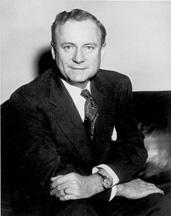
Here you will find contact information for Senator Marion Price Daniel, including email address, phone number, and mailing address.
| Name | Marion Price Daniel |
| Position | Senator |
| State | Texas |
| Party | Democratic |
| Status | Former Representative |
| Term Start | January 3, 1953 |
| Term End | December 31, 1957 |
| Terms Served | 1 |
| Born | October 10, 1910 |
| Gender | Male |
| Bioguide ID | D000036 |
About Senator Marion Price Daniel
Marion Price Daniel Sr. (properly Marion Price Daniel II; October 10, 1910 – August 25, 1988) was an American jurist and Democratic politician who served as a U.S. Senator from Texas from 1953 to 1957 and as the 38th governor of Texas. Over a long public career he also served as Speaker of the Texas House of Representatives, Attorney General of Texas, Associate Justice of the Texas Supreme Court, and as a federal official appointed by President Lyndon B. Johnson to the National Security Council, as Director of the Office of Emergency Preparedness, and as Assistant to the President for Federal-State Relations. His work on ownership of offshore submerged lands and his role in Texas state government made him one of the most influential Texas political figures of the mid‑twentieth century.
Daniel was born on October 10, 1910, in Dayton, Texas, and raised in Liberty County, Texas. He was the eldest child of Marion Price Daniel Sr. (1882–1937) and Nannie Blanch Partlow (1886–1955). He had a sister, Ellen Virginia Daniel, born in 1912, and a brother, William Partlow Daniel, born in 1915. Known throughout his life simply as “Price,” he developed an early interest in public affairs and journalism. As a teenager he worked as a reporter for the Fort Worth Star‑Telegram, gaining early exposure to Texas politics and government that would shape his later career.
Daniel attended Baylor University School of Law in Waco, Texas, financing his education through a series of modest jobs. He worked as a janitor and dishwasher and was employed at the Waco News-Tribune while pursuing his legal studies. He received his law degree from Baylor in 1932. After graduation he returned to Liberty County and established a private law practice. In the largely rural economy of the region, he often accepted livestock and acreage in lieu of cash fees, building both a legal reputation and personal ties across his community. On June 28, 1940, he married Jean Houston Baldwin, a great‑great‑granddaughter of Texas statesman Sam Houston. The couple had four children: Marion Price Daniel III (publicly known as Price Daniel Jr.), Jean Houston Murph, Houston Lee, and John Baldwin.
Daniel entered elective office in 1938, winning a seat in the Texas House of Representatives. He served in the 46th, 47th, and 48th Texas legislatures from January 10, 1939, until January 9, 1945, and became known as an opponent of a state sales tax. During the 46th Legislature (January 10 – June 21, 1939), he served on the Judiciary; Oil, Gas, and Mining; and Public Lands and Buildings committees, and was vice chair of the Privileges, Suffrage, and Elections Committee. In the 47th Legislature (January 14 – July 3, 1941, and September 9–19, 1941), he again served on Judiciary; Privileges, Suffrage, and Elections; and Public Lands and Buildings (as vice chair), and on Revenue and Taxation. His colleagues elected him Speaker of the House for the 48th Legislature, which met from January 12 to May 11, 1943, marking him as a rising figure in Texas Democratic politics.
When the legislature adjourned in May 1943, Daniel waived his draft exemption and enlisted in the United States Army during World War II. He served in the Security Intelligence Corps, with postings in Amarillo, Texas; Pine Bluff, Arkansas; and Baton Rouge, Louisiana. In 1944 he received a commission as a second lieutenant after training at the Judge Advocate General’s Officers School in Ann Arbor, Michigan, and subsequently became an instructor at the Army School for Personnel Services in Lexington, Virginia. In 1945 the Army detailed him to the United States Marine Corps, which sent him to Sasebo, Nagasaki, Japan, to establish a Marine Personnel School in the immediate postwar occupation period. He received “outstanding authority” citations from both the Army and the Marine Corps and was discharged from active duty in May 1946.
Upon returning to civilian life in Texas, Daniel resumed his legal and political career and soon won election as Attorney General of Texas. In that capacity he became a central figure in the long-running controversy over ownership of offshore submerged lands and their mineral rights. Acting on behalf of the coastal states, he argued before the Supreme Court of the United States in United States v. California, 332 U.S. 19 (1947), a 1946 submerged-lands ownership lawsuit in which the federal government claimed title to offshore areas where oil had been discovered. Daniel presented the case on March 13–14, 1947, and although the Court decided against California on June 23, 1947, the issue remained a dominant concern in Texas politics. As attorney general he also defended the University of Texas School of Law in Sweatt v. Painter, a landmark desegregation case. Herman Marion Sweatt, an African American applicant who met all academic requirements, had been denied admission in 1946 because Texas law mandated segregated schools. Daniel argued to preserve the state’s segregated arrangements, but in June 1950 the Supreme Court ruled that Sweatt must be admitted, a decision that significantly advanced the dismantling of “separate but equal” in higher education.
In 1952, Daniel was elected to the United States Senate as a Democrat from Texas, serving one term from 1953 to 1957. His service in Congress occurred during a significant period in American history marked by the early Cold War, civil rights struggles, and debates over federal‑state relations. As a freshman senator he was taken under the wing of Senate Minority Leader Lyndon B. Johnson, the senior senator from Texas, who helped alleviate Daniel’s office-space shortage by allowing Daniel’s staff to work out of Johnson’s offices. In the Senate, Daniel held positions on the Committees on Interior; Interstate and Foreign Commerce; Post Office and Civil Service; and Judiciary, as well as Judiciary subcommittees on Internal Security and Juvenile Delinquency. He worked on a narcotics probe and supported efforts to reform the Electoral College. A staunch defender of states’ rights and an opponent of federal desegregation mandates, he joined 19 other senators and 77 members of the House of Representatives in signing the 1956 Southern Manifesto, which condemned the Supreme Court’s 1954 decision in Brown v. Board of Education and encouraged states to resist its implementation. The Supreme Court’s 1958 decision in Cooper v. Aaron later affirmed that states were bound to uphold Brown and could not nullify federal constitutional rulings.
Daniel’s most long‑lasting accomplishment as both attorney general and senator involved the Tidelands controversy over ownership of 2,440,650 acres of submerged land in the Gulf of Mexico between the low‑tide line and Texas’s gulfward boundary three leagues (10.35 miles) offshore. Texas claimed title to these lands and their mineral rights as a former republic that had reserved such rights upon entering the Union in 1845, and had authorized the School Land Board to execute mineral leases for the Permanent School Fund. After the federal government asserted ownership and prevailed in United States v. California, Texas made restoration of state title a central political issue in the 1952 presidential campaign. General Dwight D. Eisenhower supported state ownership, while Adlai Stevenson opposed it and pledged to veto any confirming legislation. The Texas state Democratic convention passed a resolution urging Texans to vote for Eisenhower, who carried the state. In the Senate, Daniel was one of 35 co‑sponsors of Senate Joint Resolution 13, authored by Florida Senator Spessard Holland, to restore submerged‑lands rights to coastal states. Working with Holland, Lyndon Johnson, and Senate Majority Leader Robert A. Taft, Daniel helped overcome a 27‑day filibuster. The measure passed the Senate 56–35 and was approved by the House on May 13, 1953; President Eisenhower signed it into law on May 22, 1953. The resulting revenue from offshore mineral development has since produced billions of dollars for Texas schools.
In 1956, while still in his first Senate term, Daniel was elected governor of Texas. He resigned from the Senate in early 1957, and his chief Democratic rival, Ralph Yarborough, ultimately succeeded him after a temporary appointment of William A. Blakley of Dallas and a special election later that year. As governor, Daniel advanced a broad reform agenda. His proposals led to reorganization of the State Board of Insurance, passage of an ethics code for legislators and other state employees, regulation of lobbyists, improvements in the structure and preservation of state archives, and adoption of a long‑range water conservation plan to address Texas’s recurring droughts and rapid growth. He was overwhelmingly re‑elected in 1958, defeating Republican Edwin S. Mayer, a San Angelo sheep and goat rancher and twice a delegate for Dwight D. Eisenhower, by a margin of roughly 7 to 1. In 1960 he again secured the Democratic nomination, defeating Houston oil‑equipment executive Jack Cox in the primary, and then won the general election with 1,637,755 votes (72.8 percent) over Republican William M. Steger of Tyler, who received 612,963 votes (27.2 percent).
Daniel’s third term as governor was dominated by fiscal issues. In 1961, the Texas Legislature passed a two‑cent state sales tax, a measure he had long opposed. To keep the state solvent, he allowed the bill to become law without his signature, a decision that significantly eroded his popularity among many Texans who associated him with earlier opposition to such a tax. In 1962 he sought an unprecedented fourth consecutive term but lost the Democratic nomination to former Secretary of the Navy John B. Connally Jr., effectively ending his gubernatorial career. Nonetheless, his three terms had reshaped state regulatory structures, ethics standards, and resource planning.
After leaving the governor’s office, Daniel was called back to national service by President Lyndon B. Johnson. Johnson appointed him to the National Security Council and named him Director of the Office of Emergency Preparedness, a key post in coordinating federal responses to natural disasters and national emergencies. Daniel also served as Assistant to the President for Federal‑State Relations, where his long experience in state government informed his work on intergovernmental policy and the balance of authority between Washington and the states during the Great Society era. His federal service extended his influence beyond Texas and placed him at the center of national discussions over emergency planning and cooperative federalism.
Daniel returned to Texas judicial service in 1971 when Governor Preston Smith appointed him Associate Justice of the Texas Supreme Court to fill a vacancy created by the retirement of Justice Clyde E. Smith. He was elected to a full term in 1972 and re‑elected in 1978, serving on the state’s highest civil court until his retirement at the end of his second term. On the bench he participated in decisions that affected Texas civil law during a period of economic and demographic change, drawing on his extensive background in legislative, executive, and federal service.
In his later years, after retiring from the Texas Supreme Court, Daniel continued to practice law and remained active in public affairs. He served as pro bono legal counsel for the Alabama‑Coushatta Tribe of Texas and was instrumental in the creation of the Texas Commission for Indian Affairs (TCIA) through House Bill 1096 of the 59th Legislature in 1965. On April 5, 1967, the Texas Legislature passed House Concurrent Resolution No. 83 recognizing Daniel for his contributions to the tribe and to the establishment of the TCIA. His longstanding commitment to education and public service was commemorated through the naming of the Price Daniel Sr. State Office Building in Austin, part of the Texas State Capitol Complex, and through the Baylor Alumni Association’s Price Daniel Distinguished Public Service Award.
Marion Price Daniel Sr., also known in various references as Marion Price Daniel Jr. and Marion Price Daniel II because his father was the first generation to bear the name, died of a stroke on August 25, 1988. He was interred in the Daniel Family Cemetery in Liberty, Texas. His career, spanning local law practice, legislative leadership, wartime military service, statewide executive office, federal appointments, and judicial service, left a durable imprint on Texas law, politics, and public institutions.