Representative Marion Anthony Zioncheck
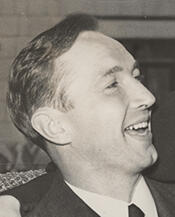
Here you will find contact information for Representative Marion Anthony Zioncheck, including email address, phone number, and mailing address.
| Name | Marion Anthony Zioncheck |
| Position | Representative |
| State | Washington |
| District | 1 |
| Party | Democratic |
| Status | Former Representative |
| Term Start | March 9, 1933 |
| Term End | January 3, 1937 |
| Terms Served | 2 |
| Born | December 5, 1901 |
| Gender | Male |
| Bioguide ID | Z000011 |
About Representative Marion Anthony Zioncheck
Marion Anthony Zioncheck (born Marjan Antoni Zajaczek; December 5, 1900 – August 7, 1936) was an American politician who served as a member of the United States House of Representatives from Washington from 1933 until his death in 1936. A Democrat, he represented Washington’s 1st congressional district for two terms and was known as an ardent champion of President Franklin D. Roosevelt’s New Deal policies, as well as for a series of highly publicized personal escapades that drew national attention.
Zioncheck was born Marjan Antoni Zajaczek in Kęty, Austria-Hungary (now in Poland), the son of Clemens and Frances (née Wlodiga) Zajaccek, whose surname was later anglicized to Zioncheck. His family immigrated to the United States in 1904, when he was a small child, and settled in Seattle, Washington. Growing up in an immigrant household in the Pacific Northwest, he came of age in a period of rapid industrial and political change that would shape his later commitment to progressive and left-wing causes.
Zioncheck attended the University of Washington in Seattle, where he quickly became active in student politics and campus affairs. In 1927 he was elected president of the Associated Students of the University of Washington (ASUW), a position that gave him early experience in leadership and public life. He went on to earn a law degree from the University of Washington, entering the legal profession while simultaneously building a reputation as a left-wing leader within the state’s Democratic Party. During this period he became involved with the Washington Commonwealth Federation, a progressive political organization that advocated social and economic reforms; the Federation would later play a key role in supporting his bid for Congress in 1932.
Rising from local activism to national office, Zioncheck was elected to the U.S. House of Representatives as a Democrat in 1932 and took his seat in March 1933, at the outset of the New Deal era. He served as a Representative from Washington in the United States Congress from 1933 to 1937, though his service ended with his death in 1936 before the completion of his second term. As a member of the House of Representatives, he participated in the legislative process during a significant period in American history, representing the interests of his Seattle-area constituents while strongly backing Roosevelt’s efforts to combat the Great Depression. He was best known in Congress for his tireless advocacy of New Deal programs and for his alignment with progressive and labor-oriented policies promoted by the Washington Commonwealth Federation.
Despite his legislative commitments, Zioncheck’s congressional career was increasingly overshadowed by his flamboyant and erratic public behavior. He became a familiar figure in the national press for a series of antics that included dancing in public fountains and driving a car on the White House lawn. These episodes, widely reported and often ridiculed, led the United Press and other outlets to describe him as a “national joke,” and they provided ammunition to critics of Roosevelt’s policies who sought to discredit New Deal supporters. Under mounting scrutiny from the press and political opponents, and beset by personal and psychological strain, Zioncheck grew depressed and announced that he would not seek reelection to a third term in 1936.
Zioncheck’s personal life during his final year in office was turbulent. In a diary entry dated April 30, 1936, Secretary of the Interior Harold L. Ickes recorded that Zioncheck had asked him to officiate at his wedding to his fiancée, Rubye Louise Nix. Ickes declined, noting that he lacked the authority to perform the ceremony and, aware of Zioncheck’s reputation, did not wish to become involved. The couple instead traveled to Annapolis, Maryland, where they were married, and then went to San Juan, Puerto Rico, for their honeymoon. On August 1, 1936, taking Zioncheck at his word that he would retire from Congress, his friend and political ally, King County Prosecutor Warren Magnuson, filed to run for Zioncheck’s House seat. Earlier that summer, on May 30, 1936, Rubye Zioncheck had left him following an argument during a party at their Washington, D.C., apartment. On June 1 he frantically searched the city for her and was arrested later that day on a lunacy warrant. He was confined in the psychopathic ward of Gallinger Municipal Hospital, where doctors attributed his condition to overwork and his hectic lifestyle; his wife returned to him during this confinement. He was subsequently transferred to a private facility in Towson, Maryland, but escaped and fled back to Washington, D.C., where, as a sitting member of Congress, he claimed congressional immunity.
Having struggled with his mental health during his service in Congress, Zioncheck died by suicide on August 7, 1936, in Seattle. He plummeted from a fifth-floor window of his congressional office in the Arctic Building at 3rd Avenue and Cherry Street in downtown Seattle, an act of autodefenestration. He struck the pavement directly in front of a car occupied by his wife. A note found after his death read, “My only hope in life was to improve the condition of an unfair economic system that held no promise to those that all the wealth of even a decent chance to survive let alone live.” His death occurred before the formal end of his second term, and he is listed among the members of the United States Congress who died in office between 1900 and 1949. In Seattle, his passing was widely mourned; both the University of Washington and the Boeing Company closed down for half a day in his honor. Marion Anthony Zioncheck is buried in Evergreen Washelli Memorial Park in Seattle.
In the years following his death, Zioncheck’s life and career continued to attract interest as a symbol of both New Deal idealism and personal tragedy. His widow, later known as Rubye Nix Wilson, became a well-known artist whose work was exhibited at major institutions including the Museum of Modern Art in New York and the John F. Kennedy Center for the Performing Arts in Washington, D.C. Zioncheck’s story inspired an unpublished book-length poem by Grant Cogswell, entitled “Ode to Congressman Marion Zioncheck,” and was the subject of Phil Campbell’s 2005 nonfiction book “Zioncheck for President: A True Story of Idealism and Madness in American Politics,” which explored his political career and psychological struggles; the film rights to Campbell’s book were optioned in 2007 by director Stephen Gyllenhaal. His life was also recounted in the song “The Ballad of Marion Zioncheck,” released by indie musician Left at London on the 2021 album “T.I.A.P.F.Y.H.,” ensuring that his brief, tumultuous career in Congress remained part of the broader cultural memory of American politics in the New Deal era.