Representative Mark S. Critz
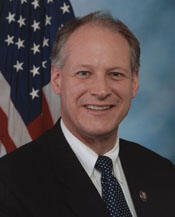
Here you will find contact information for Representative Mark S. Critz, including email address, phone number, and mailing address.
| Name | Mark S. Critz |
| Position | Representative |
| State | Pennsylvania |
| District | 12 |
| Party | Democratic |
| Status | Former Representative |
| Term Start | May 20, 2010 |
| Term End | January 3, 2013 |
| Terms Served | 2 |
| Born | January 5, 1962 |
| Gender | Male |
| Bioguide ID | C001081 |
About Representative Mark S. Critz
Mark Stephen Critz (born January 5, 1962) is an American politician and former U.S. Representative from Pennsylvania, who served in the United States House of Representatives from May 2010 until January 2013. A member of the Democratic Party, he represented Pennsylvania’s 12th congressional district, a largely working-class district in the southwestern part of the state that stretched from Johnstown to the southern suburbs of Pittsburgh. During his two terms in Congress, Critz participated actively in the legislative process and represented the interests of his constituents at a time of economic strain and political polarization.
Critz was born to Mary Lou (née Rybacki) and William S. Critz. His father was of Slovak descent, and his mother is of half-Polish and half-Italian ancestry, giving him roots in the Eastern and Southern European immigrant communities that helped shape western Pennsylvania’s industrial culture. He grew up in the region around Pittsburgh and attended Norwin High School in North Huntingdon, Pennsylvania. Reflecting on his upbringing, Critz later noted that most of his friends’ parents worked in the steel mills or owned small businesses, and that “hundreds of thousands of families relied on steel directly,” underscoring how deeply the local economy depended on heavy industry.
After graduating from Norwin High School, Critz enrolled at Indiana University of Pennsylvania in Indiana, Pennsylvania, where he earned a Bachelor of Science degree in Management Information Systems. He completed his studies during a period when the steel industry in western Pennsylvania was in steep decline, and he later recounted that, after college, he struggled to find work in the decimated local economy. In 1987 he left the region for Wilmington, Delaware, where he took a job managing a Roy Rogers restaurant. Over the ensuing years he worked in a series of management positions in the private sector, including serving as a manager for Spherical Concepts and for the clothing retailer American Eagle Outfitters. He also worked in landscaping and construction, gaining experience in small business operations and blue-collar work that would later inform his political emphasis on jobs and economic development.
Critz’s political career began in the mid-1990s through his association with Congressman John P. Murtha, the longtime Democratic representative of Pennsylvania’s 12th congressional district. In 1994 Critz became a volunteer for Murtha, and in 1998 he joined Murtha’s staff in a paid capacity. Over time he rose to the position of district director, overseeing the congressman’s local offices and focusing on district issues rather than Washington-based legislative work. In that role, he served as Murtha’s liaison to the Flight 93 Memorial committee following the September 11, 2001, terrorist attacks and to officials and families involved in the Quecreek Mine rescue in 2002, helping coordinate federal attention and resources to those high-profile events in western Pennsylvania. PoliticsPA later reported that Critz attended a 2005 meeting with defense contractors and lobbyists at which he offered Murtha’s support for an earmark project that ultimately resulted in the criminal convictions of three men, an episode that drew scrutiny to the congressman’s and staff’s dealings with defense appropriations. For his work on behalf of the military and the National Guard community, Critz was awarded the Patrick Henry Award by the National Guard Association of the United States, the highest civilian honor issued by that organization.
Following Murtha’s death in February 2010, Critz, with the support of Murtha’s widow and the Democratic Party, resigned his staff position on February 22, 2010, to seek the Democratic nomination for the vacant 12th district seat. On March 8, 2010, the Pennsylvania Democratic Party Executive Committee, following the recommendation of district officials, selected him as the party’s nominee; of 49 votes cast, Critz received 30. In the special election held on May 18, 2010, he campaigned on making economic development his top priority in Congress, emphasizing job creation, support for Social Security, and protection of traditional industries such as coal and manufacturing. He received endorsements from Vice President Joe Biden, who campaigned for him in the district, as well as from the Pennsylvania AFL-CIO, the United Mine Workers, and the National Committee to Preserve Social Security and Medicare. In the special election he defeated Republican businessman Tim Burns by a margin of 53 percent to 45 percent, and he was sworn into office on May 20, 2010, to complete Murtha’s term.
Critz stood for a full term in the regularly scheduled November 2010 election, again facing Tim Burns in a rematch. His 2010 campaign reported expenditures totaling $2,428,377.66, with major contributions from entities such as Progeny Systems, Mepco LLC, and Concurrent Technologies. He defeated Burns a second time, by a narrower margin of 51 percent to 49 percent, securing a full two-year term in the 112th Congress. During his tenure, he served on the House Committee on Armed Services, where he sat on the Subcommittee on Tactical Air and Land Forces, the Subcommittee on Seapower and Projection Forces, and the Subcommittee on Military Personnel. He also served on the House Committee on Small Business, acting as ranking member of the Subcommittee on Agriculture, Energy and Trade and as a member of the Subcommittee on Contracting and Workforce. His caucus memberships reflected his district’s economic and geographic profile; he joined the Congressional Coal Caucus, Congressional Military Families Caucus, Congressional Natural Gas Caucus, Congressional Research and Development Caucus, Congressional Rural Education Caucus, International Conservation Caucus, Marcellus Shale Caucus, and the Congressional Arts Caucus.
In Congress, Critz developed a voting record that mixed socially conservative positions with economic populism and a focus on traditional industries. He described himself as pro-life and received a 100 percent approval rating from the National Right to Life Committee, while earning a 0 percent rating from Planned Parenthood. He opposed privatization of Social Security and increases in the retirement age, stating that “Social Security is a contract between the government and Americans who have spent their entire lives working, and it is one the government must honor,” and he pledged to fight efforts to “gamble” Social Security on the stock market. He opposed “cap and trade” and emissions trading proposals in the American Clean Energy and Security Act, reflecting concerns about the impact on coal and manufacturing jobs. On trade policy, he emphasized “fair trade” and on October 12, 2011, voted against free trade agreements with Panama, Colombia, and South Korea. In foreign policy, he voted on July 1, 2010, against limiting Afghanistan military funding to withdrawal and other specified purposes and requiring a timetable for withdrawal, and on March 17, 2011, he again voted against a measure to remove U.S. troops from Afghanistan.
Critz’s voting record and interest-group ratings underscored his alignment with agricultural, labor, and small-business constituencies in his district. He received a 100 percent approval rating from both the American Farm Bureau Federation and the National Farmers Union, as well as 100 percent ratings from the International Brotherhood of Boilermakers and the National Association for the Self-Employed. The International Association of Machinists and Aerospace Workers gave him an 85 percent rating. He received a 50 percent rating from the Defenders of Wildlife Action Fund and a 100 percent rating from the Society for Animal Protective Legislation, and a 50 percent rating from the interest group Federally Employed Women. In September 2010, he voted in favor of a resolution to adjourn the House before the November elections, a closely contested measure that passed 210–209; opponents of adjournment had sought to force action on extending the Bush-era tax cuts before the recess. He voted against the Dodd–Frank Wall Street Reform and Consumer Protection Act, which passed the House in July 2010 by a vote of 239–192, positioning himself against the major Democratic financial regulatory initiative of that Congress.
After the 2010 census, Pennsylvania’s congressional districts were redrawn, and the 12th district was shifted westward to absorb much of the old 4th district, changing its partisan balance and incorporating new territory. Critz chose to run in the redrawn 12th district and faced fellow Democratic incumbent Jason Altmire, the former representative of the 4th district, in the 2012 Democratic primary. Critz defeated Altmire in the primary, but the new district leaned more Republican than its predecessor. In the general election he faced Republican attorney Keith Rothfus, who had previously run against Altmire in 2010. In November 2012, Critz was narrowly defeated by Rothfus, 52 percent to 48 percent, ending his service in Congress in January 2013.
Following his departure from the House, Critz remained active in Pennsylvania politics. On August 14, 2013, he announced on a radio program that he would seek the Democratic nomination for lieutenant governor of Pennsylvania in the 2014 election, aiming to challenge incumbent Republican Lieutenant Governor Jim Cawley on a ticket headed by the Democratic gubernatorial nominee. In the May 20, 2014, Democratic primary, however, he lost to State Senator Mike Stack, who went on to become lieutenant governor. Critz subsequently worked on the campaign of Democrat Tom Wolf, who defeated incumbent Republican Governor Tom Corbett in the 2014 gubernatorial election.
In April 2015, Critz began work as the executive director of the Pennsylvania Rural Development Council, a position that allowed him to continue focusing on economic development, infrastructure, and quality-of-life issues in rural communities across the state. He later reemerged in electoral politics in 2022, when, following another round of redistricting, he became the Democratic nominee for the redrawn 13th congressional district via a write-in campaign, receiving 967 votes in the June 2022 primary. The nomination positioned him to face incumbent Republican Representative John Joyce in the general election, but Critz declined to run, and did not mount a campaign for the seat. Mark Critz resides in Johnstown, Pennsylvania, with his wife, Nancy, and their two children, maintaining close ties to the region that has shaped his personal life and political career.