Representative Mark Hill Dunnell
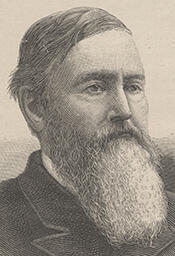
Here you will find contact information for Representative Mark Hill Dunnell, including email address, phone number, and mailing address.
| Name | Mark Hill Dunnell |
| Position | Representative |
| State | Minnesota |
| District | 1 |
| Party | Republican |
| Status | Former Representative |
| Term Start | March 4, 1871 |
| Term End | March 3, 1891 |
| Terms Served | 7 |
| Born | July 2, 1823 |
| Gender | Male |
| Bioguide ID | D000555 |
About Representative Mark Hill Dunnell
Mark Hill Dunnell (July 2, 1823 – August 9, 1904) was an American educator, lawyer, Civil War officer, diplomat, and Republican politician who served as a Representative from Minnesota in the United States Congress from 1871 to 1891. Over the course of seven terms in the House of Representatives, he contributed to the legislative process during a significant period in American history, representing the interests of his Minnesota constituents during Reconstruction and the Gilded Age.
Dunnell was born in Buxton, York County, Maine, on July 2, 1823. He completed his preparatory studies in Maine and graduated from Waterville College (now Colby College) in Waterville, Maine, in 1849. Following his graduation, he devoted himself to education, serving for five years as principal of Norway Academy and Hebron Academy, two important preparatory institutions in Maine. His early career in education helped establish his reputation as an advocate for public instruction and laid the groundwork for his later roles in educational administration and public service.
Dunnell entered public life in Maine in the mid-1850s. He was elected to the Maine House of Representatives in 1854 and served in the Maine Senate in 1855. Reflecting his growing prominence in state affairs, he was appointed state superintendent of common schools in 1855 and again from 1857 to 1859, overseeing the development and administration of Maine’s public school system. A committed member of the emerging Republican Party, he served as a delegate to the Republican National Convention in 1856. During this period he also studied law, was admitted to the bar in 1856, and commenced legal practice in Portland, Maine, in 1860.
With the outbreak of the Civil War, Dunnell entered military service in the Union Army. On May 6, 1861, he was commissioned as colonel of the 5th Maine Volunteer Infantry Regiment. His tenure in uniform was relatively brief, and he was mustered out on August 31, 1861. Soon thereafter, he entered diplomatic service as a representative of the United States abroad, serving as United States consul at Vera Cruz, Mexico, in 1861 and 1862. This combination of legislative, educational, military, and diplomatic experience broadened his perspective and prepared him for later national office.
In 1865 Dunnell moved west to Minnesota, initially settling in Winona. Two years later, in 1867, he relocated to Owatonna, which would remain his home for the rest of his life. He quickly became active in Minnesota public affairs, winning election to the Minnesota House of Representatives in 1867. That same year he was appointed state superintendent of public instruction, a position he held from April 2, 1867, to August 1870. In this role he oversaw the organization and improvement of Minnesota’s public schools during a formative period in the state’s development, resigning the post in 1870 as he prepared to seek national office.
Dunnell was elected as a Republican to the Forty-second, Forty-third, Forty-fourth, Forty-fifth, Forty-sixth, and Forty-seventh Congresses, serving from March 4, 1871, to March 3, 1883, as a member of the U.S. House of Representatives from Minnesota. His service in Congress thus extended over six consecutive terms during a transformative era in American politics and economic growth. During the Forty-seventh Congress he was an unsuccessful candidate for Speaker of the House, reflecting both his seniority and standing within the Republican Party. He was not a candidate for renomination in 1882 and subsequently made an unsuccessful bid for election to the United States Senate in 1883.
After a brief interval out of federal office, Dunnell returned to Congress later in the decade. He was elected again as a Republican to the Fifty-first Congress, serving from March 4, 1889, to March 3, 1891. In total, he served seven terms in the U.S. House of Representatives from Minnesota between 1871 and 1883 and between 1889 and 1891. He was an unsuccessful candidate for reelection in 1890 to the Fifty-second Congress. Remaining active in party affairs, he served as a delegate to the Republican National Convention in 1892, continuing his long association with the Republican Party and its national leadership.
In addition to his legislative and party work, Dunnell was a notable figure in Minnesota’s educational and civic life. He was one of the founders and a member of the board of trustees of Minnesota Academy in Owatonna, a coeducational high school for boys and girls. The institution was later renamed Pillsbury Academy in 1887 and eventually became a military academy for high school boys only in 1920. His role in establishing and guiding this academy reflected his enduring commitment to education, which had marked his career from his early years in Maine through his service in Minnesota.
Mark Hill Dunnell died in Owatonna, Minnesota, on August 9, 1904. He was interred in Forest Hill Cemetery in that city. His legacy in Minnesota is commemorated in part by the city of Dunnell, Minnesota, which bears his name, recognizing his long service to the state as educator, legislator, and member of Congress.