Representative Mark W. Neumann
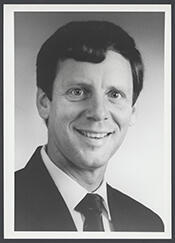
Here you will find contact information for Representative Mark W. Neumann, including email address, phone number, and mailing address.
| Name | Mark W. Neumann |
| Position | Representative |
| State | Wisconsin |
| District | 1 |
| Party | Republican |
| Status | Former Representative |
| Term Start | January 4, 1995 |
| Term End | January 3, 1999 |
| Terms Served | 2 |
| Born | February 27, 1954 |
| Gender | Male |
| Bioguide ID | N000054 |
About Representative Mark W. Neumann
Mark William Neumann (born February 27, 1954) is an American businessman and Republican politician who represented Wisconsin’s 1st congressional district in the United States House of Representatives for two terms, from January 3, 1995, to January 3, 1999. Over the course of his public career he became known for his advocacy of balanced federal budgets, his participation in the Republican Revolution of the mid‑1990s, and his later bids for statewide office in Wisconsin, including campaigns for the United States Senate and for governor.
Neumann was born in East Troy, Wisconsin, one of five siblings, to Stella and Kurt Neumann. His father worked as an electrical engineer for General Motors and his mother was an executive assistant. Raised in a religious household, he later became a member of the Wisconsin Evangelical Lutheran Synod. Neumann graduated from East Troy High School in 1972 and briefly attended the General Motors Institute (now Kettering University). In 1973, he married his high school sweetheart, Sue Link, whom he had met in Sunday school in the fourth grade. That same year he enrolled at the University of Wisconsin–Whitewater, where he graduated with honors in 1975 with a Bachelor of Science degree in mathematics.
Following his undergraduate studies, Neumann moved to River Falls, Wisconsin, where he taught mathematics at River Falls High School while pursuing graduate education. He earned a Master of Science degree in Supervision and Instructional Leadership from the University of Wisconsin–River Falls and undertook additional post‑graduate work at the University of Wisconsin–Madison. After completing his graduate work, Neumann relocated to Milton, Wisconsin, where he continued his career in education by teaching mathematics at Milton High School and at Milton College. He remained on the faculty of Milton College until the institution closed in 1982, after which he increasingly turned his attention to private business.
In 1986, Neumann founded his first company in the basement of his home, beginning with the construction of single‑family homes in the Milton and Janesville, Wisconsin, areas. Under his leadership, the enterprise expanded rapidly, and by 1991 it was recognized by Inc. Magazine as one of the fastest‑growing companies in the United States. This experience as a small‑business owner and homebuilder helped shape his later political emphasis on fiscal conservatism, economic development, and private‑sector job creation.
Neumann entered electoral politics in the early 1990s. In 1992, he ran as a Republican candidate for Wisconsin’s 1st congressional district against incumbent Democratic Representative Les Aspin. Despite spending approximately $700,000 on the race, Neumann lost by a margin of 58 percent to 41 percent. When Aspin was appointed U.S. Secretary of Defense by President Bill Clinton in 1993, his House seat became vacant, prompting a special election. Neumann again sought the seat and narrowly lost to Democrat Peter Barca by only 675 votes, receiving 49.3 percent of the vote to Barca’s 49.9 percent. Undeterred, Neumann ran for the seat a third time in 1994. In that election he defeated Barca by 1,120 votes, becoming the first Republican to hold Wisconsin’s 1st congressional district since 1971. His victory was one of 52 Republican pickups nationwide during the 1994 Republican Revolution.
Neumann was sworn into the 104th United States Congress on January 3, 1995, at a time when the Republican Party gained control of both houses of Congress for the first time since the 1950s. During his two terms in the House of Representatives, from 1995 to 1999, he represented the interests of his southeastern Wisconsin constituents and participated actively in the legislative process. He was the only freshman member appointed to the powerful Committee on Appropriations in 1995, and he also served on the Committee on the Budget. Within Appropriations, he worked on matters related to the Veterans Administration and the Subcommittee on Transportation, Housing and Urban Development, and Related Agencies. A strong fiscal conservative, Neumann drafted his own version of the federal budget designed to achieve balance by 1999, aligning himself with broader Republican efforts to reduce deficits.
Neumann’s tenure in Congress was marked by several notable episodes. In September 1995, he introduced an amendment that would have required explicit congressional approval for the deployment of U.S. troops to Bosnia; when the amendment failed, he joined other freshman members in voting against the $243 billion military appropriations bill on September 29, 1995, because it did not include his provision. As a consequence, Appropriations Committee Chairman Bob Livingston briefly removed him from the committee, although Neumann was later reassigned. In the election for Speaker of the House in 1997, Neumann cast a “present” vote rather than supporting Speaker Newt Gingrich, underscoring his independent streak within the Republican Conference. During this period he also became known for his socially conservative positions; in 1996 he told The New York Times that “if I was elected God for a day, homosexuality wouldn’t be permitted, but nobody’s electing me God,” and he was publicly critical of LGBT rights. Neumann won reelection in 1996 in a close race, defeating Democratic challenger Lydia Spottswood by 4,260 votes.
In September 1997, while still serving in the House, Neumann announced that he would run for the United States Senate against incumbent Democratic Senator Russ Feingold in the 1998 election, rather than seek a third House term. The campaign drew national attention, in part because both candidates agreed to limit their campaign spending to $3.8 million—one dollar for every citizen of Wisconsin. Neumann campaigned as a fiscal conservative and social traditionalist, supporting a ban on so‑called partial‑birth abortion, while Feingold opposed such a ban. Although outside groups spent more than $2 million on Neumann’s behalf, Feingold refused to allow independent expenditures in his favor. In the November 1998 election, Feingold defeated Neumann by 37,787 votes, 51 percent to 48 percent, with Neumann suffering a 68,000‑vote deficit in Milwaukee County. His departure from the House in January 1999 concluded his formal congressional service after two terms.
After leaving Congress, Neumann returned to the private sector and continued his involvement in Republican politics. He remained a prominent figure in Wisconsin conservative circles and was frequently mentioned as a potential candidate for higher office. He stayed out of the 2004 Senate race, instead supporting former Lieutenant Governor Margaret Farrow, who ultimately did not run. Despite speculation that he might challenge Democratic Senator Herb Kohl or Governor Jim Doyle in 2006, Neumann declined to enter either race. He considered a run for governor but stepped aside in deference to Milwaukee County Executive Scott Walker, who later withdrew in favor of former Congressman Mark Green.
Neumann reemerged as a candidate for statewide office in 2009. On April 23, 2009, he told the Wisconsin State Journal that he intended to run for governor in 2010, and he officially declared his candidacy on July 1, 2009. During the 2010 gubernatorial campaign he emphasized job creation and economic development and reiterated his opposition to same‑sex marriage, positioning himself as a fiscal and social conservative alternative within the Republican primary. In the September 14, 2010, primary, Neumann was defeated by Scott Walker, who won 59 percent of the vote to Neumann’s 39 percent and went on to be elected governor in the general election. Neumann remained active in politics and, in 2012, sought the Republican nomination for the U.S. Senate seat being vacated by retiring Democratic Senator Herb Kohl. In that race he placed third in the Republican primary, concluding another chapter in a career that combined entrepreneurship, education, and public service.