Representative Mark H. Schauer
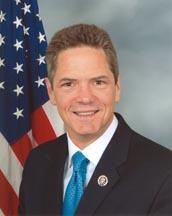
Here you will find contact information for Representative Mark H. Schauer, including email address, phone number, and mailing address.
| Name | Mark H. Schauer |
| Position | Representative |
| State | Michigan |
| District | 7 |
| Party | Democratic |
| Status | Former Representative |
| Term Start | January 6, 2009 |
| Term End | January 3, 2011 |
| Terms Served | 1 |
| Born | October 2, 1961 |
| Gender | Male |
| Bioguide ID | S001178 |
About Representative Mark H. Schauer
Mark Hamilton Schauer (born October 2, 1961) is an American politician and public servant who represented Michigan’s 7th congressional district in the U.S. House of Representatives from January 3, 2009, to January 3, 2011. A member of the Democratic Party, he served one term in Congress during a period of significant national economic and political change, contributing to the legislative process and representing the interests of his south-central Michigan constituents. Before and after his congressional service, Schauer built a long career in local and state government, party leadership, and issue advocacy.
Schauer was born and raised in Howell, Michigan. His mother, Myra (Trafton) Schauer, was a registered nurse, and his father, Robert Schauer, was a high school science teacher. He distinguished himself early academically, graduating as valedictorian of his class at Howell High School. He went on to attend Albion College, where he graduated summa cum laude in 1984. At Albion he was a member of Tau Kappa Epsilon fraternity, was elected to Phi Beta Kappa, and participated in the Gerald R. Ford Institute for Public Policy, experiences that helped shape his interest in public service and policy-making.
Following his undergraduate studies, Schauer began his professional career in public administration and planning. From 1984 to 1987, he worked as an urban planner for the Calhoun County Planning Department while pursuing graduate education. He earned a master’s degree in public administration from Western Michigan University in Kalamazoo, and later completed a master’s degree in political science from Michigan State University in 1997. These academic credentials in public administration and political science complemented his growing practical experience in local government and community-based organizations.
Schauer’s early career in community service deepened when he joined the Community Action Agency (CAA) in Battle Creek, where he initially worked in program development. Shortly thereafter, when the director departed, Schauer was selected to lead the agency. Under his direction, the CAA operated with approximately 200 employees and a 21-member board of directors, administering a broad range of anti-poverty programs, including home weatherization, a foster grandparent program, food assistance initiatives, and the local Head Start program for children. He was a founding board member of Battle Creek Habitat for Humanity in 1988 and, in recognition of fifteen years of service, was named “2003 Public Official of the Year” by Habitat for Humanity of Michigan. Schauer was also actively involved with the Food Bank of South Central Michigan and the Urban League of Battle Creek, and he served on the board of directors of the Kids ’N’ Stuff Children’s Museum in Albion. From 1992 to 1997, he coordinated the Calhoun County Human Services Coordinating Council, further cementing his role in regional human services and nonprofit collaboration.
Schauer’s formal political career began at the local level in Battle Creek. In 1993, he ran for a seat on the Battle Creek City Commission and narrowly lost by about 200 votes. He was later appointed to fill an unexpired term on the commission and subsequently won election to a full term in 1995. Building on this local experience, Schauer sought state office in 1996, running for the 62nd district of the Michigan House of Representatives, which included Battle Creek and surrounding areas. He won that election and was re-elected in 1998 and 2000, winning 67 percent of the vote in his later campaigns. During his tenure in the Michigan House from 1997 to 2002, he served as Assistant Democratic Leader from 1999 to 2000 and chaired the House Education Subcommittee on Violence in the Schools. In 1999, he strongly opposed Republican Governor John Engler’s plan to appoint a monitor for Detroit Public Schools, describing the proposal as “very dangerous” and characterizing it as a form of “receivership.”
In 2002, Schauer successfully ran for the 19th district of the Michigan Senate, again representing Battle Creek and its surrounding region. He defeated Republican State Representative Mickey Mortimer by a margin of 55 percent to 45 percent and won re-election in 2006, defeating Republican Elizabeth Fulton 61 percent to 39 percent. In the Senate, he served as Minority Whip from 2003 to 2006 and, following the 2006 elections, became Senate Minority Leader, a position he held from 2007 to 2009. During his Senate service, he supported reforms to the Michigan Catastrophic Claims Association (MCCA) in 2004 and was active in statewide and national Democratic politics. In June 2007, he joined state senators Liz Brater and Gilda Jacobs and state representative Robert Jones in endorsing Senator Hillary Clinton for president in the 2008 election.
Schauer entered federal politics in 2007, when he formed a finance committee in August to challenge freshman Republican U.S. Representative Tim Walberg in Michigan’s 7th congressional district, a seat long dominated by Republicans and historically numbered as the 2nd District prior to the 1990s redistricting. Identified as a top target by the Democratic Congressional Campaign Committee, Schauer quickly emerged as the leading Democratic contender. His entry into the race prompted other Democratic hopefuls, including David Nacht and former State Senator Jim Berryman, to withdraw. In the Democratic primary, he defeated Sharon Marie Renier by a wide margin, 71 percent to 29 percent. In the November 2008 general election, he unseated Walberg with 49 percent of the vote to Walberg’s 46 percent, carrying four of the district’s seven counties—Calhoun (56 percent), Washtenaw (51 percent), Eaton (50 percent), and Jackson (48 percent). He became only the second Democrat to represent this district since World War I.
As a member of the U.S. House of Representatives in the 111th Congress (2009–2011), Schauer served during the Great Recession and the early years of the Obama administration, a period marked by major economic stimulus and financial regulatory reforms, as well as significant health care and civil rights legislation. A moderate Democrat, he generally voted with his party on key issues and was rated by GovTrack as a “moderate Democratic follower,” indicating that he fell near the center of the Democratic caucus and typically supported the legislative efforts of fellow members. Schauer voted in favor of the Lilly Ledbetter Fair Pay Act, the reauthorization and expansion of the State Children’s Health Insurance Program (SCHIP), and the repeal of the “Don’t Ask, Don’t Tell” policy governing military service by gay and lesbian Americans. He supported the American Recovery and Reinvestment Act, earning praise from the U.S. Chamber of Commerce, and pledged “vigorous oversight” of how stimulus funds were used. Schauer also backed the Dodd–Frank Wall Street Reform and Consumer Protection Act, stating that the legislation would “protect consumers, crack down on the risky practices that put our entire economy at risk, and help lay the groundwork to get our economy back on track,” and explaining that his vote was “about doing what’s fair.” He voted for the Patient Protection and Affordable Care Act, a high-profile decision that drew intense political attention in his 2010 re-election campaign. He voted against the Federal Reserve Transparency Act, which sought to mandate an extensive audit of the Federal Reserve System.
In 2010, Walberg sought a rematch for the 7th district seat. Schauer’s re-election race was widely regarded as highly competitive, with aggregate and nonpartisan polling describing it as a toss-up and a dead heat. He received the endorsement of the Detroit Free Press, Michigan’s largest newspaper, and in the final days of the campaign former President Bill Clinton headlined a rally for him in his hometown. On November 2, 2010, Schauer was defeated by Walberg, who received 50.2 percent of the vote to Schauer’s 45.4 percent. In that election, Schauer carried only two of the district’s seven counties—Eaton (48 percent) and his home county of Calhoun (50 percent)—and left Congress at the conclusion of his term on January 3, 2011.
After his congressional service, Schauer remained active in Michigan and national Democratic politics. In 2014, he became the Democratic nominee for governor of Michigan, challenging incumbent Republican Governor Rick Snyder. In a closely watched race, Schauer was defeated by Snyder, who won 51 percent of the vote to Schauer’s 47 percent. Following the gubernatorial election, Schauer continued his work in party-building and electoral strategy. He became chairman of the political action committee Advantage 2020, an organization focused on helping Democrats regain control of state legislative chambers across the country, reflecting his ongoing commitment to state-level governance, legislative balance, and the broader goals of his party.