Representative Mark Deli Siljander
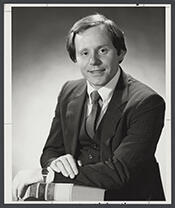
Here you will find contact information for Representative Mark Deli Siljander, including email address, phone number, and mailing address.
| Name | Mark Deli Siljander |
| Position | Representative |
| State | Michigan |
| District | 4 |
| Party | Republican |
| Status | Former Representative |
| Term Start | January 5, 1981 |
| Term End | January 3, 1987 |
| Terms Served | 3 |
| Born | June 11, 1951 |
| Gender | Male |
| Bioguide ID | S000409 |
About Representative Mark Deli Siljander
Mark Deli Siljander (born June 11, 1951) is an American author and politician who served as a Republican U.S. Representative from Michigan from 1981 to 1987. Born in Chicago, Illinois, he grew up in the Chicago area and graduated from Oak Park and River Forest High School in Oak Park, Illinois, in 1969. Time magazine later described him as a fundamentalist Christian, a characterization that reflected the strong religious convictions that would shape both his political career and his later work in international peacemaking and interfaith dialogue.
After high school, Siljander moved to Michigan to pursue higher education. He attended Western Michigan University in Kalamazoo, where he earned both a Bachelor of Science and a Master of Arts degree. Following his studies, he settled in southwestern Michigan and worked as a real estate broker. At an early age he entered local public service, serving as a trustee on the Fabius Township Board in St. Joseph County, Michigan, from 1972 to 1976. These experiences in local government and business provided the foundation for his subsequent rise in state and national politics.
Siljander’s congressional career began with a special election triggered by a high-profile resignation. On January 27, 1981, incumbent Congressman David Stockman resigned from Michigan’s 4th congressional district to become director of the Office of Management and Budget in the Reagan administration. In the ensuing special Republican primary, Siljander placed first in a seven-candidate field with 37 percent of the vote, defeating, among others, Stockman-endorsed tax attorney John Globensky, who received 36 percent, and State Senator John Mowat, who received 22 percent. In the April 21, 1981, special general election, he defeated Democratic Cass County Commissioner Johnie Rodebush by a margin of 69 to 29 percent. He thus entered the U.S. House of Representatives as the member from Michigan’s 4th congressional district, which at the time covered much of southwestern Michigan, including Three Rivers and Kalamazoo. Time magazine noted that the district was predominantly conservative and had elected only one Democrat in the twentieth century, in 1932.
Siljander served in the U.S. House of Representatives from April 21, 1981, to January 3, 1987, completing the remainder of Stockman’s term and then winning election to three full terms. A member of the Republican Party, he contributed to the legislative process during a significant period in American history and served on the House Foreign Affairs Committee. In 1982 he defeated attorney Harold Schuitmaker in the Republican primary by a margin of 56 to 44 percent and won the general election with 60 percent of the vote. In 1984 he again faced a primary challenge, this time from Tim Horan, whom he defeated 58 to 42 percent, and he went on to win re-election to a second full term with 67 percent of the vote. His voting record generally aligned with most other Republicans, but he became particularly known for his firebrand conservative rhetoric and staunch social conservatism. He opposed the Equal Rights Amendment, pornography, abortion, school busing, and what he termed “big spending,” and he supported the neutron bomb, the MX missile, and prayer in public schools. He publicly criticized President Ronald Reagan’s appointment of Sandra Day O’Connor to the Supreme Court, arguing that her record was insufficiently conservative, and he denounced “secular humanists” as having a “perverted” philosophy.
During his time in Congress, Siljander sponsored several notable legislative initiatives. In 1981, Congress enacted an amendment to the FY1982 Foreign Assistance and Related Programs Appropriations Act that became known as the Siljander Amendment. It specified that no U.S. funds could be used to lobby for abortion; Congress later modified the language to bar the use of funds to “lobby for or against abortion.” The provision has remained a touchstone in debates over U.S. funding and abortion advocacy abroad, and in 2020 pro-life members of Congress led by Senator James Lankford invoked the Siljander Amendment to prevent U.S. funding of abortions and abortion advocacy overseas. In 1984, Siljander sponsored another high-profile measure, a single-sentence amendment stating that, “For the purposes of this Act, the term ‘person’ shall include unborn children from the moment of conception.” Journalist Alexander Cockburn described this proposal as “the most far-reaching of all the measures dreamed up by the conservative right to undercut Roe v. Wade.” The amendment failed in the House by a vote of 186 to 219. Siljander also traveled with Christian Watch International to Romania in response to growing concerns over the persecution of religious minorities, and in 1985 he proposed legislation that would deny most-favored-nation trade status to countries that discriminated on cultural, ethnic, or religious grounds.
Siljander’s congressional tenure ended after he lost a primary challenge in 1986. That year he was opposed in the Republican primary by Fred Upton, a former staffer to David Stockman. Upton defeated Siljander by a margin of 55 to 45 percent, becoming the only Republican to unseat an incumbent in a primary that year. Commentators at the time suggested that a contributing factor to Siljander’s defeat was a controversial tape circulated to fundamentalist Christians in the district, in which supporters urged listeners to “break the back of Satan” by defeating Upton. After leaving Congress, Siljander remained involved in public affairs. President Ronald Reagan appointed him as an alternate representative of the United States to the United Nations General Assembly, a position he held from September 1987 to September 1988. In 1992, having relocated to Virginia, he sought the Republican nomination for the 103rd Congress from that state. In that campaign he emphasized what he described as “common-sense American traditional values” rather than explicitly religious themes, and he advocated a budget freeze, a ten percent flat tax, and a line-item veto. He finished second in the Republican primary to Henry N. Butler, a law professor at George Mason University.
In the years following his congressional service, Siljander became increasingly involved in conservative legal advocacy and faith-based diplomacy. He co-founded the Alliance Defending Freedom (ADF), a conservative legal organization whose lawyers later helped craft the model for Mississippi’s anti-abortion legislation that led to the Supreme Court’s decision in Dobbs v. Jackson Women’s Health Organization, which overruled Roe v. Wade in 2022. He also founded Trac5, an initiative aimed at implementing faith-based diplomacy in real-world conflicts, and became president of Bridges to Common Ground, a nonprofit organization focused on conflict resolution and interfaith engagement, particularly between Muslims and Christians. His work in these roles reflected a shift from his earlier reputation as a hard-line social conservative toward a focus on dialogue and peacemaking, especially in the context of the Muslim world.
Siljander’s most prominent public contribution in his post-congressional career has been as an author and mediator. His book, A Deadly Misunderstanding: A Congressman’s Quest to Bridge the Muslim-Christian Divide, was published in 2008 and received a 2009 Nautilus Silver Award. The book includes a foreword by United Nations Secretary-General Ban Ki-moon, with whom Siljander worked closely on efforts to address the humanitarian crisis in Darfur, Sudan. In Ban Ki-moon’s 2021 book, in a chapter titled “The Breakthrough,” the former Secretary-General recounted Siljander’s involvement in resolving aspects of the Darfur crisis, noting that Siljander prayed aloud “passionately for peace in Sudan” and that, on one pivotal night, he persuaded Sudanese President Omar al-Bashir to work more closely with the United Nations. Siljander’s international work also extended to Libya; he was featured in the 2019 Netflix miniseries The Family, which chronicles the history and activities of The Fellowship, a secretive Christian organization with ties to political leaders. In the series, Siljander described his efforts to engage Libyan leader Muammar Gaddafi and to help bring to justice the suspects in the Pan Am Flight 103 Lockerbie bombing.
Siljander’s later career was marked by significant legal troubles arising from his work as a consultant and lobbyist. On January 16, 2008, he was indicted in the U.S. District Court for the Western District of Missouri on five counts, including money laundering, conspiracy, and obstruction of justice. The charges stemmed from his relationship with the Islamic American Relief Agency (IARA), a charity based in Columbia, Missouri, which had hired him in early 2004 to lobby for its removal from a Senate Finance Committee list of organizations suspected of funding international terrorism. IARA was later added to the U.S. Treasury Department’s list of global terrorist organizations and closed in October 2004. Siljander initially pleaded not guilty, but on July 7, 2010, as part of a plea agreement, he pleaded guilty to obstruction of justice and acting as an unregistered foreign agent. On January 12, 2012, he was sentenced to a year and a day in federal prison. At sentencing, U.S. District Judge Nanette Kay Laughrey observed that “under the circumstances of this case there was no specific harm by the lobbying efforts that you undertook,” and stated that “this is not a case about somebody aiding a terrorist, it just isn’t, and it would be wrong of me to, in fact, try to make it out to be that.”
Following his release from prison, Siljander resumed his work in international peacemaking and faith-based diplomacy. His continued advocacy and his earlier pro-life record in Congress later drew the attention of political allies. In December 2020, President Donald J. Trump granted Siljander a presidential pardon, citing his pro-life legislative record and his post-prison work abroad. The pardon drew mixed reactions: it was criticized by Republican Congressman Fred Upton, who had succeeded Siljander in the House after defeating him in the 1986 primary, but it was supported by prominent conservatives including former Attorney General Edwin Meese, former House Speaker Newt Gingrich, former Arkansas Governor Mike Huckabee, Representative Robert Aderholt, and pastor Andrew Brunson. Siljander has remained active in public discourse, including appearing in 2025 on the Jordan Peterson podcast, where he discussed topics ranging from Islam and linguistic studies of the Aramaic language of Jesus to the application of these studies in international peacemaking.