Representative Marlin Edgar Olmsted
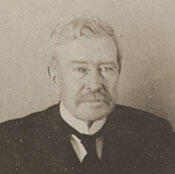
Here you will find contact information for Representative Marlin Edgar Olmsted, including email address, phone number, and mailing address.
| Name | Marlin Edgar Olmsted |
| Position | Representative |
| State | Pennsylvania |
| District | 18 |
| Party | Republican |
| Status | Former Representative |
| Term Start | March 15, 1897 |
| Term End | March 3, 1913 |
| Terms Served | 8 |
| Born | May 21, 1847 |
| Gender | Male |
| Bioguide ID | O000079 |
About Representative Marlin Edgar Olmsted
Marlin Edgar Olmsted (May 21, 1847 – July 19, 1913) was a Republican member of the United States House of Representatives from Pennsylvania, representing the 18th congressional district. He served in Congress from 1897 to 1913, holding office for eight consecutive terms during a period of significant political, economic, and social change in the United States. Over the course of his legislative career, he participated actively in the democratic process and worked to represent the interests of his Pennsylvania constituents within the broader national context.
Olmsted was born on May 21, 1847, and came of age in the years immediately following the Civil War, a time when the nation was grappling with Reconstruction and the transformation of its political institutions. Details of his early life, including his family background and childhood environment, placed him within the milieu of postwar American society, in which questions of industrial growth, regional development, and political realignment were increasingly prominent. These formative years helped shape his later outlook as a legislator in a rapidly modernizing country.
In keeping with the expectations for public men of his generation, Olmsted pursued an education that prepared him for professional and civic life. He undertook legal studies and was admitted to the bar, entering the practice of law and gaining experience in the interpretation and application of statutes and public policy. His legal training and early professional work provided him with a foundation in the workings of government and the rule of law, skills that would later prove essential in his congressional service. Through his legal career, he became familiar with the concerns of individuals, businesses, and local governments in Pennsylvania, which informed his approach to national legislation.
Olmsted’s growing prominence in legal and civic affairs led him into active participation in Republican Party politics at a time when the party was dominant in Pennsylvania and influential nationally. Aligning himself with Republican principles of the era, including support for economic development and a strong national government, he emerged as a credible candidate for federal office. In the 1890s, as debates over tariffs, monetary policy, and industrial regulation intensified, he sought election to the U.S. House of Representatives from Pennsylvania’s 18th district, presenting himself as an advocate for his region’s interests within the broader framework of Republican policy.
Elected as a Republican to the Fifty-fifth Congress, Olmsted took his seat in the House of Representatives in 1897. He was subsequently reelected to seven additional terms, serving continuously until 1913. His tenure thus spanned the administrations of Presidents William McKinley, Theodore Roosevelt, and William Howard Taft, encompassing events such as the Spanish–American War, the rise of American overseas influence, and the Progressive Era’s early reforms. Within the House, he contributed to the legislative process through committee work, debate, and the consideration of measures affecting both Pennsylvania and the nation, reflecting the priorities of his party and the evolving concerns of his constituents.
During these sixteen years in Congress, Olmsted represented a district shaped by industrial and commercial development, and he participated in deliberations on issues central to that transformation, including economic policy, infrastructure, and the regulation of commerce. As a member of the Republican majority for much of his service, he had opportunities to influence the direction of legislation and to support initiatives aligned with the party’s national agenda. His repeated reelection indicated sustained support from voters in the 18th district, who relied on him to articulate their interests in Washington during a period of rapid change.
Olmsted’s congressional service concluded in 1913, marking the end of a long and continuous period in federal office. Having spent eight terms in the House, he left a record of participation in some of the defining legislative debates of the turn of the twentieth century. After departing Congress, he returned to private life, drawing on his long experience in law and public affairs. He died on July 19, 1913, only a few months after the close of his final term, bringing to an end a career that had been closely intertwined with the political and institutional development of the United States during the late nineteenth and early twentieth centuries.