Senator Marlow Webster Cook
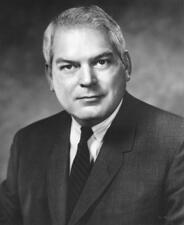
Here you will find contact information for Senator Marlow Webster Cook, including email address, phone number, and mailing address.
| Name | Marlow Webster Cook |
| Position | Senator |
| State | Kentucky |
| Party | Republican |
| Status | Former Representative |
| Term Start | December 17, 1968 |
| Term End | December 27, 1974 |
| Terms Served | 2 |
| Born | July 27, 1926 |
| Gender | Male |
| Bioguide ID | C000721 |
About Senator Marlow Webster Cook
Marlow Webster Cook (July 27, 1926 – February 4, 2016) was an American lawyer and Republican politician from Kentucky who served as a United States Senator from his appointment in December 1968 to his resignation in December 1974. A prominent Rockefeller Republican, he represented Kentucky during a significant period in American history, contributing to the legislative process over two terms in office and becoming one of the first Republican senators to call for President Richard Nixon’s resignation during the Watergate scandal.
Cook was born in Akron, a town in Erie County, New York. At the age of seventeen he moved to Louisville, Kentucky, a relocation that would shape his personal and political life. Also at seventeen, during World War II, he joined the United States Navy and served on submarines in both the European Theater of Operations and in the Pacific War. Following his military service, he returned to Louisville and enrolled at the University of Louisville, where he earned a Bachelor of Arts degree in 1948 and a law degree in 1950. After admission to the bar, he practiced law in Louisville from 1950 until 1957, establishing himself in the local legal community.
Cook entered elective politics in the late 1950s. He was elected to the Kentucky House of Representatives in 1957 and was reelected in 1959. During his tenure in the state legislature, he served on a special committee analyzing education in Kentucky and on a planning committee, gaining experience in policy development and state governance. In 1961 he successfully ran for Jefferson County Judge, a position roughly equivalent to a county executive or mayor for populous Jefferson County, which by the 1960s consisted largely of Louisville’s suburbs. His election, alongside fellow Republican William Cowger as mayor of Louisville, ended 28 years of continuous Democratic control of those two key local offices.
As Jefferson County Judge, Cook became known for both administrative reforms and a high-profile preservation initiative. In 1962 he was primarily responsible for the county’s $34,000 purchase at government auction in Cincinnati of the decrepit steamboat Avalon, then regarded as little more than scrap. Cook intended the purchase to draw attention to Louisville’s historic cobblestone wharf at a time when Interstate 64 was being constructed along the city’s waterfront. The refurbished vessel was renamed the Belle of Louisville and became one of the city’s most recognizable symbols, continuing to carry passengers annually well into the twenty-first century. A politically motivated taxpayer lawsuit challenged what critics called an “outrageous sum” for a “throwback to the Dark Ages of transportation,” but Cook countered that the cost amounted to roughly six cents per taxpayer. He famously kept a jar of pennies in his desk to reimburse any citizen who complained, and in a later interview recalled writing several six-cent checks at the insistence of some taxpayers, none of which was ever cashed. Cook was reelected county judge in 1965 by a wide margin, defeating Democrat William B. Stansbury by 121,481 votes to 71,280.
In 1967, Cook sought higher office as a candidate for governor of Kentucky, running at the top of a Republican slate in the party’s primary. He was narrowly defeated by the more conservative Barren County judge Louie Nunn, who went on to become the first Republican governor of Kentucky since 1943. Nunn had previously been the party’s unsuccessful gubernatorial nominee in 1963, when he narrowly lost to Democrat Ned Breathitt, at a time when Kentucky governors were constitutionally barred from succeeding themselves in office. Despite his primary loss, Cook remained a leading figure in Kentucky Republican politics and soon turned his attention to federal office.
In 1968, Cook ran for the United States Senate to fill the vacancy created by the retirement of another moderate Republican, Thruston Ballard Morton, a former chairman of the Republican National Committee. He was appointed to the Senate in December 1968 and then elected in the general election held that year, in which Richard Nixon carried Kentucky over Hubert Humphrey and George Wallace. Cook defeated Democratic nominee Katherine Peden, a former state commerce commissioner, and in doing so became the first Roman Catholic to hold statewide office in Kentucky. As a senator, he was identified with the moderate, reform-minded wing of the Republican Party and was considered a Rockefeller Republican. His service in Congress occurred during a tumultuous era marked by the Vietnam War, civil rights struggles, and the unfolding Watergate scandal. In that context, Cook distinguished himself as one of the first Republican senators to publicly urge President Nixon to resign.
Cook’s Senate career ended in 1974, when he was defeated in his bid for reelection by Democratic Governor Wendell Ford, a popular figure in Kentucky politics. During the campaign, Cook’s repeated and ultimately unsuccessful pleas for Ford to debate him were regarded as unusual. After the election, Cook resigned his seat early, in December 1974, so that Ford could resign the governorship and be appointed to the Senate by his successor, Governor Julian Carroll, thereby gaining seniority upon taking office. This mirrored the earlier transition in 1968, when Morton had resigned early to allow Cook to enter the Senate with greater seniority.
After leaving the Senate, Cook practiced law in Washington, D.C., continuing his involvement in public affairs from the nation’s capital. He remained in legal practice there until 1989, when he retired to Sarasota, Florida. In the early 1980s he partnered with former Democratic U.S. Representative David N. Henderson of North Carolina to form the lobbying firm Cook and Henderson. The firm became one of the primary political lobbying operations for the Tobacco Institute, reflecting Cook’s continued engagement with national policy issues and corporate interests. Over the years, several of his former staff members rose to prominence in Congress. Mitch McConnell, later Senate Minority Leader, served as Cook’s chief legislative aide from 1968 to 1970, and John Yarmuth, who would become chair of the House Committee on the Budget and a Democratic representative from Kentucky, worked as an aide to Cook in the 1970s before changing party affiliation.
In his later political commentary, Cook often expressed discomfort with the rightward shift of the Republican Party and of some of his former protégés. Although McConnell had assisted Cook in advancing the unsuccessful Equal Rights Amendment during Cook’s Senate tenure, Cook later opposed McConnell in the 1984 Senate campaign in which McConnell defeated incumbent Democrat Walter Dee Huddleston. In subsequent years, Cook criticized what he saw as McConnell’s increasingly conservative positions, particularly his opposition to the Affordable Care Act. Cook’s moderate Republican identity was also evident in national politics: in a strongly worded 2004 op-ed, he announced his support for Democratic Senator John Kerry of Massachusetts in the presidential election, writing, “I have been, and will continue to be, a Republican. But when we as a party send the wrong person to the White House George W. Bush, then it is our responsibility to send him home if our nation suffers as a result of his actions.”
Marlow Webster Cook died on February 4, 2016, in Sarasota, Florida, from complications of a heart attack, at the age of 89. His papers and moving image and audio recordings from his Senate years, dating from 1969 to 1974 and undated, are preserved at the University of Kentucky Libraries Special Collections Research Center, and his career is documented in the Biographical Directory of the United States Congress and in appearances on C-SPAN.