Representative Marshall Arnold
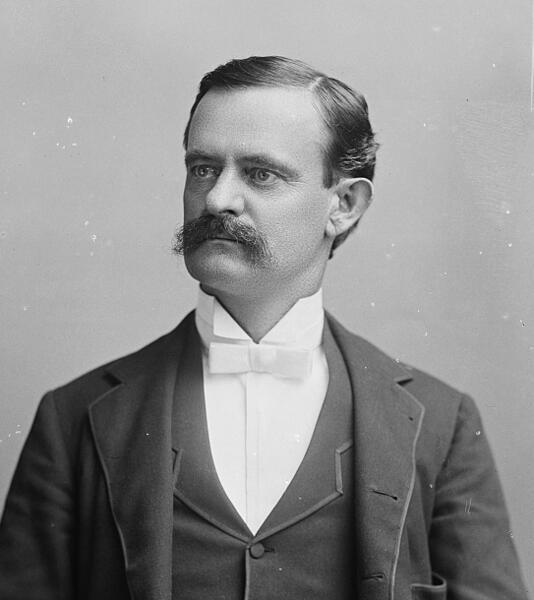
Here you will find contact information for Representative Marshall Arnold, including email address, phone number, and mailing address.
| Name | Marshall Arnold |
| Position | Representative |
| State | Missouri |
| District | 14 |
| Party | Democratic |
| Status | Former Representative |
| Term Start | December 7, 1891 |
| Term End | March 3, 1895 |
| Terms Served | 2 |
| Born | October 21, 1845 |
| Gender | Male |
| Bioguide ID | A000292 |
About Representative Marshall Arnold
Marshall Arnold (October 21, 1845 – June 12, 1913) was a Democratic U.S. Representative from Missouri who served two terms in the United States House of Representatives from 1891 to 1895. Over the course of a public career that spanned local, state, and national office, he was closely identified with the legal and political life of southeastern Missouri in the late nineteenth century.
Arnold was born on October 21, 1845, at Cook Settlement, near Farmington, in St. Francois County, Missouri. He was raised in a rural community and attended the common schools of the area, receiving the basic education typical of mid-nineteenth-century frontier Missouri. His early life in St. Francois County, then a largely agricultural region, helped shape his familiarity with the concerns of small communities and local institutions that would later inform his public service.
After completing his schooling, Arnold entered the field of education. He served as a professor at Arcadia College in Arcadia, Missouri, in 1870 and 1871. Arcadia College was an important regional institution of higher learning, and his position there reflected both his educational attainment and his standing in the community. His experience in the classroom preceded his transition into public administration and the law, and it provided him with a grounding in the issues of education and civic development.
Arnold soon moved into local government service in his home county. He became deputy clerk of the circuit, county, and probate courts of St. Francois County, Missouri, a role that gave him practical experience with court administration and the operation of the judicial system. While engaged in these duties, he studied law, preparing himself for admission to the bar. In 1872 he was admitted to the bar and commenced the practice of law in Commerce, Missouri, a town in Scott County along the Mississippi River. His legal practice quickly led to further responsibilities in public office.
From 1873 to 1876 Arnold served as prosecuting attorney of Scott County, Missouri. In that capacity he represented the state in criminal proceedings and became a prominent legal figure in the county. Building on his local reputation, he was elected to the Missouri House of Representatives, serving as a member of the state legislature from 1877 to 1879. His tenure in the Missouri General Assembly marked his entry into legislative work and party politics at the state level, aligning him with the Democratic Party during a period of reconstruction and economic adjustment following the Civil War.
Arnold’s state-level experience and legal background paved the way for his election to the United States Congress. A member of the Democratic Party, he was elected as a Democrat to the Fifty-second and Fifty-third Congresses and served as a Representative from Missouri from March 4, 1891, to March 3, 1895. His service in Congress occurred during a significant period in American history, marked by debates over tariffs, monetary policy, and agricultural distress in the wake of the Panic of 1893. As a member of the House of Representatives, Arnold participated in the legislative process, represented the interests of his Missouri constituents, and took part in the broader democratic process of the era. He sought reelection in 1894 to the Fifty-fourth Congress but was unsuccessful, concluding his service in the national legislature at the end of his second term.
Following his departure from Congress, Arnold returned to private life and the practice of law. He resumed his legal career in Benton, the county seat of Scott County, Missouri, where he continued to be a figure in local legal and civic affairs. He remained in Benton for the rest of his life, maintaining his professional activities and his connections to the community he had long served.
Marshall Arnold died in Benton, Missouri, on June 12, 1913. He was interred in Benton Cemetery. His career, encompassing roles as educator, court official, prosecuting attorney, state legislator, and U.S. Representative, reflected the trajectory of a nineteenth-century Missouri lawyer-politician who rose from local service to national office while remaining rooted in the communities of southeastern Missouri.