Representative Martha Roby
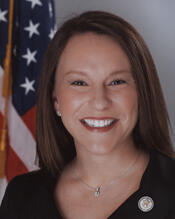
Here you will find contact information for Representative Martha Roby, including email address, phone number, and mailing address.
| Name | Martha Roby |
| Position | Representative |
| State | Alabama |
| District | 2 |
| Party | Republican |
| Status | Former Representative |
| Term Start | January 5, 2011 |
| Term End | January 3, 2021 |
| Terms Served | 5 |
| Born | July 27, 1976 |
| Gender | Female |
| Bioguide ID | R000591 |
About Representative Martha Roby
Martha Kehres Roby (ROH-bee; née Dubina; born July 26, 1976) is an American lawyer and Republican politician who represented Alabama’s 2nd congressional district in the U.S. House of Representatives from January 3, 2011, to January 3, 2021. She served five consecutive terms in Congress, having first been elected in 2010 when she defeated incumbent Democratic Representative and former Montgomery mayor Bobby Bright. In that election year, Roby and Terri Sewell became the first women elected to Congress from Alabama in regular elections. On July 26, 2019, Roby announced that she would retire from Congress at the end of her fifth term, which concluded in 2021.
Roby was born Martha Kehres Dubina on July 26, 1976, in Montgomery, Alabama. She is the daughter of Joel F. Dubina, who later served as a judge on the U.S. Court of Appeals for the Eleventh Circuit, giving her early exposure to the legal and judicial world. Raised in Montgomery, she grew up in a politically and civically engaged family environment that helped shape her interest in public service and the law.
Roby attended New York University, where she earned a Bachelor of Music degree, reflecting an early interest in the arts. She subsequently returned to Alabama to pursue a legal education, enrolling at the Cumberland School of Law at Samford University in Birmingham. She received her Juris Doctor degree and was admitted to the bar, beginning her professional career as an attorney. Before entering national politics, she practiced law and became involved in local civic and political activities in the Montgomery area.
Roby’s formal political career began at the municipal level. She was elected to the Montgomery City Council, where she represented District 7. In that role, she focused on local governance issues, including municipal services, public safety, and economic development, and gained experience in legislative deliberation and constituent service. Her tenure on the city council helped establish her reputation as a conservative Republican and positioned her for higher office.
In 2010, Roby challenged incumbent Democratic U.S. Representative Bobby Bright in Alabama’s 2nd congressional district, a historically conservative district. In the four-candidate Republican primary, she placed first with 49 percent of the vote, narrowly missing the 50 percent threshold needed to avoid a runoff. Rick Barber finished second with 29 percent, forcing a runoff election in which Roby defeated him by a 60–40 percent margin. The general election campaign against Bright became one of the most expensive in the district’s history. Roby spent a total of $1,240,275.64 on her 2010 race, with most funds coming from large individual contributions. Her top contributor was Jim Wilson and Associates, a Montgomery real estate developer, which contributed $25,300, and leadership PACs contributed a total of $106,010. In November 2010, she defeated Bright by a 51–49 percent margin, a difference of 4,780 votes, winning 7 of the district’s 16 counties—Autauga, Elmore, Covington, Coffee, Geneva, Dale, and Houston—while Bright carried Montgomery County with 59 percent of the vote. She took office on January 3, 2011, beginning a decade of service in the U.S. House of Representatives.
During her congressional tenure, Roby was repeatedly returned to office by the voters of Alabama’s 2nd district. In her 2012 bid for a second term, she received endorsements from 36 mayors in Alabama, the Alabama Farmers Federation, and the Susan B. Anthony List. The 2nd district’s longstanding conservative orientation aided her re-election prospects, and she defeated Democratic nominee Therese Ford by a 64–36 percent margin, winning 11 of the district’s 15 counties while losing her home county of Montgomery by 53–47 percent. In a subsequent election cycle, she again prevailed decisively, winning with 67.34 percent of the vote against Democratic nominee Erick Wright. On March 1, 2016, Roby won the Republican primary with 64 percent of the vote and went on to win the general election with 48.8 percent, while Democrat Nathan Mathis received 40.5 percent and write-in candidates 10.7 percent. In a later race, she faced Bobby Bright once more, after he had switched to the Republican Party. Roby defeated him in the Republican primary and then in a runoff, receiving 68 percent of the vote in the runoff, and in the general election she defeated Democratic nominee Tabitha Isner with 61.4 percent of the vote.
Roby’s legislative record reflected her conservative positions on regulation, social policy, and national security. In December 2011, she voted in support of H.R. 10, the “Regulations From the Executive in Need of Scrutiny (REINS) Act,” which would have required congressional approval for any “major regulations” issued by the executive branch, differing from the 1996 Congressional Review Act by not requiring the president’s signature or an override of a probable presidential veto. In September 2013, she voted to cut $39 billion from the Supplemental Nutrition Assistance Program (food stamps), a significant action given that in 2011 approximately 41,000 households in her district received food stamps. On foreign policy and military engagement, she voted in favor of banning the use of armed forces in Libya without congressional approval and opposed the removal of armed forces from Afghanistan in 2011, reflecting a view that Congress should exercise oversight over military deployments while maintaining a robust U.S. presence in key conflict zones.
Roby was also active on issues of government transparency, ethics, and executive oversight, particularly during the Trump administration. In February 2017, she voted against a resolution that would have directed the House to request 10 years of President Donald Trump’s tax returns for review by the House Ways and Means Committee in a closed session. That same year, she co-sponsored a bipartisan bill requiring sexual harassment and anti-discrimination training for all House members, employees, staff, and unpaid personnel; the bill passed the House. She opposed the use of taxpayer funds to settle sexual harassment claims against lawmakers, aligning herself with efforts to reform congressional workplace policies. In December 2019, as a member of the House Judiciary Committee, she voted to oppose the first impeachment of President Trump. During the committee vote, her young son George sat on her lap, an image that drew public attention. Roby stated that Americans “should feel cheated” by what she characterized as an “incomplete and inadequate pursuit of the truth” by House Democrats in the impeachment process.
On social issues, Roby consistently identified as “unapologetically pro-life.” As of 2019, she held a 0 percent rating from Planned Parenthood. She supported the Hyde Amendment, opposed allowing abortion providers access to Title X family planning funds, and opposed sex-selective and race-selective abortions. Roby backed efforts to include “preborn human person[s]” within the protections of the Fourteenth Amendment to the United States Constitution and co-sponsored legislation to that effect, including the Sanctity of Human Life Act. In 2011, she signed on to a prohibition on funding the United Nations Population Fund, reflecting her opposition to international programs she believed were linked to abortion. She also took strong positions on national security and terrorism, and in the aftermath of the June 2016 terrorist attack in Orlando, Florida, she stated that she was “horrified and heartbroken” by the attack, called for prayers for the victims and their families, and described it as the worst terrorist attack on American soil since September 11, 2001. She argued that the fight against “radical Islamic terrorism” was not solely an overseas struggle but one that had reached the homeland and required American leaders to recognize and address it.
In addition to her work on national legislation, Roby focused on district-level priorities, including infrastructure and rural development. She helped secure more than $3.6 million in funding to expand broadband internet access in rural Autauga County, Alabama, seeking to improve connectivity and economic opportunity in underserved areas of her district. Throughout her five terms, she participated in the legislative process on a wide range of issues, representing the interests of her constituents in a period marked by partisan polarization, debates over health care and federal spending, and two presidential administrations. On July 26, 2019, she publicly announced that she would not seek re-election and would retire from Congress at the end of her fifth term, which ended in January 2021, concluding a decade of service in the U.S. House of Representatives.