Representative Martin Charles Ansorge
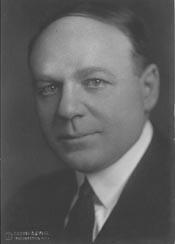
Here you will find contact information for Representative Martin Charles Ansorge, including email address, phone number, and mailing address.
| Name | Martin Charles Ansorge |
| Position | Representative |
| State | New York |
| District | 21 |
| Party | Republican |
| Status | Former Representative |
| Term Start | April 11, 1921 |
| Term End | March 3, 1923 |
| Terms Served | 1 |
| Born | January 1, 1882 |
| Gender | Male |
| Bioguide ID | A000260 |
About Representative Martin Charles Ansorge
Martin Charles Ansorge (January 1, 1882 – February 4, 1967) was an American lawyer, businessman, and Republican politician who served as a United States Representative from New York from 1921 to 1923. Over the course of a varied public and private career, he was active in New York City politics, federal legislative initiatives, major infrastructure development, and corporate governance, while also maintaining a long-standing law practice.
Ansorge was born into a Jewish household in Corning, Steuben County, New York, on January 1, 1882, the son of Mark Perry Ansorge and Jennie Bach Ansorge. He attended the public schools and then the College of the City of New York. He went on to Columbia College of Columbia University, from which he graduated in 1903, and continued at Columbia Law School, earning his law degree in 1906. That same year he was admitted to the bar and commenced the practice of law in Manhattan, New York City. During his student years he founded the Young Republicans at Columbia University, beginning a long association with Columbia’s president, Nicholas Murray Butler, who became his mentor, close friend, and political ally.
Establishing himself as an attorney in New York City, Ansorge quickly became involved in Republican politics. He served on Butler’s staff at Republican national conventions and spoke on Butler’s behalf at political rallies in New York, helping to advance Butler’s standing within the party. Ansorge was the unsuccessful Republican candidate for election to Congress in 1912, 1914, and 1916. In his 1916 campaign for the 21st District Congressional seat, he adopted the slogan “Feed America First,” advocating an embargo on the shipment abroad of foodstuffs needed for American consumption, and taking a clear position on international trade and tariff policy in the context of the World War I era. He declined the Republican nomination for Congress in 1918. During this period he also emerged as a civic leader in infrastructure planning, becoming the first chairman of the Triborough Bridge Committee, a post he held from 1918 to 1921, in which he worked to advance plans for what would become one of New York City’s most important transportation links.
During the First World War, Ansorge enlisted as a private in the United States Army. He was assigned to the Motor Transport Corps and stationed at Camp Meigs in what is now the Brentwood neighborhood of Washington, D.C., with the intention of serving in France. The armistice of November 1918 occurred before he was deployed overseas, and he was honorably discharged at the end of the war. Returning to civilian life, he resumed his law practice and continued his involvement in Republican politics and public affairs in New York.
Ansorge was elected as a Republican to the 67th United States Congress and served one term from March 4, 1921, to March 3, 1923, representing a New York district during a significant period in American history marked by postwar adjustment and major domestic policy debates. As a member of the House of Representatives, he participated in the legislative process and represented the interests of his constituents, contributing to the broader democratic process. He was particularly influential in efforts to enact the first-ever federal anti-lynching legislation. His work helped shape what became the Dyer Anti-Lynching Bill, which sought to make lynching a federal crime. The bill passed the House of Representatives by a vote of 230 to 119 but was filibustered in the Senate by Southern Democrats and never became law. Following a speech Ansorge delivered in support of the bill, Nicholas Murray Butler wrote to him: “You are making a fine and highly patriotic record in the House, and your friends are proud of you,” reflecting the esteem in which his advocacy was held.
Ansorge also played a significant role in the development of the Port of New York. He was co-author of the original Port Authority Bill, which he helped shepherd successfully through Congress, and he was an active leader in efforts to develop what he described as “the greatest port in the world,” linking New York and New Jersey. He personally presented the bill to President Warren G. Harding for signature into law. The pen Harding used to sign the legislation remained in the Ansorge family for some years before being donated to the Museum of the City of New York. In 1922, during his term in Congress, Ansorge nominated Emile Treville Holley, the first African American since 1874 to be put forward for appointment to the U.S. Naval Academy at Annapolis. Although three Black midshipmen had attended in the 1870s, Holley was ultimately not accepted for enrollment because of entrenched racist attitudes. Contemporary reporting in The New York Times noted that naval officers and midshipmen, though unwilling to speak publicly, anticipated that Holley would face social ostracism and “Coventry,” as had earlier Black midshipmen. Holley instead enrolled at Middlebury College in Vermont and later became a college professor.
Ansorge’s congressional service ended after he sought reelection in 1922 and lost to Democrat Royal H. Weller by a margin of 345 votes. He contested the result, successfully obtaining dismissal of an injunction that had prevented the opening of the ballot boxes. A subsequent recount reduced Weller’s margin of victory to 10 votes, but Weller ultimately retained the seat and Ansorge left Congress at the close of his term in March 1923. Despite his defeat, Ansorge’s single term in the House left a record of engagement with civil rights legislation and major regional infrastructure policy.
After leaving Congress, Ansorge remained active in public life and the law. He was an unsuccessful candidate for judge of the Court of General Sessions of New York City in 1924, and he ran unsuccessfully for justice of the Supreme Court of New York in 1927 and again in 1928. The New York Times later mentioned him as a potential candidate for Mayor of New York City in 1949, indicating that he continued to be regarded as a figure of some prominence in Republican and civic circles. Alongside his political activities, he continued to practice law in New York City and developed a substantial career in corporate and transportation matters.
In the private sector, Ansorge served as a member of the board of directors of United Air Lines from 1934 to 1961, participating in the governance of a major American commercial airline during a formative period for civil aviation. In his legal practice he represented prominent clients, including industrialist Henry Ford in the Aaron Sapiro libel lawsuit. That high-profile case concluded with Ford issuing public apologies and agreeing to pay court costs, a resolution in which Ansorge played a key role as Ford’s counsel. He remained professionally active for many years, maintaining his residence at the Ansonia Hotel at 74th Street and Broadway in Manhattan.
Martin Charles Ansorge died at his apartment in the Ansonia Hotel in Manhattan, New York City, on February 4, 1967. He was interred in Temple Israel Cemetery in Hastings-on-Hudson, New York. His life and career, marked by service in Congress, advocacy for federal anti-lynching legislation, leadership in the creation of the Port Authority of New York and New Jersey, and decades of legal and corporate work, have placed him among the notable Jewish members of the United States Congress.