Senator Martin Waltham Bates
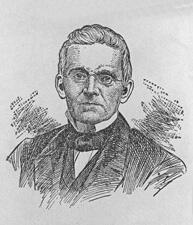
Here you will find contact information for Senator Martin Waltham Bates, including email address, phone number, and mailing address.
| Name | Martin Waltham Bates |
| Position | Senator |
| State | Delaware |
| Party | Democratic |
| Status | Former Representative |
| Term Start | December 7, 1857 |
| Term End | March 3, 1859 |
| Terms Served | 1 |
| Born | February 24, 1786 |
| Gender | Male |
| Bioguide ID | B000238 |
About Senator Martin Waltham Bates
Martin Waltham Bates (February 24, 1786 – January 1, 1869) was a lawyer and politician from Dover, in Kent County, Delaware, who served in the Delaware General Assembly and as a United States Senator from Delaware. Over the course of his public life he was first affiliated with the Federalist Party and later with the Democratic Party, and he participated in state and national politics during a period of mounting sectional tension in the years preceding the American Civil War.
Bates was born on February 24, 1786, in Salisbury, Connecticut. Little is recorded about his early family background or childhood in Connecticut, but as a young man he left New England and settled in Delaware, where he would spend the remainder of his life. After moving to Delaware, he initially supported himself as a schoolteacher. During this period he pursued further study in both medicine and the law, reflecting the broad professional training common among early nineteenth‑century American public figures.
Bates married Mary Hillyard, the daughter of prominent Delawarean Charles Hillyard. The couple made their home in Dover at “Woodburn,” a notable residence that would later become the official Delaware Governor’s Mansion. They were members of the Presbyterian Church, and Bates became closely identified with the civic and social life of Dover. His legal studies culminated in his admission to the Delaware bar in 1822, after which he established a law practice in Dover. He practiced law there for the rest of his life, building a reputation that underpinned his subsequent political career.
Bates’s formal political career began at the state level. Originally a member of the Federalist Party, he entered elective office when he served in the Delaware House of Representatives during the 1826 session of the Delaware General Assembly. At that time, Delaware elections were held on the first Tuesday of October, and members of the General Assembly took office on the first Tuesday of January. State Representatives served one‑year terms, and the General Assembly exercised significant authority, including the selection of United States senators and delegates to state constitutional conventions. As the Federalist Party declined nationally, Bates later aligned himself with the Democratic Party, reflecting the shifting partisan landscape of the era.
In addition to his service in the State House, Bates played a role in shaping Delaware’s fundamental law as a member of the Delaware Constitutional Convention of 1852. Delegates to this convention were chosen by the General Assembly, and Bates’s selection indicated the esteem in which he was held in state political circles. The convention undertook a comprehensive revision of the state’s constitutional framework, and his participation placed him at the center of mid‑nineteenth‑century debates over representation, governance, and the organization of state institutions.
Bates’s national service came with his election to the United States Senate from Delaware. A member of the Democratic Party by this time, he became U.S. Senator in 1857 when he was elected by the Delaware General Assembly to fill the vacancy caused by the death of Senator John M. Clayton, a vacancy that had been briefly filled by the appointment of Joseph P. Comegys. The General Assembly, which chose U.S. senators in this period, elected Bates to serve the remainder of Clayton’s term. He took his seat on January 14, 1857, and served until March 3, 1859. His tenure thus lasted for one term in office, during the 34th and 35th Congresses, a significant period in American history marked by intensifying disputes over slavery, sectional balance, and the future of the Union. As a member of the Senate, Bates participated in the legislative process, represented the interests of his Delaware constituents, and contributed to the democratic process at the federal level.
Bates sought to continue in the Senate but was defeated for reelection in 1858 by Willard Saulsbury Sr., another Delaware Democrat, and therefore served only the remainder of the unexpired term that ended on March 3, 1859. After leaving the Senate, he returned to Dover and resumed his legal practice, remaining a respected figure in Delaware’s legal and political community. He continued to reside at Woodburn and to be active in local affairs, though he did not again hold high public office.
Martin Waltham Bates died in Dover, Delaware, on January 1, 1869. He was buried in the Old Presbyterian Cemetery in Dover, on the grounds of what is now the Delaware State Museum. His life spanned from the early years of the new republic through the Civil War era, and his career reflected both the evolution of Delaware’s political institutions and the broader transformations in American party politics during the first half of the nineteenth century.