Representative Martin Linn Clardy
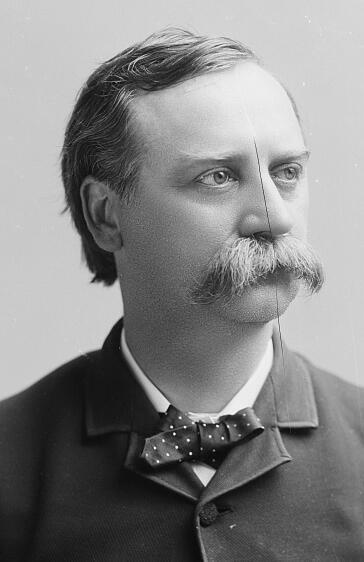
Here you will find contact information for Representative Martin Linn Clardy, including email address, phone number, and mailing address.
| Name | Martin Linn Clardy |
| Position | Representative |
| State | Missouri |
| District | 10 |
| Party | Democratic |
| Status | Former Representative |
| Term Start | March 18, 1879 |
| Term End | March 3, 1889 |
| Terms Served | 5 |
| Born | April 26, 1844 |
| Gender | Male |
| Bioguide ID | C000417 |
About Representative Martin Linn Clardy
Martin Linn Clardy (April 26, 1844 – July 5, 1914) was a nineteenth-century politician, lawyer, and railroad executive from Missouri who served as a Representative from Missouri in the United States Congress from 1879 to 1889. A member of the Democratic Party, he represented his state in the U.S. House of Representatives for five consecutive terms during a significant period in American history, contributing to the legislative process and the democratic governance of his era.
Clardy was born near Farmington, St. Francois County, Missouri, on April 26, 1844. He spent his early years in this rural part of southeastern Missouri before pursuing higher education. He attended Saint Louis University in St. Louis, Missouri, and later studied at the University of Mississippi. He completed his formal education at the University of Virginia, from which he graduated. This combination of institutions in different regions of the country exposed him to a broad range of intellectual and political currents in the years immediately preceding and during the Civil War.
During the American Civil War, Clardy served in the Confederate Army until the close of the conflict. Over the course of his military service, he rose to the rank of major. His wartime experience in the Confederate forces placed him among the many Southern and border-state veterans who would later enter public life during Reconstruction and the post-Reconstruction period, shaping their views on national reconciliation, federal authority, and regional development.
After the war, Clardy turned to the study of law. He was admitted to the bar and commenced legal practice in Farmington, Missouri. Establishing himself as a lawyer in his home region, he built a professional reputation that provided the foundation for his subsequent political career. His legal work in Farmington connected him closely with the local community and the economic interests of southeastern Missouri, including mining and transportation, which would later figure prominently in his congressional committee assignments.
Clardy was elected as a Democrat to the United States House of Representatives in 1878 and took his seat in the Forty-sixth Congress on March 4, 1879. He served continuously through the Forty-seventh, Forty-eighth, Forty-ninth, and Fiftieth Congresses, holding office from 1879 to 1889. During his decade in the House, he represented the interests of his Missouri constituents at a time of industrial expansion, regional adjustment after the Civil War, and growing national debates over commerce and resource development. He served as chairman of the Committee on Mines and Mining from 1885 to 1887, reflecting the importance of mineral resources and mining interests to his state and district. From 1887 to 1889, he was chairman of the Committee on Commerce, a key position that placed him at the center of legislative consideration of trade, transportation, and commercial regulation in the late nineteenth century. In addition to his congressional duties, Clardy was a delegate to the Democratic National Convention in 1884, participating in the national party’s deliberations during the presidency of Grover Cleveland. He was an unsuccessful candidate for reelection in 1888, bringing his congressional service to a close on March 3, 1889.
Following his departure from Congress, Clardy resumed the practice of law in Farmington, continuing his legal career in Missouri. In 1894 he moved to St. Louis, Missouri, which was emerging as a major commercial and transportation hub in the region. That same year, he was appointed general attorney of the Missouri Pacific Railway and of the St. Louis, Iron Mountain and Southern Railway. His work for these railroads reflected both his legal expertise and his familiarity with issues of commerce and transportation developed during his time in Congress. In 1909 he was elected vice president and general solicitor of these companies, positions he held until his death. In these executive roles, he was responsible for overseeing the legal affairs of major rail systems that were central to the economic life of Missouri and the broader Midwest and Southwest.
Martin Linn Clardy died in St. Louis, Missouri, on July 5, 1914, while still serving as vice president and general solicitor of the Missouri Pacific Railway and the St. Louis, Iron Mountain and Southern Railway. He was interred in Bellefontaine Cemetery in St. Louis, a burial place for many of the city’s prominent figures. He is also potentially related to Robert Walter Morgan Clardy, though the precise nature of this relationship has not been definitively established in the historical record.