Representative Martin R. Hoke
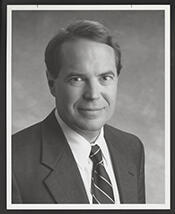
Here you will find contact information for Representative Martin R. Hoke, including email address, phone number, and mailing address.
| Name | Martin R. Hoke |
| Position | Representative |
| State | Ohio |
| District | 10 |
| Party | Republican |
| Status | Former Representative |
| Term Start | January 5, 1993 |
| Term End | January 3, 1997 |
| Terms Served | 2 |
| Born | May 18, 1952 |
| Gender | Male |
| Bioguide ID | H000707 |
About Representative Martin R. Hoke
Martin Rossiter Hoke (born May 18, 1952) is an American Republican politician, former member of the Ohio Casino Control Commission, and former member of the United States House of Representatives from Ohio. He served as a Representative from Ohio in the United States Congress from 1993 to 1997, completing two terms in office. Over the course of his public career, he was active in both state and federal roles, contributing to the legislative process and representing the interests of his constituents during a period of significant political and economic change in the United States.
Hoke was born in Lakewood, Ohio, and raised in the greater Cleveland area. He attended public schools in the region before pursuing higher education. His early years in northeastern Ohio helped shape his understanding of the industrial and economic challenges facing the communities he would later represent. Growing up in a politically engaged environment, he developed an interest in public affairs and business that would inform his later professional and political pursuits.
Hoke attended Amherst College in Amherst, Massachusetts, where he earned his undergraduate degree. Following his studies at Amherst, he returned to Ohio and enrolled at Case Western Reserve University School of Law in Cleveland, where he obtained his Juris Doctor. His legal education provided a foundation in constitutional and administrative law that would later prove relevant to his work in both the private sector and government service. After law school, he was admitted to the bar and began his professional career.
Before entering Congress, Hoke worked in business and law, gaining experience as an entrepreneur and attorney in the Cleveland area. He became involved in local civic and political activities, building a reputation as a Republican figure with a focus on economic development and government reform. His engagement with community and party organizations helped establish the political base that would support his eventual run for federal office.
Hoke was elected as a Republican to the U.S. House of Representatives from Ohio and served from January 3, 1993, to January 3, 1997. His service in Congress occurred during a significant period in American history, marked by debates over federal spending, welfare reform, and changes in the post–Cold War international order. As a member of the House of Representatives, Martin R. Hoke participated in the democratic process and represented the interests of constituents from his Ohio district, contributing to the legislative process during his two terms in office. He served during the 103rd and 104th Congresses, a time that included the Republican takeover of the House in 1994 and the ensuing negotiations over the federal budget and domestic policy priorities.
During his congressional tenure, Hoke aligned with the Republican Party’s emphasis on fiscal conservatism and regulatory reform. He took part in committee work and floor debates that reflected the concerns of his district, including economic competitiveness, crime, and government efficiency. His role in Congress placed him at the intersection of national policy discussions and local needs, as he sought to balance party positions with the priorities of voters in northeastern Ohio. After serving two terms, he left the House of Representatives following the conclusion of his second term in January 1997.
Following his congressional service, Hoke remained active in public and civic life in Ohio. He later served as a member of the Ohio Casino Control Commission, a state regulatory body established to oversee casino gaming operations and ensure compliance with Ohio law. In that capacity, he drew on his legal and legislative background to help shape and implement regulatory frameworks for a newly developing sector of the state’s economy. His post-congressional work reflected a continued engagement with issues of public policy, regulation, and economic development in Ohio.