Senator Martin Nelson Johnson
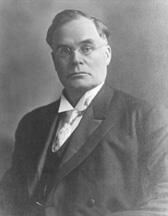
Here you will find contact information for Senator Martin Nelson Johnson, including email address, phone number, and mailing address.
| Name | Martin Nelson Johnson |
| Position | Senator |
| State | North Dakota |
| Party | Republican |
| Status | Former Representative |
| Term Start | December 7, 1891 |
| Term End | October 21, 1909 |
| Terms Served | 5 |
| Born | March 3, 1850 |
| Gender | Male |
| Bioguide ID | J000162 |
About Senator Martin Nelson Johnson
Martin Nelson Johnson (March 3, 1850 – October 21, 1909) was an American attorney and Republican politician who served as both a United States Representative and a United States Senator from North Dakota. Over the course of his national legislative career, he served five terms in Congress, contributing to the legislative process during a significant period in American history and representing the interests of his constituents in the Upper Midwest.
Johnson was born on March 3, 1850, in Racine County, Wisconsin, to Norwegian immigrant parents. In the same year, he moved with his family to Decorah, Iowa, where he was taught at home and attended local country schools. His upbringing in a Norwegian-American farming community would later shape his political base and his advocacy for agricultural interests. Seeking higher education, he enrolled at Upper Iowa University in Fayette, Iowa, and later transferred to the University of Iowa at Iowa City. He graduated from the law department of the University of Iowa in 1873 with a bachelor’s degree in law, laying the foundation for his dual career in law and politics.
After completing his legal studies, Johnson spent two years in California, where he taught at the California Military Academy in Oakland. He returned to Iowa in 1875, was admitted to the bar in 1876, and commenced the practice of law in Decorah. His legal career quickly intersected with public service. A committed Republican, he served as a presidential elector on the Republican ticket in 1876. He was elected to the Iowa House of Representatives in 1877 and then to the Iowa Senate, serving from 1878 to 1882. In both chambers of the Iowa legislature he chaired the Committee on the State Library, gaining experience in legislative procedure and public administration. In 1879 he married Stella White, marking the beginning of a family life that would accompany his moves across the growing American frontier.
In October 1882, Johnson and his wife moved to the Dakota Territory to pursue agricultural opportunities, reflecting the broader westward expansion of the period. They purchased approximately 2,500 acres of land near the Great Northern Railway a few miles west of Larimore, in what would become North Dakota. There Johnson and his neighbor, Levi Peterson, established a town near the railroad, which they named Petersburg. While building his agricultural and business interests, Johnson remained active in public affairs. He served as district attorney of Nelson County from 1886 to 1890, prosecuting cases and representing the county in legal matters. In 1889 he was a member of the North Dakota constitutional convention, where he gained attention for his advocacy of a unicameral state legislature. He was recruited to the convention in part through the efforts of the Scandinavian Republican League, which sought to increase Scandinavian representation; only 10 of the 75 delegates were of Scandinavian descent. Johnson was also an active member of the North Dakota Farmers’ Alliance, a powerful agrarian movement representing the concerns of farmers. Norwegian farmers across North Dakota rallied behind him as a strong voice for their interests and pushed to place him on the ballot for the U.S. Senate when North Dakota achieved statehood. Although the new state legislature ultimately elected Lyman Casey after several days of voting, and Johnson narrowly missed becoming the first Norwegian-American elected to the Senate, the contest enhanced his statewide prominence.
Johnson’s national congressional service began in the House of Representatives. Running as a Republican, he was elected to the United States House of Representatives in 1890 and served four consecutive terms from March 4, 1891, to March 4, 1899, representing North Dakota at-large. During these years he participated actively in the democratic process and contributed to federal legislation at a time when issues of agrarian reform, tariffs, and economic policy were central to national debate. His eight years in the House encompassed the economic turmoil of the 1890s, including the Panic of 1893, and he was regarded as a capable representative of his largely rural constituency. At the conclusion of his fourth term, he chose not to seek renomination to the House, instead attempting to secure a seat in the United States Senate. When he failed to obtain the Republican nomination, losing to Porter J. McCumber, Johnson temporarily stepped back from national politics and returned to his home in Petersburg, resuming his legal, agricultural, and community activities.
Johnson eventually realized his long-sought goal of service in the United States Senate. In early 1909, the North Dakota state legislature elected him to the Senate over incumbent Senator Henry C. Hansbrough. His senatorial term began on March 4, 1909. Although his time in the Senate was brief, he quickly assumed responsibilities of note. He served as chairman of the Senate committee to Investigate Trespassers Upon Indian Lands, a body concerned with encroachments on Native American territories, and he presided over the Senate on nine occasions during his short tenure. Colleagues regarded him as a man of intelligence and ability, and his election to the Senate capped a political career that had begun in state legislatures and extended through four terms in the House to the upper chamber of Congress.
Johnson’s service in the Senate was cut short by illness and death. On October 21, 1909, just eight months into his first senatorial term, he died at the Gardner Hotel in Fargo, North Dakota, following an attack of Bright’s disease that occurred after nasal surgery. His death in office placed him among the members of the United States Congress who died while serving between 1900 and 1949. He was buried in the City Cemetery in Petersburg, North Dakota, the community he had helped to found decades earlier. Memorial addresses honoring Martin N. Johnson, late a senator from North Dakota, were later delivered in both the House of Representatives and the Senate, reflecting the respect he had earned over a lifetime of public service.